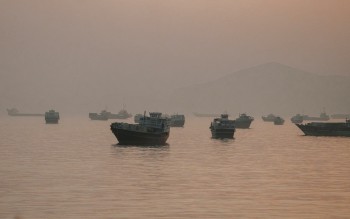
Economy Minister Akmal Nasrullah Mohd Nasir has sounded a cautionary note to Malaysian businesses and households, urging them to prepare for the economic fallout from Iran's renewed closure of the Strait of Hormuz. Speaking through a video message posted on his official TikTok account, the minister stressed that despite scattered reports of commercial vessels still transiting through the strategic waterway, stakeholders should not interpret this as a sign that normal conditions are returning. The closure follows a series of military strikes launched by the United States against Iran on July 8, escalating tensions in the West Asian region and creating fresh uncertainty for global trade and energy markets.
The Strait of Hormuz remains one of the world's most critical chokepoints for international commerce, with a substantial portion of global crude oil shipments passing through its waters daily. Any prolonged disruption to traffic through this narrow passage has immediate ramifications for energy security worldwide, and Malaysia—as a trading nation heavily dependent on regional and global supply chains—stands exposed to these geopolitical oscillations. Akmal Nasrullah's cautionary stance reflects the government's assessment that the current situation warrants serious contingency planning rather than optimistic assumptions about rapid normalisation.
The minister identified several immediate economic pressure points that Malaysian firms and consumers should anticipate. Rising oil prices represent the most obvious concern, as tighter supplies push global energy costs upward. Beyond petroleum, however, the impacts become more diffuse and harder to quantify. Shipping companies face mounting transit costs as vessels reroute around the closure, taking longer journeys and burning additional fuel. These incremental expenses ripple through logistics networks, ultimately affecting the price of imported goods on Malaysian shelves. Raw material inputs sourced from across Asia and beyond will experience elevated carrying costs, while food imports—a significant component of Malaysia's consumption basket—will arrive with steeper price tags attached.
Akmal Nasrullah emphasised that complacency poses a genuine threat to Malaysia's economic stability. The presence of a handful of commercial ships still navigating the strait could create a misleading impression of limited disruption, potentially causing businesses to delay protective measures and governments to underscore preparedness warnings. This mindset conflicts with historical experience of supply chain crises, where denial during early stages compounds difficulties later. The minister argued instead that both public and private sectors must activate monitoring systems, review inventory strategies, and develop contingency pathways now rather than scrambling when constraints become acute.
One of the minister's key insights involved mapping the hidden complexity of integrated supply chains. He used plastic manufacturing as an illustrative example, noting that pressure on polymer producers reverberates across seemingly unrelated industries. Food packaging operations face input scarcity, electrical and electronics manufacturers struggle to source components, automotive suppliers encounter material shortages, medical device producers lose access to critical polymers, construction firms find specialised materials unavailable, and agricultural exporters lose packaging solutions. This cascading logic underscores why isolated sector impacts rarely remain confined; modern manufacturing ecosystems feature dense interdependencies that amplify initial shocks across the entire economic fabric.
Malaysia's positioning as a mid-tier manufacturing hub and trading centre makes it particularly vulnerable to such supply chain contagion. The country hosts significant operations in electrical and electronics assembly, pharmaceuticals, petrochemicals, and food processing—all sectors heavily dependent on imported inputs and vulnerable to the cost pressures Akmal Nasrullah outlined. When shipping times extend and freight rates climb, Malaysian manufacturers working on razor-thin margins face margin compression and potential competitiveness erosion against rivals in less-disrupted markets. Small and medium enterprises, which lack the financial cushioning of larger corporations, face existential pressure should input costs rise sharply without offsetting price increases in final goods.
The minister's emphasis on reducing dependence on external situations points toward longer-term structural adjustments Malaysia should consider. While complete autarky remains unrealistic for a small, open economy, diversification of supply sources, investment in local content where feasible, and development of regional supply networks could buffer Malaysia against future shocks. Singapore, South Korea, and other regional peers have invested heavily in supply chain resilience through stockpiling, strategic partnerships, and technological innovation. Malaysia's government and private sector face similar imperatives to strengthen supply chain antifragility rather than merely hoping for swift resolutions to external crises.
The timing of Akmal Nasrullah's warning carries significance as global growth projections face downward revision amid escalating geopolitical tensions. For Malaysia's government, which has prioritised economic stability and growth targets, supply chain disruptions present unwelcome complications. Inflation pressures from elevated energy and transportation costs could complicate monetary policy deliberations and erode purchasing power across income groups. The construction and property sectors, which depend on imported materials and steady financing conditions, could experience demand shifts as consumers redirect spending toward necessities.
Businesses across sectors should interpret the minister's message as an official signal to activate contingency protocols. Companies sourcing raw materials through Hormuz-dependent routes should explore alternative logistics arrangements, even at higher cost, to maintain operational continuity. Financial planning should incorporate scenarios incorporating elevated input costs persisting for months rather than weeks. Inventory management strategies warrant review to optimise holdings without excessive capital tying. Similarly, government agencies overseeing food security, energy supply, and critical manufacturing should coordinate with private sector partners to identify vulnerabilities and establish communication channels for rapid information sharing should the crisis deepen.
The broader context here involves Malaysia's structural vulnerability to external shocks—a reality that extends beyond immediate Hormuz concerns. Climate change, pandemic diseases, trade tensions, and geopolitical conflicts all pose supply chain risks that Malaysian policymakers must take seriously. Akmal Nasrullah's intervention signals that at least portions of the government recognise these vulnerabilities and are attempting to encourage proactive rather than reactive responses. Whether businesses and the public heed this warning with sufficient seriousness will determine whether Malaysia navigates the coming period with manageable disruption or encounters more severe economic turbulence stemming from inadequate preparation.

