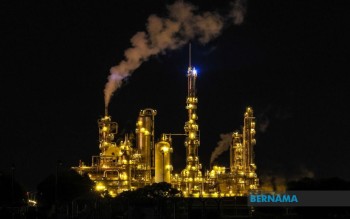
Malaysia should chart a cautious path toward establishing a national petroleum reserve, prioritising fiscal discipline and measured expansion over the ambitious models pursued by major industrialised economies, according to investment strategy specialists evaluating the government's energy security ambitions. Prime Minister Datuk Seri Anwar Ibrahim recently signalled the administration's intent to investigate whether and how the country might establish such reserves to insulate itself from future geopolitical shocks to global oil supplies. However, economists warn that blindly emulating the strategic stockpiling approaches of wealthier nations like the United States and Japan would prove economically counterproductive given Malaysia's different budgetary constraints and exposure profile to energy disruptions.
The case for moving cautiously rests on a fundamental economic principle: every ringgit committed to petroleum reserves represents resources unavailable for competing priorities that demand immediate public investment. Mohd Sedek Jantan, director of investment strategy at IPPFA Sdn Bhd, articulated this tension in his recent analysis, noting that healthcare, education and food security initiatives also compete for government funding in an environment of finite resources. Malaysia's fiscal landscape differs markedly from that of the United States, which maintains vast reserves partly through sheer budgetary scale, or Japan, which faces distinct strategic vulnerabilities as an energy-importing island nation dependent on maritime trade routes. Malaysia's own position sits between energy sufficiency and import dependency, a reality that should inform the size and structure of any reserve programme rather than aspirational comparisons with larger economies.
What fundamentally distinguishes a prudent approach from a wasteful one is the preliminary analytical groundwork that precedes any physical investment. Rather than rushing to construct storage facilities or purchase crude oil for stockpiling, the economist emphasised that policymakers must first undertake a rigorous assessment of Malaysia's actual vulnerability to supply disruptions. This risk mapping exercise should identify the likelihood and severity of scenarios where global market turmoil, shipping lane disruptions or regional instability might restrict oil flows to Malaysian refineries and power plants. Only with this baseline understanding can planners determine what quantity of reserves would meaningfully enhance security without representing dead capital that generates no economic return. The question, as Jantan framed it, is not the absolute size of reserves but their appropriateness to Malaysia's distinct circumstances.
The economic calculus extends beyond upfront acquisition costs. Establishing a functional petroleum reserve system entails ongoing expenses for storage infrastructure maintenance, security, quality assurance and management personnel. These recurring obligations must fit within long-term budget projections without crowding out other investments. Jantan suggested that a comprehensive cost-benefit framework must weigh these expenditures against the anticipated economic damage that a major supply disruption could inflict on manufacturing, power generation and transportation sectors. A carefully calibrated reserve might prevent losses far exceeding its establishment and maintenance costs, yet an oversized programme would represent wasteful spending with minimal additional protective benefit. This marginal analysis should guide decisions on reserve dimensions rather than international prestige or rankings.
A phased implementation strategy offers practical advantages over an all-in approach that ties up capital immediately. Beginning with a modest initial reserve, perhaps sufficient for several weeks of national consumption, allows Malaysia to establish operational expertise and refine management protocols before expanding significantly. This approach permits policymakers to evaluate whether the reserve functions as intended, whether storage facilities perform reliably and whether integration with existing energy infrastructure occurs smoothly. Lessons learned during early phases can inform subsequent expansion decisions, avoiding costly mistakes embedded in a massive upfront deployment. Moreover, spreading capital expenditures across multiple years distributes fiscal pressure more evenly than concentrating massive infrastructure spending in a single budget cycle.
Financing mechanisms deserve equal scrutiny alongside reserve sizing. The economist flagged opportunities for private sector partnerships that might reduce the budgetary burden on government accounts. Private energy companies, refineries and traders might contribute capital or operational expertise in exchange for access to reserve stockpiles during emergencies or commercial arrangements during normal periods. Such arrangements require careful contractual design to ensure public interest protection while providing partners with incentive structures encouraging participation. Alternatively, dedicated levies on petroleum products or dedicated revenue streams could fund reserves without depleting general treasury resources, though any such mechanisms demand transparent governance and public accountability.
The sequencing of decisions also matters strategically. Before acquiring petroleum or constructing storage tanks, Malaysia should complete thorough technical and economic studies determining reserve composition, storage location decisions and operating protocols. Should reserves concentrate in specific geographic zones for efficiency, or distribute regionally to enhance resilience? Should the government stockpile crude oil for sale to domestic refineries or maintain finished products like diesel and petrol closer to consumption points? How should reserves integrate with existing strategic storage facilities already maintained by major refiners and petroleum companies? These design questions require specialist input and careful deliberation rather than hurried execution.
The broader context of economic security strategy also warrants attention. A petroleum reserve represents just one element within comprehensive energy resilience frameworks that might encompass fuel diversification, renewable energy expansion, efficiency improvements and regional cooperation arrangements. Malaysia might enhance energy security more cost-effectively through combinations of these approaches than through petroleum stockpiling alone. For instance, accelerating liquefied natural gas import infrastructure, supporting solar and wind deployment, or negotiating energy-sharing agreements with neighbouring producers might deliver security benefits at lower total cost. A holistic strategy would evaluate petroleum reserves within this wider context rather than treating stockpiling as an isolated solution.
The economic case for some degree of petroleum reserve capacity appears defensible when framed against genuine disruption scenarios. Malaysia's refineries, power plants and transportation networks would suffer acute dysfunction if supply interruptions forced sudden rationing or price spikes. Manufacturing competitiveness could erode rapidly, and essential services might face operational constraints. A modest reserve serving as a buffer during supply emergencies could prevent economic damage worth many times the reserve's establishment cost. However, this logic supports maintaining appropriate reserves calibrated to realistic risk assessments rather than matching international comparisons or pursuing maximum stockpiling capacity.
Moving forward, the government's immediate priority should be commissioning independent analysts to assess Malaysia's energy vulnerability, model various disruption scenarios and calculate optimal reserve dimensions suited to national circumstances. This foundational work must precede any procurement decisions or infrastructure development. Institutional frameworks for reserve governance, transparency standards and emergency activation procedures should be established alongside technical planning, ensuring public confidence in reserve management. Only after completing this preparatory phase should policymakers authorize gradual physical implementation, proceeding in tranches that permit evaluation and refinement rather than irreversible large-scale commitments. This measured approach recognises both the genuine value of petroleum reserves for energy security and the necessity of fiscal discipline in deploying public resources.

