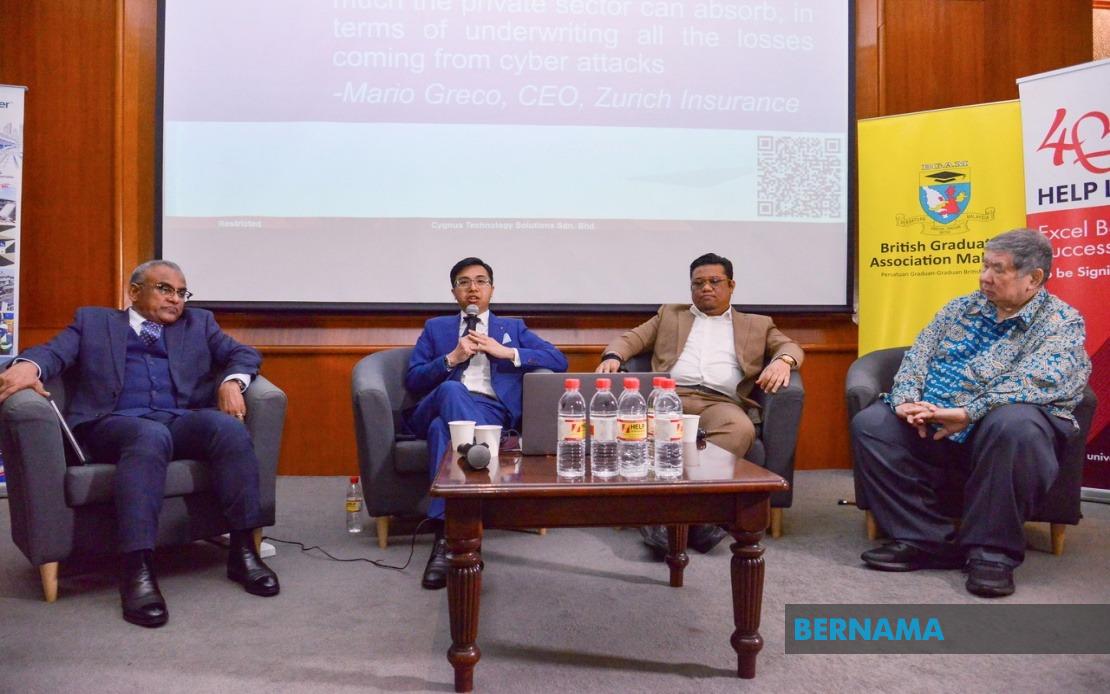
Malaysia is confronting a scam emergency of unprecedented scale, with documented cases exceeding 66,000 in the previous year and aggregated losses reaching approximately RM2.97 billion, according to crime prevention specialists addressing the growing sophistication of organised scam operations across the region. The scale of the problem has prompted urgent calls from government and law enforcement leaders for a fundamental shift in how the country approaches cybercrime prevention, moving beyond conventional enforcement strategies to encompass educational and community-based interventions.
Datuk Kamarudin Md Ali, an executive member of the Malaysia Crime Prevention Foundation and president of the British Graduates Association Malaysia, characterised the evolution of scamming from sporadic criminal acts into a systematic threat imperilling individuals, household finances, and commercial enterprises. Speaking at the BGAM Lecture Series on scam awareness, he emphasised that effective countermeasures depend on widespread public understanding and vigilance, positioning ordinary citizens as essential participants in the defence against criminal syndicates. This framing represents a departure from traditional law enforcement narratives that concentrate responsibility primarily on police agencies and specialised units.
The sophistication of contemporary scam operations reflects rapid technological advancement and psychological manipulation techniques. Prof Datuk Seri Dr Akhbar Satar, director of HELP University's Institute of Criminology and Criminal Justice, offered a penetrating observation that scammers succeed not through purely technical means but through exploiting human vulnerabilities and eroding institutional integrity. His assertion that scammers "hack human psychology" rather than computer systems underscores a critical insight: technological defences remain insufficient without corresponding development of critical thinking capacity and ethical awareness among the general population. Universities, he argued, bear particular responsibility for equipping graduates with both digital literacy and the moral framework necessary to resist manipulation.
Tan Sri Dr Syed Hamid Albar, former Home Minister and inaugural chairman of the Malaysia Crime Prevention Foundation, broadened the framing of the scam crisis beyond financial harm to encompass systemic damage to public trust and confidence in Malaysia's digital infrastructure. His intervention reflects governmental acknowledgment that scams represent more than isolated crimes; they constitute a challenge to the nation's social cohesion and economic resilience. He advocated for an integrated approach combining education, enforcement, and institutional reform, arguing that preventive measures through public awareness and digital literacy yield greater long-term returns than reactive investigations following financial loss.
The regional context amplifies Malaysia's vulnerability and urgency. Datuk Seri Ramli Mohamed Yoosuf, former director of Bukit Aman's Commercial Crime Investigation Department, characterised Southeast Asia as the global epicentre of commercial crime, with regional scam losses projected between USD88 billion and USD114 billion in 2025. This staggering scale reflects the region's emergence as both a lucrative market for scammers and a geographic base for organised criminal compounds. Myanmar, Cambodia, Laos and the Philippines host substantial scam operations generating approximately USD40 billion annually, according to law enforcement assessments. These compounds employ trafficked workers from more than 80 countries, transforming scamming from isolated fraud into an industrialised criminal enterprise with international dimensions.
Artificial intelligence and cryptocurrency technologies have fundamentally transformed scam operations, enabling criminals to operate at unprecedented scale and sophistication. AI-generated deepfakes now feature prominently in social engineering campaigns, allowing scammers to impersonate trusted figures or fabricate convincing false evidence. Cryptocurrency laundering provides mechanisms for rapidly converting stolen funds into assets difficult for authorities to trace or recover. These technological innovations have outpaced regulatory frameworks and law enforcement capabilities across Southeast Asia, creating structural asymmetries that favour criminal syndicates with cutting-edge technical resources and flat organisational hierarchies enabling rapid adaptation.
Malaysia has implemented legislative and institutional responses to address evolving threats. The Cybersecurity Act 2024 provides enhanced legal frameworks for prosecuting cyber-enabled crimes and regulating digital security standards across critical infrastructure and private enterprise. Strengthened compliance with Financial Action Task Force standards aims to restrict illicit financial flows and disrupt money laundering networks that facilitate scam operations. The establishment of the National Scam Response Centre represents institutional innovation enabling inter-agency coordination and information sharing between law enforcement, financial regulators, and technology providers. However, these initiatives remain nascent, and their effectiveness depends on sustained implementation and resource allocation.
Law enforcement and academic experts acknowledge persistent gaps between institutional responses and the accelerating pace of criminal innovation. Ramli Mohamed Yoosuf cautioned that organised scam syndicates continue adapting tactics faster than regulatory and enforcement mechanisms can respond, creating a structural disadvantage for authorities. This dynamic necessitates continuous evolution of investigative techniques, enhanced international cooperation, and greater investment in technological capabilities matching those deployed by criminal organisations. The complexity of cross-border criminal networks operating across multiple jurisdictions with varying legal frameworks and enforcement capacities presents particular obstacles to effective intervention.
The intellectual foundations for sustainable scam prevention extend beyond conventional law enforcement into education, media literacy, and organisational governance. The BGAM lecture series brought together government officials, law enforcement specialists, cybersecurity professionals, academics and community representatives, signalling recognition that fragmented institutional responses prove insufficient. This multistakeholder approach acknowledges that scam prevention requires coordinated action across financial institutions, technology companies, educational establishments, media organisations and civil society groups. Each institutional actor possesses distinct capabilities and positions enabling contributions to public awareness, digital literacy development, and practical security measures.
Media literacy and critical thinking capacity emerge as particularly crucial elements of sustainable prevention strategies. Datuk Yong Soo Heong, president of the Malaysian Press Institute, participated in structured discussions addressing how journalistic institutions and media literacy initiatives can help citizens develop resistance to misinformation, social engineering narratives, and deceptive communications. This emphasis reflects growing recognition that scammers exploit not merely technical vulnerabilities but informational asymmetries and cognitive biases affecting digital communications. By strengthening capacity for critical evaluation of online communications and verification of claims before financial or personal commitment, citizens can substantially reduce vulnerability to manipulation.
For Malaysian businesses and households, the implications are profound. Commercial enterprises face operational disruption, financial loss and reputational damage from successful scam attacks targeting employees or customers. Individual households confront targeted fraud exploiting personal information and social connections. The cumulative economic impact extends beyond immediate financial losses to include costs of fraud investigation, remediation, insurance coverage and reduced consumer confidence in digital transactions. Rising scam losses may influence spending behaviour, reduce adoption of cashless payment systems, and undermine confidence in e-commerce platforms critical for Malaysia's digital economy development.
The pathways forward require sustained commitment from multiple institutional actors and individual citizens. Effective prevention depends on continuous public education campaigns reaching diverse demographic groups with varying digital literacy levels, particularly targeting elderly populations and recent immigrants vulnerable to sophisticated social engineering. Financial institutions and payment platforms must implement increasingly robust authentication and fraud detection systems while balancing security with user convenience. Law enforcement agencies require adequate resources and specialised training to investigate complex transnational crimes. Policymakers must establish legal and regulatory frameworks enabling rapid adaptation as criminal tactics evolve, while protecting privacy and civil liberties. The evidence presented at recent expert forums suggests that Malaysia recognises these imperatives, yet translating awareness into sustained, coordinated action at the scale required remains the central challenge confronting the nation's scam prevention efforts.

