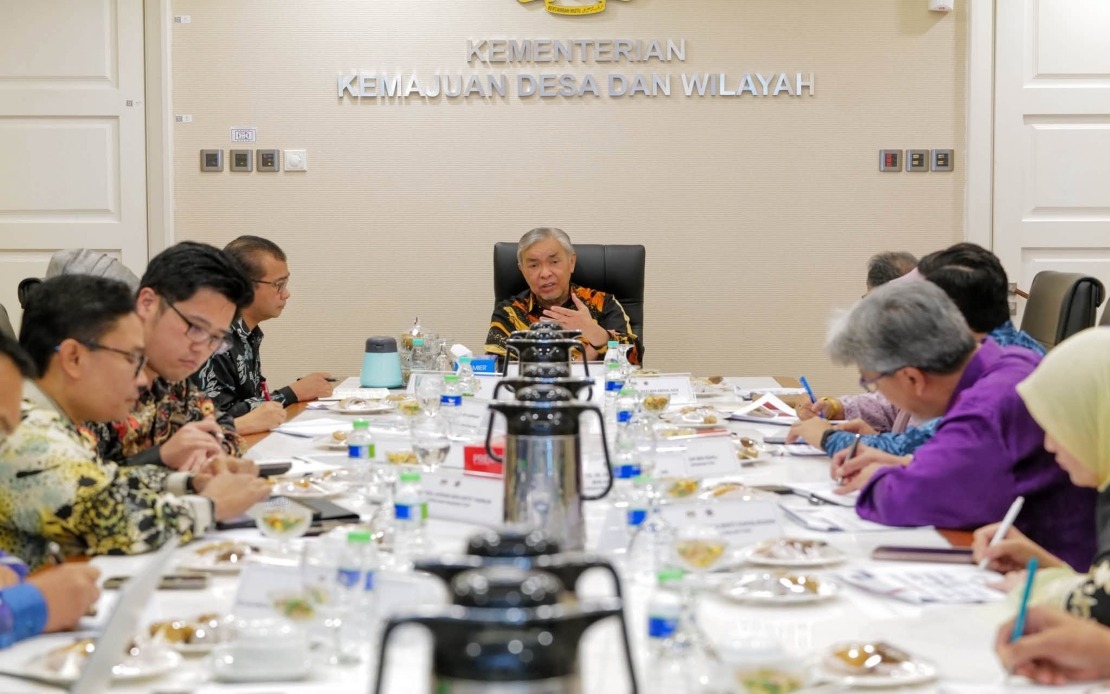
Malaysia is intensifying its push to transform technical and vocational education through a decade-long strategic framework designed to create a skilled workforce capable of meeting evolving economic demands. Deputy Prime Minister Datuk Seri Dr Ahmad Zahid Hamidi announced the establishment of the Strategic TVET 2.0 Task Force 2026-2035 and ten accompanying TVET Strategic Committees, marking a significant institutional restructuring aimed at elevating Malaysia's vocational training sector. As Chairman of the National TVET Council, Ahmad Zahid framed the initiative as a critical component of the government's broader human capital development strategy, emphasizing that the new structure will enable more coordinated and measurable implementation of vocational training policies across the nation.
The task force and committees represent a deliberate shift toward greater organizational coherence in Malaysia's TVET ecosystem. Rather than relying on fragmented departmental efforts, the new framework consolidates multiple stakeholders under unified strategic direction. This approach acknowledges a persistent challenge in Malaysia's vocational education system: the disconnect between training providers and industry expectations. By establishing dedicated committees focused on specific dimensions—governance, industry partnerships, financing, and workforce inclusion—the government is attempting to address systemic bottlenecks that have historically constrained the sector's responsiveness and effectiveness.
Leadership of the Strategic TVET 2.0 Task Force has been entrusted to Emeritus Professor Datuk Dr Siti Hamisah Tapsir, president and vice-chancellor emeritus of UCSI University. Her appointment signals the government's intention to bring academic expertise and institutional knowledge to bear on vocational education reform. The selection of a university leader to chair a TVET task force also reflects recognition that higher education and vocational training must increasingly operate within an integrated ecosystem rather than as parallel systems. The ten strategic committees each target distinct operational domains essential to a functioning TVET landscape, from institutional governance to employer engagement.
Among the committees is the TVET Governance and Institutional Reform Committee, chaired by Datuk Dr Asyraf Wajdi Dusuki, which will address structural deficiencies in how vocational institutions are managed and held accountable. Simultaneously, the TVET Industry and Employers Committee, led by Datuk Khairul Azwan Harun, aims to bridge the persistent gap between what training institutions teach and what employers actually require. This committee's work is particularly crucial given Malaysia's experience with skill mismatches that leave graduates undersupported in the job market despite apparent demand for skilled workers. The inclusion of industry leaders in formal committee structures provides a mechanism for genuine feedback loops that have often been absent in top-down vocational policy development.
Financial sustainability emerges as another critical concern addressed through the TVET Financing and Sustainability Committee, chaired by Ramelle Ashram Ramli. Malaysia's vocational sector has traditionally struggled with inadequate and inconsistent funding, limiting infrastructure development and instructor training. By elevating financing to a dedicated committee with strategic oversight, the government signals recognition that sustainable TVET transformation requires long-term financial commitments and innovative funding mechanisms. This committee will likely explore public-private partnership models, employer contributions, and alternative revenue streams to ensure vocational institutions can maintain quality standards and adapt to changing industry needs without relying exclusively on government budgets.
The government has also established a Women Empowerment in TVET Committee, chaired by Datuk Dr Masilla Kamalrudin, acknowledging that Malaysia's vocational sector has historically underrepresented women despite growing evidence that inclusive workforce development yields better economic outcomes. Women remain significantly underrepresented in technical fields across Malaysia, limiting the pool of available talent and perpetuating gender-based occupational segregation. This dedicated committee signals commitment to removing barriers that discourage women from pursuing technical and vocational careers, whether through curriculum design, workplace culture change, or targeted recruitment initiatives. Success in this area could meaningfully expand Malaysia's skilled workforce while advancing gender equity objectives.
Ahmad Zahid, who also serves as Minister of Rural and Regional Development, emphasized that the TVET 2.0 initiative directly supports the MADANI government's stated priorities of developing competitive human capital and building an economy capable of meeting future challenges. The ten-year timeframe reflects understanding that vocational education transformation cannot occur through short-term initiatives; genuine systemic change requires sustained commitment to curriculum development, instructor capacity building, facility modernization, and cultural shift toward viewing vocational pathways as equally prestigious as academic tracks. For Malaysia to maintain competitiveness amid rapid technological change and regional economic integration, the workforce must possess both foundational technical competencies and adaptive learning capacities.
The strategic framework arrives as Malaysia confronts significant labor market transitions driven by automation, digitalization, and economic restructuring. Manufacturing, construction, healthcare, and hospitality sectors—all critical to Malaysia's employment landscape—face evolving skill requirements that existing TVET institutions struggle to anticipate and address. By institutionalizing closer coordination between training providers, employers, and government agencies through the task force and committees, Malaysia creates better mechanisms for identifying emerging skill gaps and adjusting curricula accordingly. This responsive capacity becomes increasingly valuable as technological disruption accelerates.
Implementation of the TVET 2.0 agenda will likely encounter familiar challenges including bureaucratic coordination difficulties, inconsistent funding execution, and resistance to change from entrenched institutional interests. However, the task force structure suggests government recognition that previous ad-hoc approaches have yielded insufficient results. Whether the committees become genuinely influential or merely ceremonial will depend on adequate resource allocation, clear authority lines, and willingness to implement recommendations even when they challenge established practices. For Malaysian readers and Southeast Asian observers, the TVET 2.0 initiative represents an important test of whether Malaysia can successfully execute ambitious policy reforms in a sector that significantly influences long-term economic competitiveness and workforce readiness.

