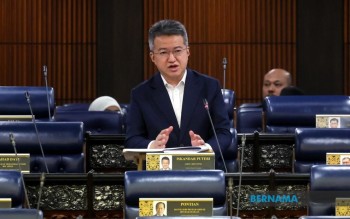
Malaysia has moved forward with establishing a National Trust Fund as lawmakers advanced groundbreaking legislation designed to build a durable financial cushion for the nation across multiple generations. The National Trust Fund Bill 2026 received its first reading in the Dewan Rakyat on July 14, setting the stage for legislative passage that would create a new institutional framework for managing the country's long-term wealth accumulation and investment strategies. Deputy Finance Minister Liew Chin Tong introduced the measure, which establishes both the fund itself and a dedicated governing entity—the National Trust Fund (Incorporated)—to oversee its operations, growth and strategic deployment of resources.
The legislative push reflects a recognition among Malaysian policymakers that securing financial stability for coming decades requires deliberate institutional mechanisms beyond normal budgetary cycles. Rather than allowing resource revenues and surpluses to dissipate within annual spending pressures, the framework aims to ring-fence capital specifically designated for long-term national benefit. This approach mirrors similar sovereign wealth models adopted by resource-rich nations seeking to insulate future prosperity from commodity price volatility and political cycles. By codifying contribution requirements and governance standards, Malaysia's architects signal commitment to consistent capital accumulation regardless of which government holds office.
The bill imposes mandatory funding obligations on federal authorities that blend multiple revenue streams into a single accumulating pool. The Government must contribute annually an amount equal to at least 0.1 percent of its projected yearly revenue, establishing a baseline that should grow automatically alongside the overall economy. More significantly, the legislation requires channeling a minimum of two percent of all dividend income received from Petroliam Nasional Bhd—the state-owned petroleum corporation—into the fund each year. This provision ties national wealth-building directly to hydrocarbon revenues, acknowledging that Malaysia's natural resource endowment, though finite, represents valuable assets that warrant preservation for future economic benefit rather than immediate consumption.
The contribution framework extends beyond federal petroleum dividends to capture export duties levied on depleting natural resources. After accounting for any obligations transferred to state governments, the Federal Government must allocate no less than two percent of remaining resource export duties to the trust fund. This multi-source approach recognizes that Malaysia's mineral wealth, timber resources, and other extractive industries generate government revenue that could otherwise disappear into current expenditure. The legislation thus converts a portion of earnings from asset depletion into reinvestment in perpetual wealth, creating a counterbalance to the temporary nature of extractive resources. All such contributions will appear transparently in annual financial statements submitted to parliament, ensuring accountability and legislative oversight of the fund's growth.
State governments are invited to participate voluntarily, contributing from royalty revenues they derive from petroleum or other depleting resource exploitation within their territories. This collaborative approach respects federalism principles while encouraging subnational involvement in collective wealth preservation. Given that several Malaysian states generate substantial resource-related income, voluntary participation could significantly enhance the fund's scale and diversification, though mandatory federal contributions ensure the mechanism functions even absent state contributions. The structure thus creates flexibility while maintaining momentum through guaranteed federal participation regardless of political alignment between federal and state administrations.
Governing the accumulated capital will fall to the National Trust Fund (Incorporated), which operates as a corporate entity answerable to the Finance Minister and parliament. The board must develop comprehensive long-term investment strategies specified through formal strategic asset allocation frameworks, moving beyond passive cash accumulation toward active wealth generation. This governance architecture matters considerably—investment expertise, disciplined decision-making, and independence from short-term political pressure determine whether the fund becomes a genuine engine of perpetual growth or merely a slowly eroding reserve. The requirement for detailed reporting to the Finance Minister balances operational autonomy with public accountability, enabling ministerial oversight without creating scope for politicization of investment decisions.
The fund's assets will support multiple legitimate expenses, including compensation and reimbursement for board members and professional staff, alongside administrative costs inherent to managing substantial investments. These operational expenses represent necessary investments in institutional capacity, yet the legislation appropriately constrains such spending to ensure maximal capital preservation and growth. The distinction between using fund resources for governance and administration versus strategic deployment for economic returns reflects sophisticated thinking about stewardship responsibilities. By explicitly authorizing reinvestment of earned returns and restricting consumption of principal, the bill embeds principles of sustainable resource management into institutional DNA.
The timing of this legislation reflects Malaysia's maturation regarding fiscal management and intergenerational equity. With global attention focused on climate change and resource depletion, establishing mechanisms for converting finite natural wealth into perpetual financial security represents rational policy adaptation. Southeast Asian neighbors increasingly contemplate similar sovereign wealth structures, positioning Malaysia's National Trust Fund as a potential template for regional development. The bill's passage would signal Malaysian commitment to systematic, long-term fiscal planning that transcends election cycles and acknowledges obligations to citizens not yet born.
Parliament scheduled the second reading during the current session, suggesting leadership determination to advance the measure rapidly through legislative stages. This expedited timeline reflects cross-party recognition that sovereign wealth mechanisms require stable, long-term mandates unlikely to face reversals. The bill's relatively technical focus on governance, contribution formulas, and investment frameworks minimizes partisan controversy compared to distributive legislation, facilitating broader support. Should the National Trust Fund Bill 2026 progress to royal assent, the Finance Minister will appoint the operational commencement date through gazette notification, likely allowing institutional preparation before funds begin accumulating.
The legislation carries significant implications for Malaysia's medium and long-term economic positioning. Countries with successful sovereign wealth funds typically demonstrate stronger fiscal resilience during commodity downturns, greater capacity for counter-cyclical spending during recessions, and enhanced ability to fund public investments in education, infrastructure and research without crowding out private capital. Should Malaysia's National Trust Fund accumulate substantial assets and generate consistent returns through competent management, it could ultimately reshape the nation's relationship with resource wealth—converting temporary abundance into durable prosperity. This represents the fundamental promise underlying the 2026 legislation: ensuring that Malaysia's natural bounty benefits not merely today's generation but those inheriting the nation across coming decades.

