Malaysia's military leadership is moving to fortify the nation's air defence infrastructure through a coordinated deployment of sophisticated radar technology across the country. The Royal Malaysian Air Force announced the installation of multiple radar systems designed to close surveillance gaps and strengthen operational readiness in response to an increasingly complex regional security environment. This initiative represents a significant modernisation effort that reflects growing concerns about airspace vulnerabilities and the strategic importance of maintaining robust defence mechanisms.
The RMAF has identified four key locations for radar deployment as part of its immediate modernisation agenda. Air defence radar systems will be positioned at Bintulu in Sarawak, Bukit Puteri in Terengganu, and Bukit Lunchu in Johor. Additionally, an air surveillance radar is being established on Pulau Layang-Layang, a strategic island in the South China Sea. According to RMAF Chief General Tan Sri Muhamad Norazlan Aris, these installations form the opening phase of a broader capability enhancement strategy intended to maintain the force's technological competitiveness through 2055.
The broader context for this modernisation lies in the RMAF Capability Development Plan 2055, an ambitious long-term roadmap designed to ensure Malaysia's air force remains equipped to handle emerging security threats. This framework acknowledges that technological advancement and evolving geopolitical dynamics demand continuous investment in defence infrastructure. The radar deployment initiative sits within this larger vision, addressing immediate gaps in surveillance coverage while supporting the force's transition toward future operational requirements.
For Malaysian readers concerned with regional stability, the timing of this announcement carries particular significance. Recent conflicts in the Middle East, particularly the ongoing tensions affecting the Strait of Hormuz, have demonstrated how distant geopolitical crises can have cascading effects on global commerce and energy markets. Malaysia, as a nation highly dependent on international maritime trade, faces indirect but substantial impacts from such disruptions. The RMAF leadership has emphasised that maintaining vigilance over critical maritime corridors—especially the Strait of Malacca and the South China Sea—is essential for protecting national economic interests.
The Strait of Malacca represents one of the world's most critical shipping channels, with millions of barrels of oil passing through its waters daily destined for Asian markets. Disruptions to Sea Lines of Communication in this region would directly threaten Malaysia's economic stability and regional trade networks. The radar systems announced today represent a physical manifestation of Malaysia's commitment to ensuring these vital trade routes remain secure and operational. Early warning capabilities provided by advanced radar technology can detect potential threats well before they materialise, providing critical time for response and threat mitigation.
The South China Sea component of this modernisation strategy reflects Malaysia's particular vulnerability in this disputed waterway. As an archipelagic nation with significant maritime claims, Malaysia depends on sophisticated surveillance systems to monitor its exclusive economic zone and enforce maritime sovereignty. The Pulau Layang-Layang installation specifically addresses this challenge, positioning surveillance equipment at a strategic point that can monitor significant portions of Malaysia's maritime territory. This capability directly supports both national security and the country's ability to protect its maritime economic interests, including fisheries and potential hydrocarbon resources.
Beyond the tactical advantages of improved radar coverage, this modernisation initiative signals Malaysia's determination to maintain genuine strategic autonomy in an increasingly multipolar region. As larger powers develop sophisticated military capabilities and compete for influence in Southeast Asia, Malaysia must ensure its own defensive systems remain credible and effective. The investment in modern radar technology demonstrates that Malaysia is not content to rely solely on diplomatic arrangements or the security umbrella of larger allies, but is actively strengthening its own defence capabilities.
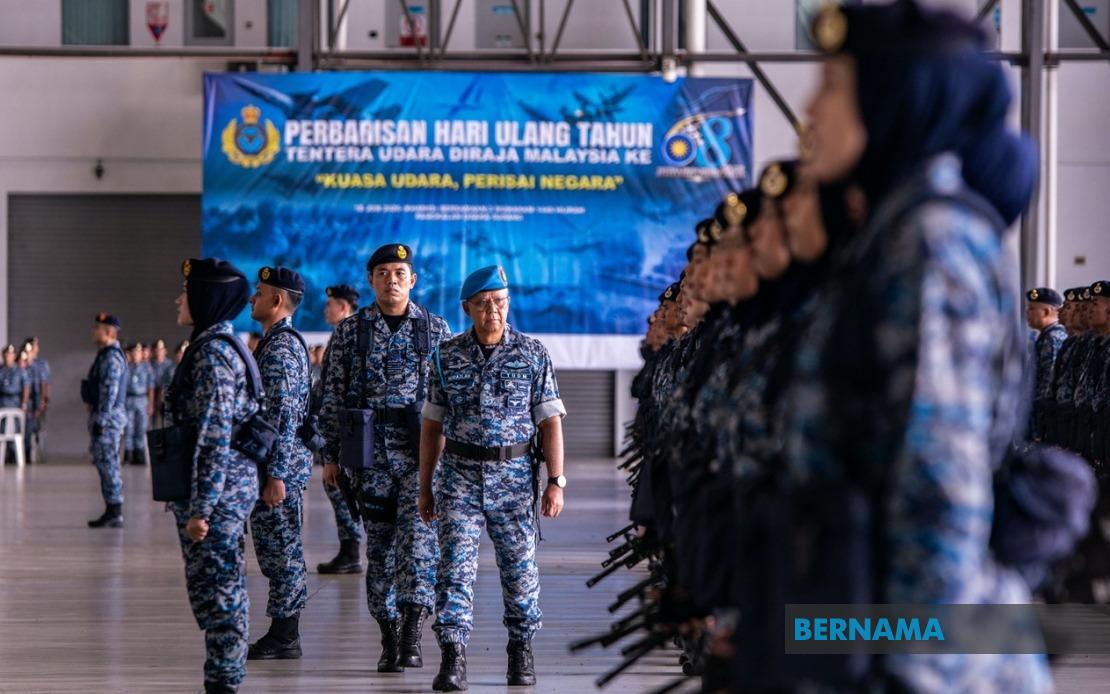
The RMAF's 68th Anniversary Parade, during which these capability announcements were made, provided the occasion for recognising personnel contributions to national defence. The parade featured 16 officers and 272 personnel representing various RMAF specialised units, including the special forces (PASKAU), ground defence forces (HANDAU), and composite flights. Beyond ceremonial significance, such events reinforce institutional pride and operational cohesion within the armed forces, qualities essential for maintaining effective defence structures.
The recognition of 17 military personnel through various commendation awards during the ceremony underscores the human dimension of Malaysia's defence apparatus. While sophisticated technology receives public attention, the capability and dedication of trained personnel ultimately determine military effectiveness. The RMAF's emphasis on recognising service and commitment reflects an understanding that modern defence requires both advanced equipment and a motivated, professional military culture. Investment in technology without corresponding investment in personnel development and morale would prove insufficient.
Implementing this radar capability development will require sustained financial commitment and technical expertise. Malaysia must ensure that the systems installed are maintained to optimal standards and that personnel operating these systems receive appropriate training. The complexity of modern air defence systems demands not merely procurement of hardware but development of skilled operators capable of interpreting data and responding effectively to detected threats. This human-centred dimension of technological modernisation often receives less attention than the hardware itself but proves equally critical for operational success.
The regional implications of Malaysia's air defence strengthening extend beyond bilateral considerations. As Southeast Asia's military capabilities evolve, equilibrium in the region depends partly on transparent, professional force development that enhances stability rather than triggering security spirals. Malaysia's measured approach to capability development—focused on defensive systems for specific strategic locations rather than aggressive force projection—aligns with principles of responsible regional security behaviour that contribute to broader Southeast Asian stability.
Looking forward, the RMAF's modernisation agenda suggests Malaysia views its security challenges as long-term and multifaceted. The timeline extending to 2055 indicates strategic planning oriented toward decades rather than election cycles, a perspective that should provide stability to defence policy regardless of political transitions. Consistent investment in air defence capabilities, maritime surveillance, and personnel development represents a rational response to Malaysia's geographic position and economic dependence on secure sea lanes, ensuring the nation can protect its interests in an uncertain strategic environment.

