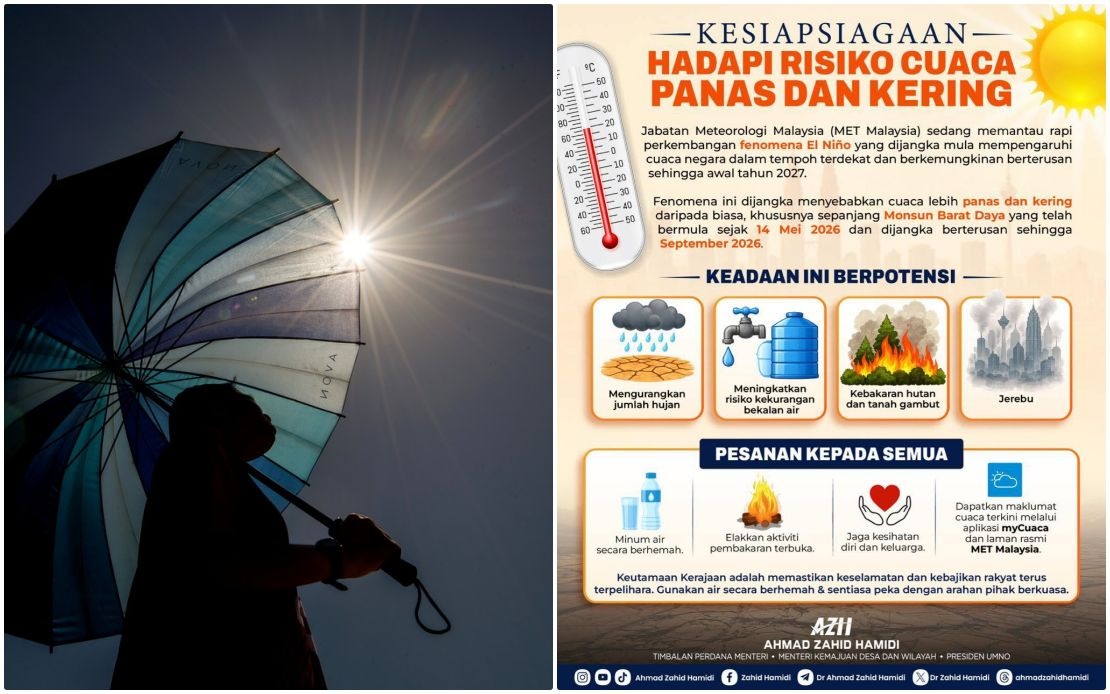
Malaysia faces an extended period of abnormally hot and dry weather as the El Niño phenomenon takes hold, Deputy Prime Minister Datuk Seri Dr Ahmad Zahid Hamidi warned on Thursday, urging citizens to adopt water conservation measures and heightened vigilance against fire hazards. Speaking in his capacity as chairman of the Central Disaster Management Committee, Ahmad Zahid indicated that the climatic shift is expected to persist until early 2027, fundamentally altering weather patterns across the nation during the coming months.
The El Niño effect will be particularly pronounced during the Southwest Monsoon season, which commenced on May 14 and will extend through September. This overlap between a traditionally drier monsoon period and the global El Niño pattern creates a compounded risk environment. The phenomenon typically suppresses rainfall across Southeast Asia, and the convergence with seasonal weather cycles means certain regions of Malaysia could experience significantly reduced precipitation compared to historical averages.
Ahmad Zahid articulated several cascading risks associated with the anticipated weather shift. Diminished rainfall in multiple areas threatens to exacerbate water supply challenges, potentially straining both urban water systems and rural communities already vulnerable to seasonal shortages. The conjunction of elevated temperatures and reduced moisture creates ideal conditions for uncontrolled wildfires, particularly in forested regions and carbon-rich peatlands that are susceptible to ignition and rapid spread. Beyond environmental degradation, such fires generate transboundary haze pollution that degrades air quality across Malaysia and neighbouring countries, creating public health emergencies.
The Deputy Prime Minister emphasised the importance of personal and collective preparedness, calling on Malaysians to exercise restraint in water usage during the drought period. His statement specifically cautioned against open burning activities, a recurring concern in Southeast Asia where agricultural and land-clearing fires frequently spiral beyond intended boundaries, causing regional air quality crises. Ahmad Zahid stressed that vulnerable populations, including the elderly, children, and those with respiratory or cardiovascular conditions, require particular attention during prolonged heat exposure.
MetMalaysia Director-General Dr Mohd Hisham Mohd Anip corroborated the warning in a separate statement, confirming that the meteorological authority expects conditions substantially hotter and drier than typical for the Southwest Monsoon period. The timing presents a critical juncture for Malaysian resource management, as water demand typically peaks during drier months while supply simultaneously diminishes. Urban centres and agricultural regions dependent on seasonal rainfall patterns face potential disruption to normal operations and productivity.
The Malaysian government is positioning itself as an active monitor and coordinator of the response to El Niño impacts. Ahmad Zahid pledged continued surveillance of developing conditions and commitment to implementing protective measures as circumstances warrant. This signals an intention to move beyond advisory statements toward potential policy interventions, though specific measures remained undetailed in his public comments.
Citizens are being directed to the myCuaca mobile application and MetMalaysia's official channels for real-time weather monitoring and updates. This emphasis on citizen engagement with meteorological data reflects a modern approach to disaster risk management, empowering individuals to make informed decisions about daily activities and precautions. Widespread public access to granular weather forecasting enables more targeted responses than centralised directives alone.
The El Niño phenomenon carries significant implications for Malaysia's economic sectors beyond immediate public safety concerns. Agriculture, particularly rice cultivation and palm oil production, depends on predictable rainfall patterns, and prolonged drought threatens crop yields and farmer incomes. The energy sector, where hydroelectric generation contributes substantially to Malaysia's power supply, faces potential reduced output if reservoir levels decline due to suppressed precipitation. These economic ripple effects underscore why the government is mobilising early public communication and preparation initiatives.
Regionally, El Niño-driven drought conditions are expected across Southeast Asia, creating potential competitions for transboundary water resources and shared concerns about fire management. Countries throughout the region experienced severe haze episodes during previous El Niño years, particularly 2015, when air quality reached hazardous levels across multiple nations. This historical precedent lends urgency to current advisory efforts, as policymakers recognise the cross-border nature of environmental and health impacts.
The emphasis on early preparation and "responsible action by all parties" reflects recognition that climate-related risks require coordinated responses spanning government agencies, private sector organisations, and individual households. Ahmad Zahid's framing positions El Niño preparedness as a shared national responsibility rather than solely a governmental function, likely intended to encourage proactive rather than reactive behaviour among the public.
For Malaysian readers, the practical implications are substantial. Households should consider water storage provisions, check air conditioning and cooling systems ahead of peak heat periods, and review emergency supplies. Businesses reliant on water or vulnerable to fire risks should audit operational resilience. Farmers and agricultural operators should assess irrigation infrastructure and crop varieties suited to drier conditions. Health facilities should prepare for increased heat-related illness presentations.
The declaration of El Niño preparedness also signals Malaysia's broader integration into global climate monitoring systems. The ability to anticipate El Niño arrival and duration reflects sophisticated meteorological capabilities and international scientific cooperation. This positions Malaysia alongside other nations in coordinated understanding of planetary climate patterns, though it also highlights vulnerability to global climatic forces beyond individual national control.

