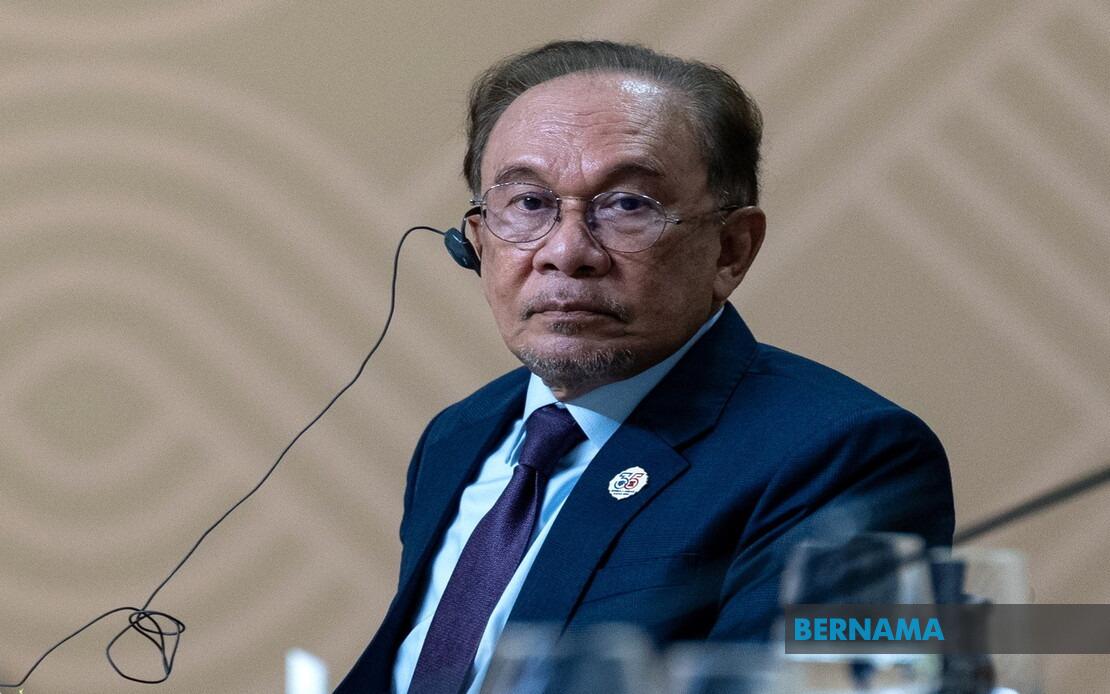
Malaysia has thrown its diplomatic weight behind efforts to broker peace between the United States and Iran, with Prime Minister Datuk Seri Anwar Ibrahim expressing cautious optimism about the trajectory of negotiations aimed at resolving one of West Asia's most intractable conflicts. Speaking during the 35th ASEAN-Russia Commemorative Summit in Kazan on Thursday, Anwar outlined his assessment that a memorandum of understanding between Washington and Tehran could serve as a foundational step toward comprehensive regional stability.
The Malaysian leader's remarks came against the backdrop of intensive diplomatic efforts to conclude a final agreement within a prescribed 60-day window. Although this timeline represents a compressed negotiating period for matters of such geopolitical significance, Anwar framed the deadline as a realistic target rather than an impossible constraint, emphasising the need for international goodwill and sustained commitment from all stakeholders.
Anwar's optimism appears rooted in substantive intelligence rather than mere diplomatic posturing. He drew heavily on direct consultations with Pakistan Prime Minister Shehbaz Sharif, who has emerged as a critical interlocutor in the mediation process. According to Anwar, Sharif has maintained comprehensive involvement throughout the negotiating stages, ensuring transparent communication and depth in discussions that have progressively shifted momentum in a constructive direction.
For Malaysia and the broader ASEAN community, the potential resolution of US-Iran tensions carries substantial implications. The region's maritime trade routes and energy security remain vulnerable to escalations in West Asian conflicts, with any military confrontation threatening to disrupt global shipping lanes and petroleum supplies upon which Southeast Asian economies depend. A durable peace framework would therefore benefit Malaysia's commercial interests and regional stability architecture.
Anwar's engagement with Russian President Vladimir Putin during the Kazan summit reinforced his assessment. The Malaysian Prime Minister noted that Putin similarly conveyed encouraging signals regarding the peace process's trajectory. This convergence of views among major powers—spanning Asia, the Middle East, and Europe—suggests a rare alignment of international diplomatic interests, though Anwar acknowledged that unpredictability inherent in any US administration could still introduce complications.
The inclusion of Donald Trump's administration in the equation introduces a variable that defies simple prediction. Anwar's measured language—acknowledging possibilities without guaranteeing outcomes—reflects the genuine uncertainty surrounding how US policy shifts might affect momentum. Trump's previous withdrawal from the Joint Comprehensive Plan of Action in 2018 remains a cautionary reference point for skeptics, though the current diplomatic initiative appears distinct in its architecture and participant composition.
Pakistan's mediating role deserves particular attention given its geographic positioning and diplomatic relationships across the Muslim-majority world and beyond. Islamabad's willingness to facilitate US-Iran talks represents a significant commitment of political capital, particularly given domestic sensitivities and Pakistan's own complex relationship with Iran across multiple domains. Sharif's reported deep involvement at every negotiating stage suggests serious intent and suggests the parties perceive genuine movement toward compromise positions.
For Malaysia specifically, the statement carries resonance within ASEAN's non-aligned positioning and commitment to conflict resolution through dialogue. Anwar's public backing of these talks aligns with Malaysia's historical diplomatic tradition of supporting multilateral approaches to international disputes. His comments underscore ASEAN's stake in global peace processes, particularly those affecting maritime regions and energy security that directly intersect with member states' prosperity.
The 60-day timeline, while compressed, reflects recognition that extended negotiations risk losing momentum and allowing spoiler elements to reassert influence. This urgency should focus negotiators' attention on substantive compromises rather than procedural minutiae. Whether the period suffices depends substantially on whether the core issues—sanctions relief, nuclear programme limitations, and regional security guarantees—have already moved toward convergence in back-channel discussions.
Anwar's invocation of prayer and collective goodwill, while ceremonial, underscores the gravity his government attaches to the outcome. Malaysia's explicit support for these negotiations positions it as a constructive voice within the global diplomatic community, reinforcing its credentials as a responsible stakeholder in international peace efforts. The country's track record of hosting dialogues and mediating disputes gives credibility to its endorsement.
The broader context involves recognising that persistent US-Iran tension has destabilised multiple dimensions of West Asian affairs, from Yemen's civil conflict to Syria's reconstruction and Lebanon's political fragility. A sustainable rapprochement between Washington and Tehran would not automatically resolve these secondary conflicts but would reduce their intensity and create space for regional actors to pursue parallel settlement processes.
Anwar's comments also signal Malaysia's interest in strengthening relationships with both Russia and Pakistan, reinforcing the country's non-aligned credentials in an era of geopolitical polarisation. By positioning Malaysia within networks of dialogue and mediation, Anwar enhances his government's diplomatic standing internationally while championing approaches that prioritise negotiation over confrontation.
Ultimately, the success or failure of these peace negotiations will reshape regional dynamics for years ahead. Malaysia's open support for the process reflects both enlightened self-interest and principled commitment to multilateral conflict resolution, even as uncertainties surrounding implementation timelines and political will remain substantial.

