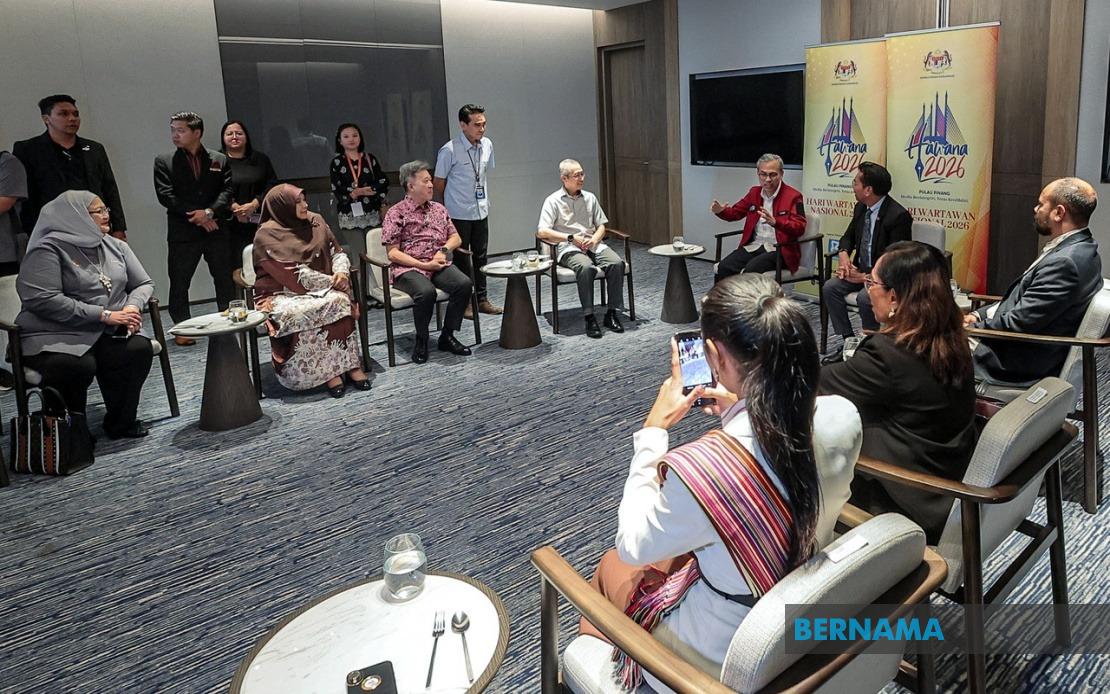
Malaysia is pursuing a strategic expansion of its media and communications ties with Timor-Leste, signalling a broader regional effort to strengthen institutional partnerships and share best practices in journalism standards. The initiative emerged during a meeting between Communications Minister Datuk Fahmi Fadzil and a high-level Timor-Leste delegation led by Secretary of State for Social Communication Expedito Loro Dias Ximenes, held in Butterworth on June 20. The Timor-Leste contingent included Agencia Noticiosa de Timor-Leste (TATOLI) president Noemio Mateus Soares Falcao and deputy president Madalena DE JCP Carlos, underscoring the delegation's focus on advancing bilateral media institutions rather than pursuing purely diplomatic channels.
At the core of Malaysia's proposals lies a framework for deepening professional exchanges and operational cooperation between major Malaysian broadcasting and news organisations and their Timor-Leste equivalents. Fahmi indicated that Bernama, Malaysia's national news agency, alongside Radio Televisyen Malaysia (RTM), would serve as primary vehicles for this collaboration. The minister specifically proposed that the Tun Abdul Razak Broadcasting and Information Institute (IPPTAR), a specialist training facility under the Communications Ministry, organise dedicated capacity-building programmes tailored for Timorese journalists. Such arrangements would enable knowledge transfer on editorial practices, digital newsroom management, and investigative journalism methodologies—areas where Malaysia's longer institutional experience could prove valuable to a nation still consolidating its media infrastructure.
The convergence of Malaysia and Timor-Leste on media cooperation takes on added significance when viewed through the lens of press freedom metrics. During their discussions, Fahmi and Ximenes deliberated on Timor-Leste's standing in the World Press Freedom Index compiled annually by Reporters Without Borders (RSF). Timor-Leste's ranking demonstrates a noteworthy achievement for Southeast Asia: the country currently ranks first within the region and 30th globally out of 180 countries assessed. This ranking positions Timor-Leste ahead of Malaysia, which occupies the second position in Southeast Asia, a distinction that carries implicit acknowledgment of the structural and policy differences between the two nations' media environments.
For Malaysia, this comparison serves as both a reality check and a motivational benchmark. Fahmi acknowledged that while the MADANI Government has secured measurable improvements in Malaysia's press freedom standing over the past three to four years—a trajectory notably steeper than under previous administrations—room remains for further advancement. The minister characterised the gap not as an insurmountable challenge but as an opportunity for recalibrated policy interventions and institutional reforms. His willingness to openly reference Timor-Leste's superior ranking suggests a shift toward greater transparency in addressing media governance weaknesses, a posture that contrasts with historical Malaysian approaches that often deflected international press freedom critiques.
The substantive nature of Malaysia's outreach reflects evolving regional dynamics within Southeast Asia. Timor-Leste, having gained independence only in 2002, has built its media ecosystem with relatively modern legislative frameworks and institutional safeguards that, in several respects, exceed those of longer-established democracies in the region. Its success in maintaining press freedom despite economic constraints and geographic isolation offers practical lessons for Malaysia as it seeks to modernise its own media regulations and journalist protections. Conversely, Malaysia's institutional depth—encompassing established news gathering networks, broadcasting infrastructure, and journalistic talent pools—positions it as a potential strategic partner for Timor-Leste's ongoing media development.
The bilateral engagement also unfolds against the backdrop of the sixth edition of HAWANA, a regional media conference convening approximately 1,000 journalists, media executives, and communications professionals from across Malaysia and beyond. Held at the PICCA Convention Centre @ Butterworth Arena, the 2026 iteration adopts the thematic framework 'Media Integrity Strengthens Credibility,' a messaging choice that directly echoes contemporary global anxieties about misinformation, digital manipulation, and erosion of public trust in news institutions. The timing of the Timor-Leste delegation's participation—with Prime Minister Datuk Seri Anwar Ibrahim scheduled to formally open proceedings—underscores the Malaysian government's investment in positioning itself as a regional convener on media governance questions.
For Malaysian newsrooms and communications professionals, the proposed cooperation framework carries practical implications. Access to IPPTAR training modules could theoretically be reciprocated through exchanges involving Malaysian journalists studying Timor-Leste's regulatory innovations or editorial practices around community accountability. Bernama's expanded partnership with TATOLI might facilitate more robust newswire cooperation, enabling Malaysian outlets to access original reporting from Timor-Leste and vice versa, thereby diversifying sourcing patterns and reducing reliance on Western news agencies for Southeast Asian coverage. RTM's collaboration with Timorese counterparts could yield documentary partnerships, cultural programming, and shared broadcast standards development—areas where operational efficiency and cost-effectiveness often intersect.
The institutional composition of the Malaysian delegation—which included Communications Ministry permanent staff, Bernama's senior leadership, and broadcasting directorate officials—reflects the government's determination to translate ministerial intent into concrete institutional action. The presence of Bernama chairman Datuk Seri Wong Chun Wai and chief executive officer Datin Paduka Nur-ul Afida Kamaludin signalled that proposals would receive immediate departmental prioritisation rather than languishing in bureaucratic channels. This top-level commitment suggests Malaysia views the Timor-Leste partnership as strategically important rather than peripheral.
Broader Southeast Asian implications emerge from Malaysia's courtship of Timor-Leste on media issues. The region's media landscape remains fragmented, with press freedom conditions varying dramatically across the ten ASEAN member states. Malaysia's effort to engage a comparatively higher-ranked regional peer on journalism standards and institutional cooperation could catalyse similar partnerships elsewhere, potentially establishing a counterweight to media globalisation patterns that currently concentrate newsgathering power in Western agencies and a handful of dominant regional players. A stronger network of intra-ASEAN media cooperation might amplify diverse Southeast Asian voices in global news cycles and reduce external editorial gatekeeping.
The coordination of this media initiative with the HAWANA conference demonstrates how Malaysia is leveraging flagship regional events to advance bilateral relationships and policy objectives simultaneously. Rather than treating media cooperation as an isolated diplomatic exercise, the government has embedded bilateral discussions within a broader conversation about journalism quality, institutional integrity, and credibility-building—themes that resonate with both Timorese officials prioritising nation-building and Malaysian stakeholders concerned about the sector's reputational standing. This integrated approach suggests more sophisticated diplomacy around media governance than has historically characterised ASEAN engagement on communication issues.

