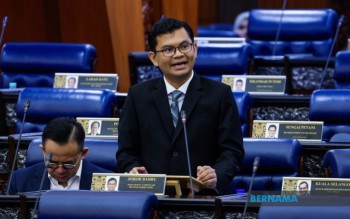
The Malaysian government is running at full throttle to shield its economy from the cascading effects of global supply chain disruptions, having activated a comprehensive 120-point action plan overseen by the National Economic Action Council (MTEN). In a parliamentary briefing on June 29, Economy Minister Akmal Nasrullah Mohd Nasir revealed that while 27 of these decisions have reached full implementation status, the remaining 93 are currently in execution phases, demonstrating sustained governmental engagement with a crisis that shows no signs of rapid resolution.
The breadth of this interventionist approach reflects recognition that supply chain instability has become a structural feature of the global economic landscape rather than a temporary shock. The measures target immediate relief for vulnerable segments—households facing higher living costs and micro, small and medium enterprises (MSMEs) struggling with input price inflation—while simultaneously protecting critical supply lines for essential commodities. This dual focus acknowledges that supply crises inflict damage through multiple channels: consumer hardship from price pressures, business failure from margin compression, and systemic fragility if key goods become scarce.
The minister's framing of government intervention as "closely monitored" signals an important shift in policy philosophy. Rather than ad hoc responses or temporary price controls, Malaysia is adopting what amounts to a seated warfare position—maintaining vigilance and readiness while accepting that the crisis will not abate quickly. This realistic posture contrasts sharply with either denial or panic, positioning the government as a steady steward capable of managing prolonged uncertainty without careening between extremes.
Globally, energy markets represent the most consequential wildcard. Akmal Nasrullah projected gradual stabilization beginning in the third quarter of 2026, yet immediately qualified this with a critical caveat: geopolitical stability and normalised trade routes must cooperate with market forces for this timeline to hold. The implicit acknowledgement here is sobering—energy price volatility will likely persist for another one to two years, a horizon extending well beyond typical business planning cycles. For Malaysia, an energy-importing nation with significant petroleum refining and petrochemical sectors, this extended uncertainty creates planning nightmares for both private industry and the government's own fiscal position.
The supply crisis presents peculiar challenges for Malaysian policymakers because the country occupies an unusual position in global value chains. As a manufacturing and commodities exporter dependent on imported energy and raw materials, Malaysia faces pressure from both sides—foreign demand softening due to global slowdowns, while input costs remain elevated. MSMEs, which account for a disproportionate share of Malaysian employment and entrepreneurship, are particularly exposed to this squeeze, lacking the scale to absorb cost shocks or diversify supply sources that larger corporations might access.
The government's commitment to continuous engagement throughout the recovery period, rather than waiting for complete resolution, reveals pragmatism born from experience. Previous crises demonstrated that delayed intervention allows cumulative damage to build—business closures, job losses, and erosion of household savings compound if emergency measures come only after conditions deteriorate significantly. By maintaining active MTEN coordination and monitoring, the administration is attempting to flatten the damage curve rather than allowing supply disruptions to cascade into broader economic dysfunction.
Transparency about information sharing represents another notable dimension. The minister's pledge to provide regular, accurate updates to the public addresses a governance challenge that often accompanies crisis management: rumour, speculation, and panic can worsen outcomes if official silence creates an information vacuum. In the Malaysian context, where social media amplifies economic anxiety rapidly and opposition politicians weaponize supply concerns, proactive communication serves both reassurance and political legitimacy functions.
The invocation of multi-stakeholder cooperation underscores that government tools alone cannot resolve supply crises rooted in global dynamics beyond Kuala Lumpur's control. Port operators, logistics firms, retailers, manufacturers, and labour organisations all possess agency in how supply disruptions propagate through the economy. Voluntary compliance with price discipline, efficient distribution practices, and restraint in wage demands during inflation can collectively reduce crisis damage—though such cooperation remains elusive when different groups face divergent incentives.
For ordinary Malaysians watching prices climb at the petrol pump and supermarket checkout, the government's 120-point plan offers limited immediate comfort; most measures work through indirect channels or target specific sectors rather than providing direct relief. The political vulnerability here is substantial—if inflation persists and real wages decline despite official assurances, public patience erodes regardless of technical competence in crisis management. The minister's emphasis on vigilance without panic, realism without defensiveness, appears designed partly to manage expectations and partly to project confidence that Malaysia possesses the institutional capacity to navigate prolonged turbulence.
Regionally, Malaysia's experience carries relevance for neighbouring Southeast Asian economies facing similar supply headwinds. The MTEN framework and structured monitoring approach offer a model that emphasises coordination over ad hoc measures, though implementation success ultimately depends on political will, bureaucratic capacity, and sufficient fiscal space to absorb intervention costs. Thailand, Vietnam, and Indonesia all grapple with comparable supply vulnerabilities, suggesting that Malaysia's response—neither minimizing nor catastrophizing—may presage broader regional policy convergence around managed adaptation.
The fundamental tension embedded in the government's position remains unresolved: how long can a state sustain intensive interventionist measures before fiscal constraints or inflation generated by stimulus itself becomes more damaging than the original supply crisis? The projection of gradual energy market stabilization from late 2026 onward provides a notional endpoint for the emergency posture, yet geopolitical risks—Middle Eastern tensions, Taiwan strait instability, Russian sanctions—could easily extend timelines. Malaysia's ability to maintain this balanced approach through 2026 and beyond will test both its economic resilience and the patience of voters confronted with the grinding reality of persistent price pressures.

