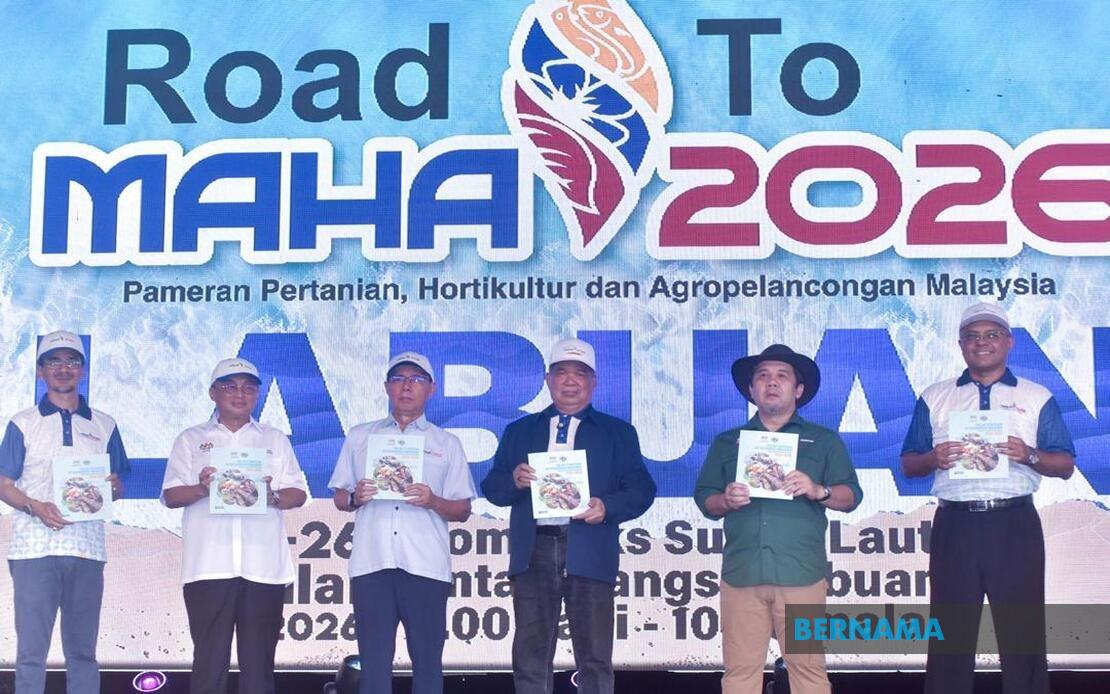
The inaugural Road to MAHA Labuan 2026 has already carved out a significant success story, attracting 30,837 visitors during its opening weekend and generating nearly RM800,000 in sales—a performance that exceeded initial projections and signalled robust appetite among Malaysian consumers for agricultural products and agro-entrepreneurial ventures. Held from July 23-26, the five-day showcase has demonstrated that Labuan's unique positioning as a duty-free island combined with its strategic location in East Malaysia creates a compelling draw for both regional and peninsular participants seeking to expand their agricultural and food security presence.
The Department of Federal Territories' secretariat attributed the overwhelming response to mounting public consciousness around food security, sustainable agriculture and the entrepreneurial opportunities embedded within the broader agro-economy. By capturing nearly half of its RM1.6 million sales target within merely two days, MAHA Labuan has validated organisational confidence that the event could serve as a meaningful platform for knowledge exchange and commercial transactions across the sector. This trajectory suggests that final tallies could substantially exceed expectations should visitor momentum persist through the weekend programming.
Participation in the event reflects agricultural diversity across the nation. A total of 184 agro-entrepreneurs have registered to participate, with 117 hailing from within Labuan itself, demonstrating robust local engagement, while others have travelled from Sabah, Sarawak, Johor and Perak. This geographical spread underscores how a regionally positioned event can galvanise producers across multiple states and territories, creating networking opportunities that typically remain fragmented in conventional domestic agricultural forums. The breadth of exhibitor origin strengthens the event's credibility as a genuinely national showcase rather than a localised promotion.
The product offering spans comprehensive agricultural coverage, encompassing traditional livestock exhibitions featuring cattle and goats supplied by Sita Farm—attractions that have proven particularly popular with visiting families and professional farmers alike. Beyond livestock, participating entrepreneurs have brought forth processed food items, value-added agricultural products, and emerging agro-based innovations, reflecting the sector's gradual shift toward higher-margin, consumer-oriented offerings. This merchandising diversity appeals to multiple consumer segments, from hobbyist smallholders to commercial procurement officers seeking new suppliers.
Organisationally, MAHA Labuan represents collaborative governance spanning the Ministry of Agriculture and Food Security, the Department of Federal Territories, and Labuan Corporation—a tripartite structure that pools regulatory oversight, federal territorial administration and local economic development expertise. Such institutional alignment suggests long-term commitment to institutionalising the event, potentially establishing it as an annual fixture within Malaysia's agricultural calendar. For Malaysian policymakers monitoring agro-entrepreneurship metrics, this partnership model demonstrates how federal coordination can effectively translate strategic priorities into tangible commercial events.
Beyond immediate transaction values, MAHA Labuan's economic footprint extends considerably into the local economy through indirect spending channels. The Department of Federal Territories estimates that approximately 20 per cent of visitor expenditure flows toward accommodation providers, transportation operators, food and beverage vendors, and allied supply-chain businesses. These multiplier effects—often overlooked in simplified sales tallies—represent the genuine economic stimulus that large-scale events generate within smaller, island-based economies like Labuan. For accommodation operators and service providers facing seasonal volatility, such events provide material revenue injections during traditionally quieter periods.
From a policy perspective, MAHA Labuan's strong performance carries implications for broader Malaysian agricultural strategy. Food security has emerged as a recurrent theme in national discourse, particularly as climate volatility and geopolitical supply-chain disruptions complicate import dependency. By creating platforms where domestic producers can directly access consumers and facilitate bulk transactions, events such as MAHA Labuan reduce intermediary layers and reinforce direct-to-consumer marketing competencies among smallholders and established entrepreneurs. This demystifies export and inter-regional trade processes for agricultural microenterprises that might otherwise lack confidence or networks to expand beyond local markets.
Labuan's distinctive status as a duty-free zone adds nuance to the event's appeal. Visitors may leverage the transaction environment for advantageous pricing on imported agricultural inputs, while locally produced goods gain competitive shelf-space prominence. This intersecting dynamic—combining duty-free procurement advantages with domestic agricultural promotion—creates value propositions unavailable in peninsular venues, potentially explaining why organisers attracted participants from geographically dispersed origins willing to commit resources and logistics to attend.
The event's scheduling during late July positions it strategically ahead of traditional agricultural purchasing cycles associated with upcoming harvest seasons and year-end consumer demand. Farmers and agribusiness operators can assess market appetite, negotiate supply contracts, and validate product-market fit before committing to expanded production runs. Similarly, retailers and food service operators can lock in supplier relationships at an early stage, ensuring supply continuity throughout peak demand periods. This temporal positioning thus serves both supply-side validation and demand-side procurement purposes.
Looking forward, MAHA Labuan's inaugural success establishes a strong foundation for institutional expansion. Organisers now possess concrete attendance and sales data enabling more sophisticated forecasting, targeted marketing refinement, and exhibitor recruitment strategies for subsequent iterations. The geographic distribution of current participants suggests that the event's reputation is already circulating through agricultural networks; word-of-mouth endorsement from successful first-time exhibitors typically generates exponential participation increases in year-two programming. For Malaysian agricultural stakeholders monitoring sector health, MAHA Labuan represents an emerging barometer of agro-entrepreneurial vitality and consumer engagement across the nation's eastern flank.
Within the broader Southeast Asian context, MAHA Labuan also positions Malaysia as a credible organiser of agricultural commerce platforms. Regional agricultural producers and technology providers increasingly seek market access across diverse ecosystems; events like MAHA Labuan signal Malaysia's institutional capacity to host large-scale sectoral gatherings with measurable commercial outcomes. As regional trade increasingly prioritises food security and localised agricultural resilience, Malaysia's demonstrable ability to facilitate such exchanges enhances diplomatic soft power while advancing tangible commercial objectives that benefit domestic farmers and entrepreneurs.

