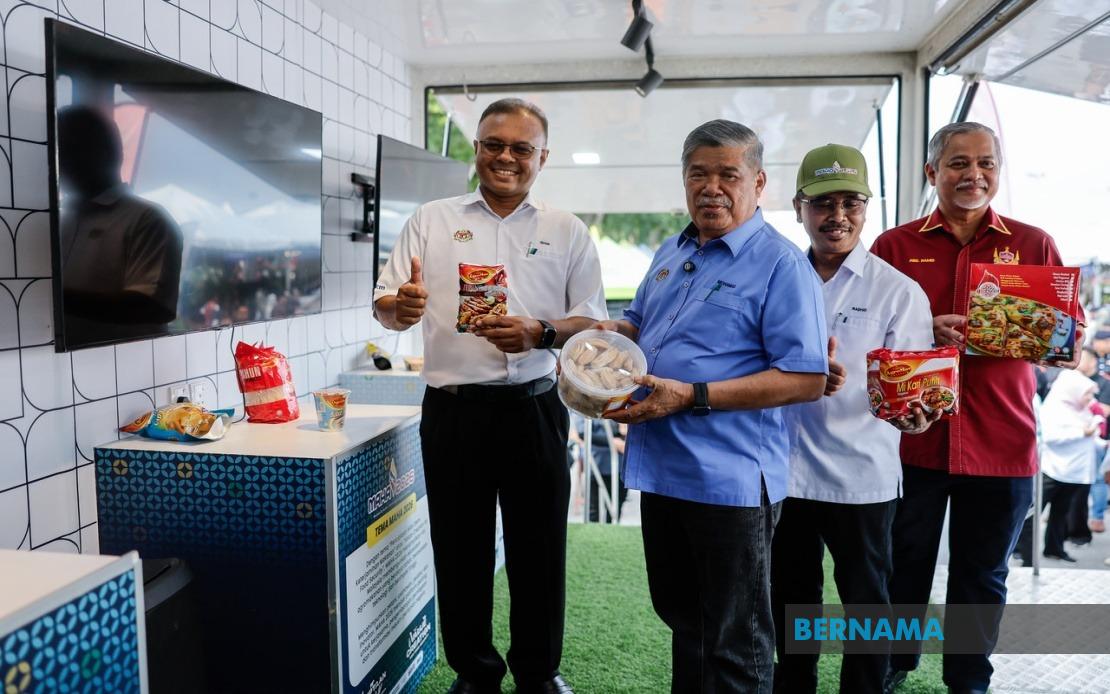
Malaysia's premier agricultural showcase, the Malaysia Agriculture, Horticulture and Agrotourism Show (MAHA) 2026, is poised to break new ground by incorporating international exhibitors into its format for the inaugural time, according to Agriculture and Food Security Minister Datuk Seri Mohamad Sabu. The minister's announcement during the Central Zone's Road to MAHA 2026 programme in Shah Alam signals a strategic shift in the biennial event's structure, designed to elevate the platform's standing within the global agricultural community while delivering tangible benefits to domestic stakeholders.
Countries already confirming their participation encompass Brazil, China, the United States, Japan, South Korea, and Hungary, alongside China's Guangxi region—a geographic and economic powerhouse in agricultural production. Additional confirmations are anticipated, with Uzbekistan indicating serious interest in joining the roster. This expanding roster underscores MAHA 2026's growing significance as a hub for agricultural exchange within the Asia-Pacific region and beyond, reflecting Malaysia's positioning as a credible convener of food security dialogues.
The inclusion of foreign exhibitors represents more than ceremonial international goodwill; it addresses a fundamental reality of contemporary food systems. Mohamad emphasised that food security transcends national boundaries, emphasising that no single country possesses complete autonomy over its nutritional challenges. When agricultural crises or disruptions strike one nation, others inevitably extend assistance and fill supply gaps. This interdependence makes knowledge-sharing and direct commercial relationships between different agricultural sectors essential for regional stability and resilience.
For Malaysian farmers, processors, exporters, and agribusiness entrepreneurs, the event promises expanded horizons. Direct exposure to foreign agricultural technologies, cultivation methods, and market practices will enable local participants to benchmark their operations against international standards. The biennial format means that businesses missing previous editions can strategically position themselves to capitalise on MAHA 2026's enhanced scope, whether through identifying new suppliers, technology partners, or distribution channels.
According to Agriculture and Food Security Ministry secretary-general Datuk Isham Ishak, the international participation will facilitate structured business matching sessions—a critical mechanism for converting attendee interest into concrete commercial transactions. These curated networking opportunities allow exhibitors and visitors to conduct preliminary due diligence, negotiate terms, and potentially conclude purchase or sales agreements within the controlled environment of the event. For Malaysian agricultural stakeholders seeking to access foreign inputs, equipment, or expertise, such sessions reduce transaction costs and information asymmetries.
The event's architecture accommodates bidirectional commerce: Malaysian producers can showcase their products to international buyers, while also sourcing agricultural goods, technology, and services from foreign counterparts. This two-way flow incentivises both local and international participation, creating a self-reinforcing cycle of engagement. Visitors—whether retail farmers, industrial buyers, or government procurement officials—gain access to a curated selection of both domestic and imported offerings in a single venue.
Concurrently, the government has unveiled the Surveillance and Intervention Supply Demand Agrofood (SISDA) system, a technologically sophisticated tool aimed at modernising Malaysia's food supply governance. SISDA harnesses big data analytics, machine learning algorithms, and predictive early warning mechanisms to enable proactive rather than reactive policy responses. By continuously monitoring supply conditions, demand fluctuations, and price movements across the agricultural value chain, the system equips policymakers with the intelligence needed to maintain consumer affordability whilst ensuring sustainable margins for producers.
The timing of SISDA's launch alongside MAHA 2026's expansion reflects a coherent policy vision: international collaboration and domestic institutional strengthening advancing in tandem. Enhanced visibility into supply and demand dynamics permits targeted interventions that prevent price spikes driven by temporary shortages, thereby protecting household food budgets whilst maintaining producer confidence. For Malaysia's agricultural sector—which operates within the constraints of limited arable land, dependence on imports for several commodity categories, and exposure to climate variability—such predictive capability offers strategic advantage.
The strategic implications for Malaysian agriculture are substantive. Import dependence for key food categories renders the nation vulnerable to external supply shocks, price volatility, and geopolitical disruptions. Establishing deeper connections with international agricultural sources through MAHA 2026 diversifies supply relationships and reduces over-reliance on any single trading partner. Simultaneously, enabling local exporters to access international markets strengthens the agricultural sector's export revenue potential, offsetting structural import deficits.
For Southeast Asian neighbours, Malaysia's openness to international agricultural exchange sets a precedent for regional cooperation on food security. As climate change intensifies agricultural unpredictability across tropical and subtropical zones, platforms facilitating rapid knowledge transfer and supply chain diversification become increasingly valuable. MAHA 2026 positions Malaysia as a collaborative node within broader regional and global food networks rather than as an isolated domestic market.
The practical impact on Malaysian consumers may manifest through improved price stability and product variety. Enhanced supply chain transparency via SISDA reduces hoarding and speculative behaviour, whilst international sourcing options provide competition that moderates domestic prices. Simultaneously, farmers gain access to premium export markets and higher-value agricultural inputs, creating upward pressure on rural incomes.
Looking forward, MAHA 2026 represents a milestone in Malaysia's agricultural development trajectory. The integration of international exhibitors signals confidence in the nation's capacity to facilitate meaningful cross-border agricultural exchange. Whether this inaugural expansion becomes a permanent feature depends partly on the outcomes—the volume of business contracts concluded, the quality of technology transfers achieved, and the satisfaction levels among both domestic and international participants. Early success could position subsequent MAHA editions as anchor events for agricultural cooperation across Asia and beyond.

