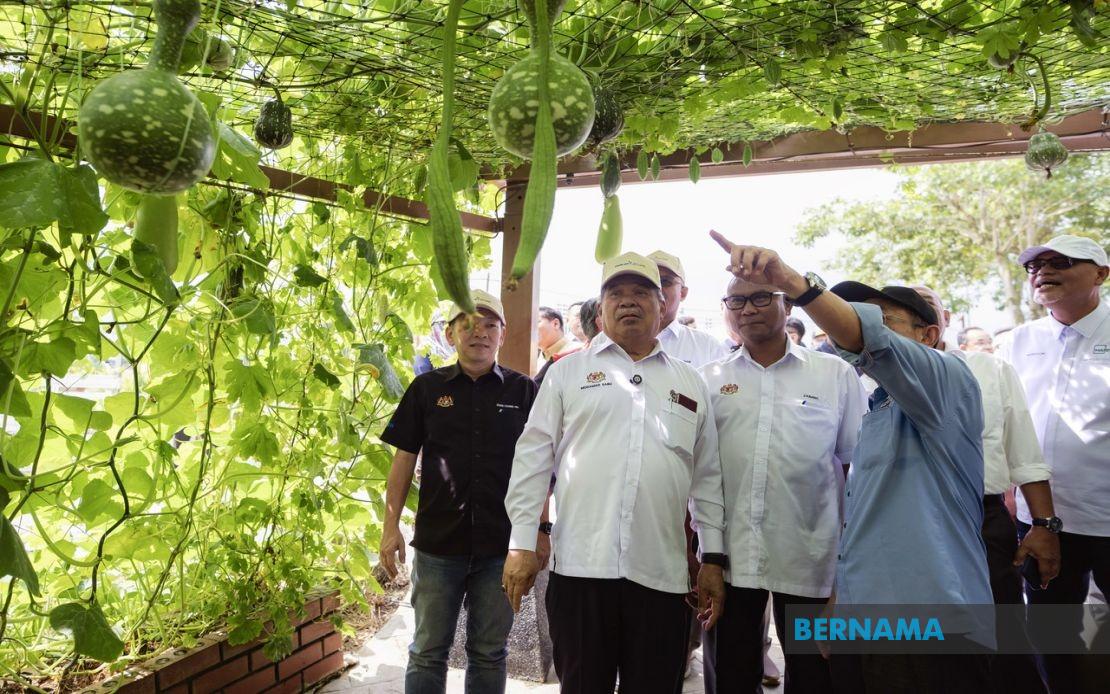
The Malaysia Agriculture, Horticulture and Agrotourism Exhibition (MAHA) 2026 is on track to open its doors on August 28, with Agriculture and Food Security Minister Datuk Seri Mohamad Sabu confirming that preparations have reached 80 per cent completion and will be fully ready by August 27. Speaking during an inspection of the venue at Malaysia Agro Exposition Park Serdang (MAEPS) on August 19, Mohamad indicated that the core infrastructure has been substantially delivered, leaving only finishing touches and installation work at individual exhibition spaces. The minister's optimism reflects careful coordination between government agencies and private sector partners working to deliver what is poised to become one of Southeast Asia's premier agricultural showcases.
The 10-day exhibition, running through September 6, centres on the theme 'Penciptaan Nilai Demi Keterjaminan Makanan' (value creation for food security), marking a deliberate pivot toward modernising Malaysia's agricultural sector through adoption of cutting-edge technologies and innovation practices. Mohamad will inaugurate proceedings on the opening day, while Prime Minister Datuk Seri Anwar Ibrahim will preside over the closing ceremony, underscoring the government's commitment to positioning agriculture as a strategic economic pillar. This high-level involvement signals recognition that the sector requires sustained attention and investment to meet future food security challenges amid changing climate patterns and rising global competition.
A significant focus of MAHA 2026 involves showcasing advanced mechanisation and automation technologies that are already transforming agricultural practices in developed economies. The exhibition will feature modern farming machinery alongside autonomous vehicles and an expanding array of drone applications, including their deployment in paddy, pineapple, and melon cultivation. By providing Malaysian farmers and agricultural entrepreneurs with direct exposure to these innovations, the exhibition aims to accelerate technology adoption and close the productivity gap between domestic operations and highly mechanised systems observed in countries such as China and the Netherlands. This benchmark approach acknowledges that technological parity is increasingly essential for maintaining competitiveness in global agricultural markets.
Beyond machinery and automation, the exhibition emphasises value chain development—a critical concept for transforming Malaysia's agricultural sector from a primary commodity producer into a higher-margin value-added economy. Mohamad highlighted how raw materials such as milk, pineapple, and cassava possess considerable downstream potential, capable of being converted into dozens of refined products that command premium pricing. By encouraging farmers and livestock breeders to move beyond production into processing and product development, the government seeks to create entry points for local entrepreneurs and retain greater profit margins domestically. This vertical integration approach addresses a persistent challenge in Malaysian agriculture, where producers often capture only a fraction of the final retail value.
Recognising that agriculture extends beyond commercial enterprise into cultural and social dimensions, MAHA 2026 dedicates significant space to Perkampungan Abang Mat, a cultural village showcasing 'rewang' (traditional communal cooking), food heritage, and indigenous cuisine throughout the exhibition period. Daily programming will rotate different activities to maintain visitor interest and educational value, particularly appealing to families seeking relaxation alongside learning experiences. Traditional games such as congkak will feature prominently, offering senior visitors opportunities for leisure and nostalgia while introducing younger generations to Malaysia's cultural traditions. This cultural component transforms MAHA from a purely commercial event into a celebration of agricultural identity and heritage.
Family-oriented attractions and gaming elements have been woven throughout the exhibition experience, with organisers arranging daily lucky draws to sustain visitor engagement across the 10-day run. Prize offerings are substantial, including two motorcycles daily (totalling 20 units across the period) along with electrical appliances as consolation prizes, creating genuine incentive for repeat visits. This strategy acknowledges that exhibition attendance in Malaysia benefits significantly from entertainment value and tangible rewards, particularly among families and younger demographics who might otherwise view agricultural exhibitions as niche events. The extensive prize programme represents substantial investment in visitor experience quality.
Projections indicate MAHA 2026 will attract more than four million visitors whilst assembling approximately 2,000 exhibitors sourced from Malaysian and international participants spanning 14 countries. Kenya's participation marks a debut pavilion presence at MAHA, symbolising expanding international recognition of the exhibition's significance as a regional agricultural platform. International participation creates bilateral opportunities for technology demonstration and cooperation exploration, potentially facilitating knowledge transfer and commercial partnerships between Malaysian agricultural stakeholders and overseas counterparts. This diplomatic dimension elevates MAHA beyond a domestic trade event into a regional economic engagement forum.
Youth engagement represents another strategic priority, with exhibition organisers targeting approximately 800,000 young Malaysians through programming focused on automation, technology, and agricultural modernisation. The ministry is actively pursuing approval from the Education Ministry to integrate MAHA activities into school co-curricular programmes, potentially exposing students to career pathways in agritech and modern farming before they complete secondary education. This educational initiative addresses a longstanding challenge in Malaysian agriculture: attracting young talent to a sector often perceived as low-tech, low-income, and lacking appeal compared to urban professional employment. By showcasing innovation-driven opportunities, the exhibition may reshape perceptions and cultivate the next generation of progressive agricultural entrepreneurs.
The timing of MAHA 2026 coincides with increasing recognition that food security and agricultural sustainability represent critical national concerns amid global supply chain uncertainties and climate volatility. Malaysia's geographic position and agro-climatic diversity position it advantageously for developing resilient, high-productivity agricultural systems capable of supplying regional food demand. The exhibition's emphasis on modernisation and value creation directly supports government objectives to enhance self-sufficiency in key commodities whilst creating employment opportunities across rural Malaysia. By providing a platform where technology providers, agricultural producers, entrepreneurs, and consumers converge, MAHA 2026 facilitates the ecosystem interactions necessary for systemic agricultural transformation.

