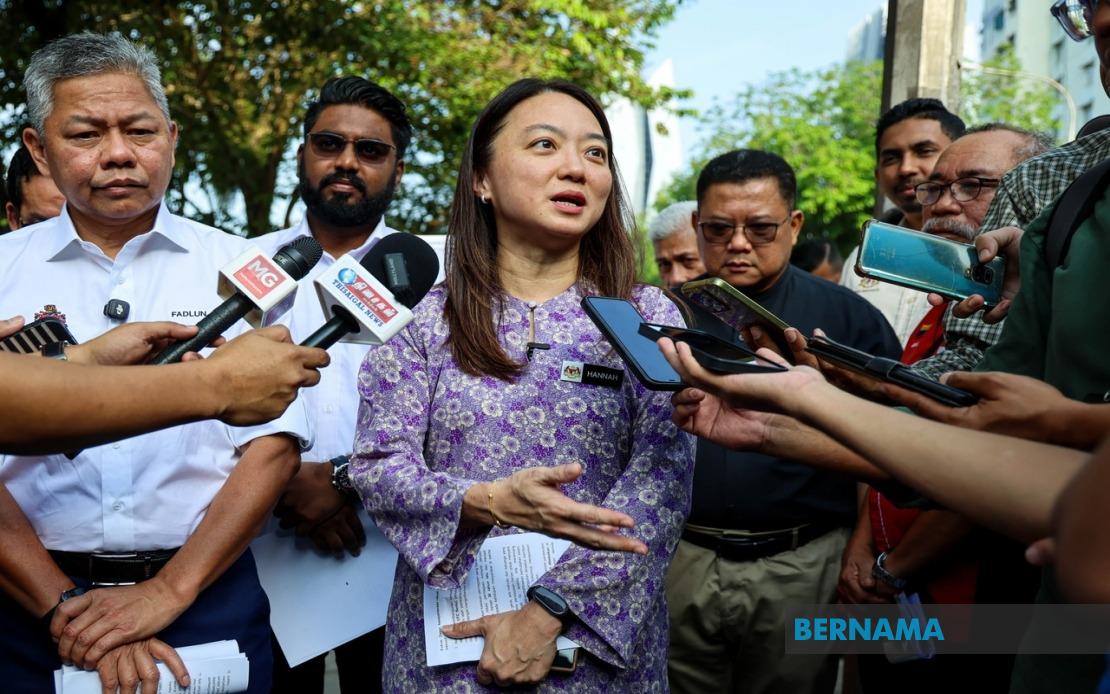
Malaysia's local authorities must shift from reactive to preventive maintenance practices, according to Federal Territories Minister Hannah Yeoh, who issued a pointed reminder that basic upkeep of public facilities should never become a casualty of bureaucratic inertia. Speaking after inspecting a hawker facilities project near the Urban Transformation Centre in Sentul, Yeoh stressed that cleanliness and safety represent non-negotiable baseline standards that demand continuous attention, particularly in high-profile destinations like Putrajaya that regularly attract both domestic and international visitors.
The minister's comments came in response to mounting complaints circulating on social media regarding deteriorating conditions at public amenities in Putrajaya, including reports of malfunctioning lifts and escalators. Rather than framing these incidents as isolated lapses, Yeoh positioned them as symptomatic of a broader systemic issue wherein local authorities have grown dependent on viral social media exposure to trigger maintenance responses. This reactive posture, she argued, undermines public confidence and damages Malaysia's image as a well-managed tourism destination.
Yeoh acknowledged that transformative infrastructure upgrades often require substantial capital investment and lengthy planning cycles, factors that legitimately constrain rapid implementation. However, she drew a critical distinction between large-scale capital projects and routine maintenance tasks, asserting that the latter category cannot be exempted from budget constraints or staffing limitations. Routine upkeep, she contended, demands nothing more than disciplined operational discipline and the political will to allocate resources appropriately. The absence of such commitment constitutes an unacceptable default.
Recognising Putrajaya's particular status as both Malaysia's federal administrative centre and premier tourism attraction, Yeoh highlighted the reputational stakes at play. When visitors encounter broken public facilities or visible neglect in high-profile venues, the experience sends signals about governance standards that extend beyond individual incidents. The Putrajaya Corporation leadership, she noted, had already mobilised repair efforts following media attention, but this pattern of belated response rather than anticipatory maintenance remains problematic. Future maintenance strategies must invert this sequence entirely.
To operationalise this shift, Yeoh called upon all local authorities to intensify the frequency of site inspections and ground-level monitoring. Regular visits by management personnel would theoretically enable early detection of emerging problems before they deteriorate sufficiently to generate public complaints. This preventive surveillance approach, combined with streamlined maintenance protocols, could dramatically reduce the lag between problem identification and resolution. The minister positioned such initiatives as fundamental management practice rather than exceptional measures.
Her ministry has already engaged with Putrajaya Corporation's management to coordinate repair operations, demonstrating the government's commitment to translating rhetoric into tangible action. However, such interventions, Yeoh made clear, should represent occasional course corrections rather than routine patterns. The responsibility for maintaining facilities rests primarily with individual local authorities, each of whom must develop organisational cultures prioritising proactive stewardship over crisis management.
Yeoh also directed attention toward the role of social media users in the feedback ecosystem, advocating for greater circumspection before amplifying complaints through online channels. In an era where anyone with a smartphone effectively functions as a media distributor, she cautioned that individual videos frequently capture only narrow slices of context, potentially misrepresenting broader situations. A malfunctioning escalator captured on a twenty-second clip may omit crucial information about ongoing repairs, pending maintenance schedules, or complicating technical factors that explain apparent neglect.
This dimension of Yeoh's remarks touches on fundamental questions about verification and perspective in digital information environments. While social media clearly serves valuable accountability functions by highlighting genuine problems that might otherwise remain obscured, the mechanism can also amplify incomplete narratives that distort public understanding. The minister advocated for digital literacy that encourages users to seek multiple perspectives and contextual details before transforming individual incidents into trending topics. Such restraint, she suggested, protects both institutional credibility and the integrity of the feedback mechanisms themselves.
The tension Yeoh articulated—between legitimate public demands for accountability and the risk of oversimplification through viral content—reflects broader governance challenges throughout Southeast Asia. As digital connectivity expands rapidly across the region, local authorities across Malaysia, Singapore, Thailand, and Indonesia confront similar pressures to respond to social media-amplified grievances. The optimal equilibrium requires local authorities that preempt such escalation through rigorous maintenance standards, while simultaneously enabling constructive public feedback mechanisms that encourage evidence-based criticism rather than performative outrage.
For Malaysian local authorities wrestling with budget constraints and competing priorities, Yeoh's message crystallises an uncomfortable reality: basic facility maintenance cannot be perpetually deferred or treated as discretionary. When tourism hubs and federal administrative centres display visible infrastructure deterioration, the consequences extend beyond individual user inconvenience. Such conditions undermine Malaysia's positioning as a professionally managed destination capable of delivering world-class public amenities. By demanding that PBTs internalize maintenance responsibilities rather than reacting to social media pressure, Yeoh has identified a necessary precondition for sustainable urban governance throughout the country.
Implementing such changes requires shifting institutional mindsets and allocating dedicated resources toward preventive maintenance frameworks. Rather than approaching facility upkeep as an afterthought within larger operational budgets, local authorities must reconceptualise it as a foundational investment in public trust and destination reputation. The minister's call for increased site visits by management personnel represents one practical mechanism, but success ultimately depends on whether PBTs genuinely embrace ownership of this responsibility. The coming months will demonstrate whether Malaysian local authorities can transform Yeoh's exhortation into sustained operational practice or whether reactive patterns, triggered by viral complaints, will continue dominating maintenance cycles.