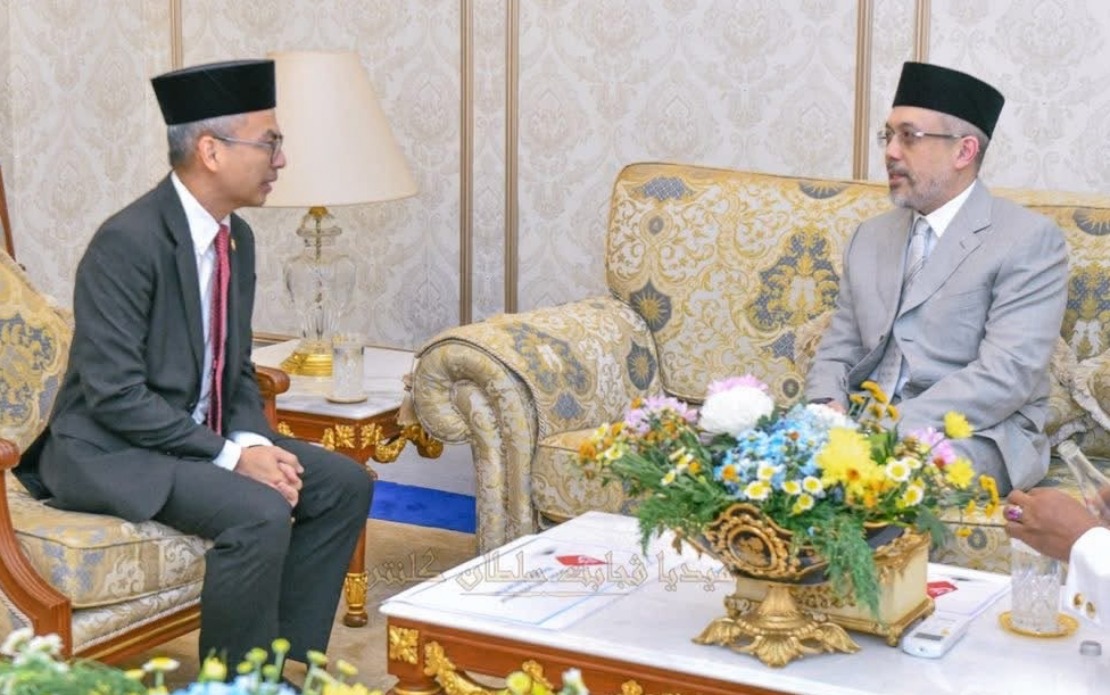
The Crown Prince of Kelantan, Tengku Muhammad Fakhry Petra, hosted Communications Minister Datuk Fahmi Fadzil at Kota Lama Palace in Kota Bharu on June 17, underscoring the government's commitment to addressing the growing menace of fraudulent social media accounts and associated disinformation. The formal audience, which commenced at 5 pm, provided a platform for high-level dialogue between the palace and the ministry responsible for overseeing Malaysia's digital communications landscape.
According to a statement from the Kelantan Sultan's Media Office, the meeting aimed to apprise the Crown Prince of recent developments and findings within the Communications Ministry's remit. This framing suggests that palace officials sought direct engagement with the ministry to understand the government's strategies for combating digital threats, particularly those targeting royal institutions. Such audiences reflect the traditional role of the Malaysian monarchy in receiving briefings on matters of national significance, demonstrating an institutional commitment to being informed about contemporary challenges.
Among the substantive issues tabled during the approximately one-hour session were escalating concerns regarding the proliferation of fake accounts on social media platforms. The discussion explicitly centred on how these fraudulent accounts facilitate the dissemination of false information and derogatory content about the Malaysian Royal Institution. This represents a critical flashpoint in Malaysia's digital governance agenda, as misinformation targeting the monarchy has become an increasingly sophisticated and persistent problem requiring coordinated government response.
The prevalence of fake accounts represents a multifaceted challenge for Malaysian authorities. These accounts often employ automated systems, stolen identities, and coordinated networks to amplify false narratives with alarming speed. For a constitutional monarchy like Malaysia, where respect for royal institutions forms a cornerstone of the nation's social contract, such attacks are viewed as threats extending beyond mere digital annoyance to matters of constitutional and cultural significance. The meeting's focus on this issue underscores recognition at senior governmental levels that traditional regulatory approaches may prove inadequate without palace-level awareness and support.
The Communications Ministry's engagement with the Kelantan palace reflects a broader pattern of institutional coordination in addressing digital governance challenges. By briefing the Crown Prince directly, Minister Fahmi signalled that the ministry regards this issue as sufficiently grave to warrant personal attention from senior royal figures. This approach demonstrates how Malaysia's governance structures integrate traditional monarchical consultation with contemporary regulatory challenges, creating pathways for the palace to influence policy direction on matters affecting royal dignity and institutional integrity.
Fahmi presented the Crown Prince with a commemorative gift during the audience, a diplomatic gesture reinforcing the respect accorded to the Kelantan royal household and the importance placed on the meeting itself. The presentation of such tokens is customary in Malaysian palace audiences, signifying formal recognition of the interaction and mutual regard between government officials and royal personages. This ceremonial dimension, while seemingly ceremonial, carries significance in Malaysia's formal governance culture.
The minister's delegation included MohamadAsif Afifi Mohd Yusof, his Senior Private Secretary, and Ahmad Afifi Hamdan Tuan Aziz, his accompanying officer, alongside officials from the Communications Ministry. This composition reflected the formal nature of the engagement, with the inclusion of senior staff suggesting that substantive policy discussions, rather than mere courtesy calls, dominated the agenda. The Communications Ministry's decision to bring key personnel indicated preparedness for detailed technical and policy discussions regarding social media regulation and digital security.
Kelantan palace officials also participated actively, with senior representatives from the Sultan's Office attending the session. This joint engagement demonstrated institutional cooperation between federal and state-level authorities in addressing what both recognised as a pressing challenge. The involvement of palace-level officials signified that the Kelantan monarchy regarded fake account proliferation as a matter requiring senior-level institutional response, potentially indicative of specific incidents or concerns affecting the state's royal household.
The meeting concluded with informal socialisation, including a photo session and meet-and-greet interactions between the invited guests and palace officials. This less formal segment provided opportunity for relationship-building between Communications Ministry staff and palace representatives, potentially establishing connections that could facilitate future coordination on digital governance matters. Such informal elements often prove as consequential as formal discussions in Malaysian institutional contexts, where personal relationships frequently underpin effective policy implementation.
The timing and nature of this audience reflect Malaysia's ongoing grappling with digital governance in an era of increasingly sophisticated information warfare. As fake accounts and coordinated disinformation campaigns proliferate across Southeast Asia, engagement between royal institutions and communications authorities becomes essential for developing comprehensive responses. For Malaysian readers, this meeting signals official recognition that social media misinformation poses threats to constitutional institutions and national stability, warranting coordinated high-level attention.
Beyond the immediate discussion of fake accounts, this audience illustrates how Malaysian governance structures adapt to contemporary digital challenges while maintaining respect for traditional institutional hierarchies. The Communications Ministry's proactive approach to briefing the palace demonstrates understanding that addressing digital threats effectively requires buy-in from all institutional stakeholders, including the monarchy. Such coordination may eventually inform policy decisions affecting platform regulation, digital literacy initiatives, and enforcement mechanisms against coordinated inauthentic behaviour.
The meeting also carries implications for Malaysia's broader digital governance narrative. By visibly engaging the palace on misinformation issues, the government reinforces messaging that protecting royal institutions from digital attacks constitutes a national priority. This framing may influence public discourse around platform accountability and user responsibilities in Malaysia, potentially shaping regulatory approaches that other Southeast Asian nations might subsequently adopt.

