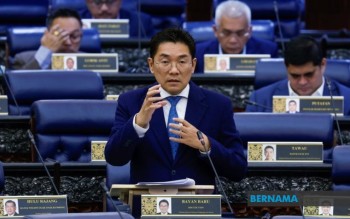
Kedah's investment momentum is accelerating, with the state pulling in RM1.4 billion in approved projects during the opening three months of 2026, signalling strong momentum for Malaysia's northern industrial corridor. Deputy Investment, Trade and Industry Minister Sim Tze Tzin disclosed the figure during parliamentary questioning, attributing the performance to a strategic policy pivot that aims to ensure high-technology industrial zones translate into tangible economic gains for surrounding communities rather than remaining isolated economic enclaves.
The investment inflow across 50 distinct projects reflects deliberate government positioning of three flagship industrial hubs—Kulim Hi-Tech Park, Kedah Rubber City, and the Kerian Integrated Green Industrial Park—as regional growth engines intended to catalyse broader economic transformation. This concentration of investment infrastructure represents a calculated approach to competing for capital in Southeast Asia's increasingly crowded manufacturing landscape, where neighbouring Thailand and Vietnam have already entrenched their industrial bases. The strategy acknowledges that peripheral regions require institutional support to transition from traditional economies towards knowledge-based sectors.
Yet the administration's rhetoric extends beyond these established industrial clusters. Responding to parliamentary concern raised by Ahmad Tarmizi Sulaiman, the Sik MP from PN, Sim articulated a commitment to channelling economic benefits into historically disadvantaged districts including Sik, Baling, and Padang Terap. These rural constituencies face persistent demographic challenges—youth outmigration, limited employment diversity, and infrastructure deficits—making them politically and developmentally significant. The government's stated determination to ensure rural communities participate in high-income employment and vendor supply chains addresses longstanding regional inequities that have fuelled political frustration in northern Malaysia.
Agro-industrial development emerges as a critical bridging mechanism within this inclusive growth framework. Rather than imposing wholesale manufacturing transformation, the government acknowledges that Baling, Sik, and Padang Terap possess competitive advantages in agriculture-based sectors, particularly food processing and agro-industries. This recognition reflects pragmatic industrial policy that leverages existing agricultural expertise rather than demanding economic wholesale reinvention. Such sectors, when integrated with modern processing techniques and supply chain technologies, can generate employment matching wages from high-tech manufacturing while remaining rooted in local comparative advantages and resource availability.
Infrastructure investment constitutes the physical foundation enabling this spatial economic integration. The widening of Federal Route FT004, connecting Kulim Hi-Tech Park to Bukit Karangan, represents a critical bottleneck resolution projected for completion by April 2028. Poor connectivity has historically isolated rural manufacturing prospects, as logistics costs and travel times render remote locations uncompetitive for time-sensitive industrial operations. Improving arterial road capacity directly addresses this constraint, potentially extending industrial development inland from established parks and reducing geographic concentration of economic activity. The infrastructure timeline suggests the government anticipates sustained investment momentum justifying such capital expenditure.
The newly implemented New Incentive Framework, activated in March 2026, introduces structural incentives aligning investor behaviour with rural development objectives. By offering enhanced government support to enterprises that elevate local vendor sourcing and domestically manufactured inputs within their supply chains, the policy mechanisms reward localization rather than merely subsidizing foreign investment. This represents a more sophisticated industrial strategy than blanket foreign direct investment attraction, as it explicitly conditions incentives on technology transfer, capability-building among local suppliers, and sustainable domestic entrepreneurship. Foreign multinationals gain competitive advantages through support packages, but only when they strengthen rather than displace local industrial ecosystems.
The mechanics of the NIF address persistent criticisms of industrial parks functioning as isolated enclaves with minimal backward linkages to surrounding economies. When multinational manufacturers source components and services exclusively from international suppliers, investment generates employment at the facility level but creates limited multiplier effects regionally. By contrast, requirements and incentives encouraging local supply chain participation catalyse vendor development, quality upgrades among domestic small and medium enterprises, and technology dissemination beyond the factory gate. This approach recognizes that sustainable industrial transformation depends on broadening participation beyond a narrow set of multinational employers.
For Malaysian policymakers, the Kedah strategy illuminates tensions between rapid capital attraction and equitable distribution of development benefits. Northern states have historically lagged southern manufacturing clusters centred on Selangor and Johor, with Kedah facing particular challenges integrating rural hinterlands into modern economic structures. The current approach attempts reconciling these tensions through spatial coordination—leveraging established industrial zones as anchors while intentionally designing policies and infrastructure improvements to extend benefits outward. This differs from the historical pattern where industrial clusters primarily benefited metropolitan regions and their immediate environs.
The emphasis on employment quality and technological capability-building also reflects evolving understanding of what constitutes meaningful industrial development. Malaysia cannot compete with lower-wage economies on assembly labour costs alone, requiring progression towards higher-value activities. Rural district participation in such upgrading depends on education, skills training, and technology exposure—factors the localization framework indirectly addresses by requiring investor engagement with domestic suppliers and encouraging knowledge transfer. Employment from agro-industrial food processing, when coupled with technical skill development, potentially provides pathways to higher-income livelihoods for rural workforces.
Regional competition provides important context for understanding urgency in the Kedah investment push. Thailand's Board of Investment and Vietnam's Foreign Investment Agency have aggressively marketed industrial parks with superior infrastructure, competitive tax rates, and established supply chain ecosystems. Malaysia's ability to attract significant manufacturing investment amid this competition depends partly on geographic and institutional advantages—established industrial parks, English-speaking workforce, and political stability—but increasingly requires differentiation through inclusive development models and quality-of-life offerings attracting both capital and talent.
The political dimension merits recognition, as investment performance and visible benefit distribution carry weight in electoral competition. Rural constituencies like Sik have demonstrated electoral volatility, with voters responsive to concrete economic opportunities and responsive governance. Government announcements regarding investment figures and infrastructure projects signal commitment to development, though delivery timelines—particularly the 2028 completion date for road improvements—extend beyond immediate electoral cycles, requiring sustained institutional follow-through.
Looking forward, the Kedah investment model's success depends on multiple reinforcing elements functioning cohesively. Capital attraction must continue at the announced pace; infrastructure upgrades must proceed on schedule; the NIF must genuinely incentivize localization without deterring foreign investors; and local enterprises must develop capacity to meet multinational supply chain requirements. Gaps between policy intention and implementation execution have historically undermined Malaysian industrial initiatives, making continued monitoring of actual investment flows, employment creation, and vendor development essential.

