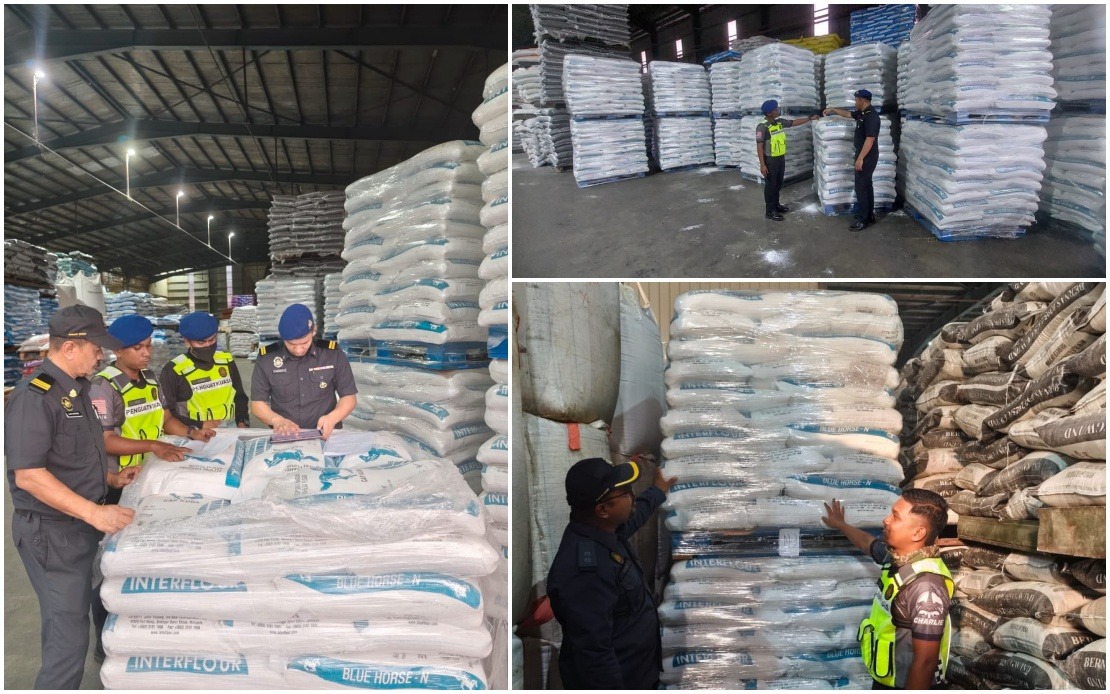
Enforcement officers from the Ministry of Domestic Trade and Cost of Living (KPDN) descended on an animal feed processing facility in the Kuala Ketil Industrial Area on June 15, uncovering what authorities believe represents a significant breach of Malaysia's commodity storage regulations. The raid, carried out by four personnel from the Baling branch at approximately 4.30 pm, resulted in the seizure of 53,325 kilogrammes of wheat flour with an estimated market value of RM100,251, marking a substantial enforcement action in the northern state.
According to Kedah KPDN director Muhammad Nizam Jamaludin, the operation revealed that the facility had been incorporating wheat flour into its animal feed production processes without securing the mandatory authorisation from the Supply Controller. The discovery raises questions about how the factory had managed to accumulate such vast quantities of flour—roughly the equivalent of filling three large lorries—without triggering regulatory oversight or compliance verification checkpoints. The seizure indicates a coordinated supply chain that bypassed or circumvented official approval mechanisms designed to monitor strategic commodity movements.
The factory manager, identified as a 25-year-old Malaysian national, could not furnish documentation demonstrating that the operation held legitimate permission to stockpile flour at the premises. This absence of paperwork represents a critical failure in documentary compliance, suggesting either deliberate non-compliance or a fundamental misunderstanding of regulatory obligations. The inability to produce a Supply Controller permit places the establishment squarely within the enforcement framework that governs restricted commodities in Malaysia, where flour remains subject to monitoring given its role in household food security and its susceptibility to price volatility.
Investigators have initiated a formal probe under Section 21 of the Control of Supplies Act 1961 (Act 122), legislation that empowers the government to regulate the movement, storage, and distribution of essential goods deemed critical to public welfare. This particular statute has been instrumental in protecting Malaysia's food supply chains from unauthorised hoarding, black-market diversion, and speculative price manipulation. The charging framework suggests that authorities view the accumulation as potentially linked to subsidy-related misuse, where regulated commodities intended for legitimate commercial purposes are redirected into parallel trading channels that undermine price controls.
The Ministry's statement emphasised that firm measures would be implemented against any entity discovered engaging in misuse or diversion of subsidised products. This rhetorical commitment reflects broader frustration within Malaysia's trade enforcement apparatus regarding leakage from the formal economy. Subsidised flour represents a significant fiscal outlay for the government, designed to maintain affordable staple prices for ordinary households. When such goods are diverted into unauthorised commercial operations—even animal feed production—they effectively become privatised benefits while public funds bear the cost.
The animal feed sector itself occupies an important position within Malaysia's agricultural economy, supporting both commercial livestock operations and smallholder farmers who depend on affordable feed inputs for poultry and aquaculture production. However, this sector also presents regulatory vulnerabilities because feed manufacturing allows commodity mixing that can obscure the final disposition of flour. A tonne of flour entering a feed facility could theoretically emerge as packaged animal feed and then be reprocessed back into human-consumption channels, creating audit and traceability complications that enforcement agencies must navigate.
The timing of the raid suggests that intelligence gathering or consumer complaints may have prompted investigation into the facility's operations. KPDN's Kedah division has intensified supply-chain monitoring since commodity prices began stabilising after the inflationary pressures of preceding years. The discovery of such a large stockpile—53,325 kilograms is not a small quantity that might result from ordinary operational procedures—indicates either systematic accumulation over an extended period or a single major inbound transaction that attracted scrutiny.
For regional observers, this enforcement action underscores the ongoing challenge that Southeast Asian governments face in protecting subsidised commodity regimes from erosion through informal market channels. Malaysia's approach reflects a philosophy of targeted price controls on essentials combined with rigorous supply-chain policing. The seizure demonstrates that the enforcement infrastructure remains adequately resourced to detect and interdict significant violations, though the initial success of the unauthorised operation points to implementation gaps that require attention.
The implications extend beyond the immediate case. Businesses operating in regulated commodity spaces—whether in animal feed, food manufacturing, or ingredient distribution—must ensure comprehensive documentation of all inputs and maintain clear audit trails demonstrating compliance with storage and purchasing protocols. The factory's failure to produce appropriate permits suggests a compliance culture failure that may reflect awareness gaps among smaller operators regarding their obligations under commodity regulations. Trade associations and industry groups may need to intensify member education regarding Supply Controller authorisation requirements to prevent similar incidents.
Authorities have indicated that investigation will determine whether the flour seizure represents an isolated compliance violation or evidence of a broader unauthorised supply scheme. The subsequent criminal proceedings will clarify whether the facility manager acted with deliberate knowledge of regulatory requirements or through negligence. These distinctions carry significance not only for the individual defendant but also for how enforcement messaging is communicated across the business community regarding commodity storage obligations and the seriousness with which authorities approach breaches.

