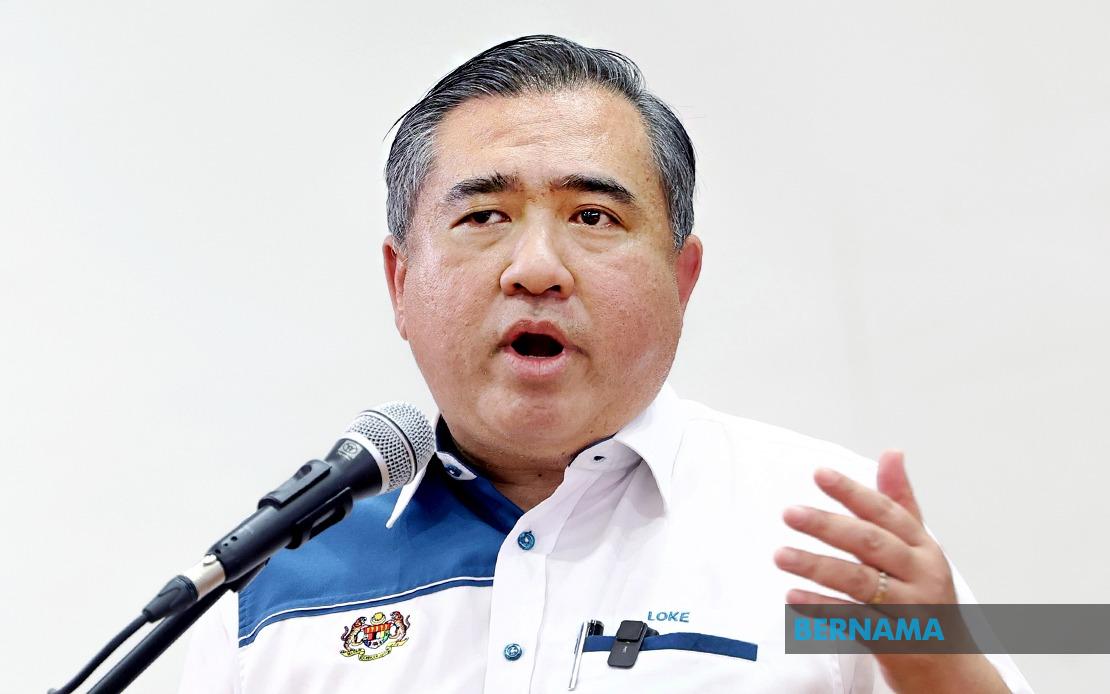
Transport Minister Anthony Loke has directed the Road Transport Department (JPJ) to issue summonses to all motorcyclists found riding without helmets during the ongoing Johor state election campaign, regardless of their political affiliation. The enforcement action, announced on July 10, will be triggered by evidence from videos circulating on social media showing violations of Malaysia's mandatory helmet laws. This directive marks a significant statement on road safety compliance during the high-profile electoral season, where campaign activities often intensify across the state.
The decision reflects Loke's consistent stance on helmet enforcement, which he has maintained across different political cycles and electoral events. In his statement, the Transport Minister emphasized that his position on this matter has remained unwavering and non-partisan. He recalled raising similar concerns during the Slim by-election campaign nearly six years ago, when he highlighted that while there is no prohibition against motorcycling during campaign work, all riders must comply with helmet requirements. This historical reference underscores that Loke views road safety as a principle that transcends political considerations and campaign operations.
What distinguishes this enforcement action is its explicit commitment to impartial application across the political spectrum. Loke acknowledged that the viral videos in question showed members of Pakatan Harapan campaign teams, including workers from the Democratic Action Party (DAP), riding without helmets during the Johor campaign activities. Rather than minimizing or excusing this conduct, the Transport Minister indicated that his ministry views the violations seriously and that enforcement would proceed against his own political allies. This approach carries particular weight given that Loke himself serves as DAP secretary-general, placing him in a position where enforcing the law against party members directly tests his commitment to impartiality.
The minister's statement contains an explicit declaration that he will not compromise on road safety principles even when enforcement involves his own campaign colleagues. This language suggests awareness that such enforcement could generate internal party friction or be perceived as inconsistent with campaign solidarity. By preemptively stressing his willingness to apply the law uniformly, Loke appears to be signaling that road safety legislation supersedes political loyalty or campaign cohesion. The statement frames helmet compliance as a fundamental legal obligation that cannot be negotiated or selectively enforced based on partisan considerations.
Loke's emphasis that road safety laws do not recognize political party affiliation highlights a broader principle about the rule of law in Malaysia. His declaration that the law must be enforced fairly and equally on all Malaysians reflects constitutional and legal principles of non-discrimination and equal application of statutes. During election periods, when campaign intensity peaks and political passion runs high, such reminders about uniform legal enforcement become particularly significant. The transport portfolio's intervention during campaign season demonstrates how administrative enforcement of safety regulations intersects with electoral conduct standards.
The JPJ's role in implementing this directive carries operational implications for enforcement during the campaign period. The department will need to process evidence from viral videos, verify the identities of riders, and issue appropriate summonses while managing the workload of routine enforcement. This creates a practical coordination between social media monitoring and formal regulatory action. The agency's willingness to act on publicly shared evidence represents a modern approach to enforcement where digital documentation enables rapid identification and processing of violations.
From a road safety perspective, Malaysia has consistently emphasized helmet usage as a critical injury prevention measure for motorcyclists, who represent a significant proportion of traffic accident fatalities and serious injuries nationwide. Campaign periods, which see increased motorcycle mobility for candidate and worker transportation, present both heightened risk exposure and opportunities for public messaging about safety compliance. When campaign workers violate helmet laws, it undermines public education efforts and potentially normalizes non-compliance among the general population who observe such conduct.
The enforcement action also carries implications for campaign culture and leadership messaging during elections. Campaign managers and candidates typically set the behavioral tone for workers and supporters. When senior campaign figures visibly comply with safety regulations, it reinforces that legal requirements apply universally and that campaigning does not exempt participants from ordinary legal obligations. Conversely, when campaign teams display cavalier attitudes toward safety laws, it can influence broader perceptions about whether campaign pressures justify bending rules.
For Malaysian voters and the general public, this enforcement action demonstrates that road safety regulations will be applied consistently regardless of which party's workers violate them. This message assumes particular importance in contexts where political affiliation might otherwise be expected to influence regulatory enforcement outcomes. The Transport Minister's explicit commitment to impartial application across party lines establishes a precedent for how administrative departments should approach campaign-related conduct during electoral periods.
The Johor state election campaign context adds urgency to this enforcement action, as state-level campaigns often feature intensive motorcycle-based campaign operations across diverse communities. The state's geography and demographic distribution mean that motorcycles constitute a primary mode of campaign transportation for many workers reaching voters in smaller towns and rural areas. Safety compliance during such operations reflects both the professionalism of campaign organization and respect for public safety norms.
Looking forward, this enforcement action may establish expectations for future electoral campaigns regarding road safety compliance. If JPJ successfully implements the summons regime during the Johor campaign and the Transport Ministry maintains consistent messaging about helmet requirements, subsequent campaigns might incorporate safety compliance planning into their operational protocols. Campaign training and briefings could emphasize that legal compliance, including helmet usage, represents non-negotiable operational requirements rather than optional conduct elements.

