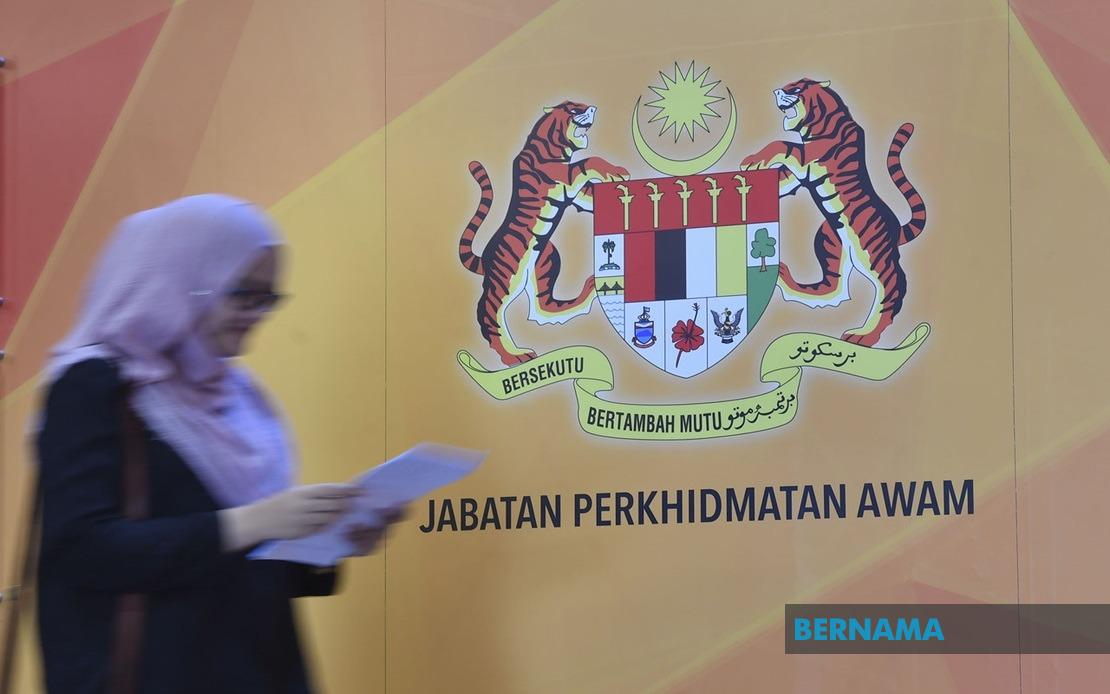
The Public Service Department (JPA) has thrown open its doors to 2026 SPM graduates, announcing 640 sponsorship slots across four structured programmes designed to nurture Malaysia's next generation of high-performing public servants. The move represents a significant investment in human capital development, reflecting the MADANI Government's broader vision of equipping young Malaysians with world-class education to strengthen the nation's competitive position globally.
The sponsorship initiative is strategically segmented to reach different cohorts of successful school leavers. The National Sponsorship Programme supplies 30 slots, while the Special Programme for Japan, Korea, France and Germany allocates 140 positions for candidates aspiring to study in these economically significant nations. The Special Programme for Domestic SPM Graduates provides 200 opportunities for those preferring Malaysian institutions, whilst the JPA-MARA Special Programme (PKJM) offers the largest allocation with 270 slots, representing nearly 42 per cent of the total scholarship pool.
For Malaysian students, the scope of eligible fields underscores JPA's focus on nation-building priorities. Engineering, science and technology, and social sciences emerge as the primary focus areas, reflecting both immediate workforce demands and long-term sectoral requirements. This concentration ensures that sponsored graduates will channel their expertise into fields critical to Malaysia's digital transformation, renewable energy ambitions, and public sector modernisation.
The geographical diversity of educational destinations signals JPA's confidence in institutions beyond the traditional Anglophone sphere. Beyond study opportunities in the United States, Australia, the United Kingdom and New Zealand, the inclusion of Japan, South Korea, France and Germany broadens exposure to different educational philosophies, technical standards and innovation ecosystems. For engineering and technology students particularly, placements in East Asian institutions provide firsthand exposure to manufacturing excellence and research intensity that rivals Western equivalents. The addition of French and German universities reflects growing recognition of European specialisations in automotive engineering, pharmaceutical sciences and renewable technologies.
A notable structural feature is JPA's introduction of the Academic Merit-Based Convertible Loan (PBUA) in June 2025, which underpins all 2026 sponsorships. This mechanism represents a philosophical shift from outright grants toward conditional funding models that tie continuing support to academic performance. The approach incentivises excellence throughout tertiary studies whilst building in accountability mechanisms, addressing longstanding concerns about whether traditional sponsorships adequately motivate consistent achievement. The convertible element—presumably allowing exceptional performers to convert loans to grants—creates graduated rewards that align personal advancement with national investment.
The application and results timeline demonstrates JPA's streamlined digital processes. Candidates who submitted applications can access results online through the department's designated portal between 10 am on announcement day and 5 pm on June 22, a compressed window that reflects digitisation of public sector services. This real-time accessibility stands in sharp contrast to historical delays that plagued scholarship announcement cycles, reducing anxiety for candidates and families awaiting confirmation.
From a Malaysian education policy perspective, the sponsorship allocation reflects careful calibration between domestic and international study pathways. The 200-slot domestic programme acknowledges the quality of Malaysia's own universities whilst the 340 international slots demonstrate confidence in sending talented graduates abroad for competitive specialisation. This balance prevents brain drain whilst ensuring exposure to global standards, a critical consideration given Malaysia's aspirations in higher education rankings and research output.
For secondary school students nationwide, these sponsorships represent validation that academic excellence remains a credible pathway to publicly-funded tertiary education. In an era where private institution fees increasingly burden middle-class families, JPA's commitment to merit-based support sustains the principle that talent rather than family wealth determines educational access. The 640-slot offering, whilst modest against the total SPM candidate population, provides meaningful opportunity density in competitive sectors.
Regionally, the sponsorship scheme positions Malaysia competitively within ASEAN's talent development landscape. Whilst neighbouring countries maintain similar programmes, JPA's explicit inclusion of top-tier institutions in multiple nations and the PBUA mechanism's emphasis on performance maintenance reflects sophisticated human capital strategy. For Malaysian employers and government agencies, sponsored graduates return with diverse experiences and certifications that enhance institutional capacity.
The emphasis on social sciences alongside STEM fields deserves particular attention. Public administration, economics, international relations and law—domains critical to policy formulation and governance—receive equal consideration to engineering. This prevents overweighting toward technical disciplines that, whilst economically productive, can marginalise the humanities expertise essential for effective government and societal leadership.
Successful applicants now face critical decisions regarding institutional choice and field selection. The geographic spread of destinations means students must evaluate not only academic rankings but cultural adaptation, language prerequisites, and career pathway alignment. For those selecting domestic institutions, the choice signals confidence in Malaysian higher education quality or personal circumstances favouring family proximity.
JPA's continued sponsorship commitment amid Malaysia's fiscal pressures underscores official recognition that education investment yields long-term returns exceeding immediate budgetary costs. As digital economies demand increasingly sophisticated workforces, maintaining robust scholarship pipelines ensures the public service and strategic sectors retain access to top talent competing against private sector recruitment efforts.
Moving forward, the success of this cohort will likely influence future allocation decisions. If PBUA-supported students maintain high completion rates and employment success, the mechanism may expand. Conversely, institutional feedback regarding sponsored graduate performance will shape programme evolution, ensuring JPA's sponsorships remain responsive to both educational excellence standards and national development priorities.

