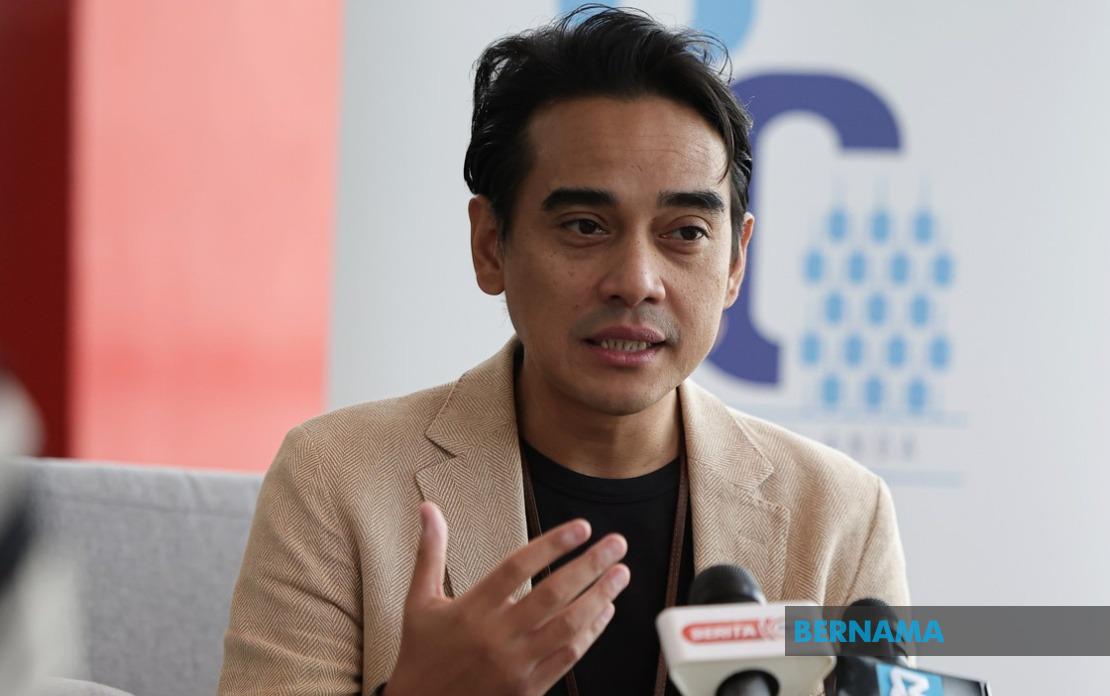
The competitive landscape for journalists in Southeast Asia is shifting fundamentally, according to Malaysia's Director-General of Broadcasting Ashwad Ismail, who delivered a stark message about the necessity of technological adaptation. Speaking recently in Kuala Lumpur, Ashwad articulated a position that distinguishes between the fear many in the industry harbour about AI and the pragmatic reality of remaining employable in an era of rapid digital transformation. His comments reflect growing concerns across the region about media sustainability and the skills gap that threatens to displace professionals unprepared for the technological transition ahead.
Ashwad's core argument reframes the relationship between journalism and artificial intelligence in deliberately reassuring yet challenging terms. Rather than positioning AI as an existential threat to the profession itself, he contends that the technology serves as an amplifier of human capability, capable of enhancing rather than replacing journalistic output. This distinction matters profoundly in a region where media employment is already under pressure from economic consolidation and shifting advertising revenues. The broadcasting chief's position essentially shifts the burden of displacement from technology itself to individual practitioners, warning that competitive advantage will accrue to those who develop sophisticated AI literacy while those who ignore these tools risk obsolescence at the hands of better-prepared colleagues.
The specificity of Ashwad's warning carries particular weight given his institutional position overseeing Malaysia's broadcasting sector. When he states that "I, as a journalist, will be taken over by another journalist who knows how to leverage, how to use and to maximise AI," he articulates a competitive dynamic that is already materializing in global newsrooms. Major publications worldwide are integrating AI into research, fact-checking, initial drafting, and data analysis workflows. For Malaysian journalists and those throughout Southeast Asia, this represents both urgent pressure to upskill and an opportunity to leapfrog traditional editorial constraints that have historically limited regional news organisations.
The concern about job displacement in Malaysian media cannot be divorced from broader economic realities affecting the industry across Asia. Traditional revenue models have eroded substantially over the past decade as advertising migration to digital platforms accelerates. Against this backdrop, AI adoption could theoretically allow existing newsrooms to maintain or expand output with fewer staff members, presenting a genuine threat to employment levels if poorly managed. Ashwad's acknowledgment of this risk suggests awareness that anxiety about job losses is not irrational panic but a legitimate concern requiring institutional response and planning.
Central to Ashwad's framework is the proposal that newsrooms require clear governance guidelines to direct AI implementation responsibly. This emphasis on structured protocols rather than haphazard adoption reflects international best practice emerging from media organisations grappling with these same questions. Such guidelines would theoretically establish parameters ensuring AI enhances rather than compromises editorial integrity, maintains human oversight of critical decisions, and preserves the distinctive value journalism provides. For Malaysian media organisations considering AI adoption, developing these frameworks in advance of implementation represents prudent institutional planning.
The quality enhancement argument underpins much of the case Ashwad makes for AI integration. Journalists equipped with AI tools can process larger datasets more rapidly, identify patterns humans might miss, verify information across multiple sources simultaneously, and allocate more time to the investigative and analytical work that distinguishes quality journalism from commoditized content production. In a competitive regional media environment where smaller organisations operate with limited resources, these efficiency gains could enable more ambitious reporting without proportionally increased staffing costs.
Yet Ashwad's advocacy for AI integration exists in tension with his simultaneous emphasis on rebuilding public trust through hyperlocal reporting and community engagement. This apparent contradiction resolves when understood as a two-track strategy: leverage AI to handle routine information processing and distribution, thereby freeing journalists to invest in the sustained community relationships and on-the-ground reporting that construct trust and differentiate quality journalism. This approach acknowledges that audiences increasingly value authenticity, local context, and demonstrated accountability—precisely the human elements that cannot be automated.
The emphasis on community engagement and the "human touch" in rebuilding media trust reflects particular relevance for Southeast Asian media systems, where misinformation flourishes partly because populations perceive mainstream news as disconnected from local realities and concerns. By redeploying staff time toward community-based reporting rather than toward lower-value administrative tasks that AI can handle, newsrooms could simultaneously improve product quality and strengthen audience relationships. This represents a constructive vision of AI adoption that prioritizes journalism's social function rather than merely its economic efficiency.
The timing of Ashwad's remarks coincides with significant industry events in the region, including HAWANA 2026, a gathering bringing together more than 1,200 media practitioners and ASEAN delegates at PICCA Convention Centre @ Arena Butterworth, Penang on June 20. The event, to be officially opened by Prime Minister Datuk Seri Anwar Ibrahim, provides a crucial forum for discussing these technological and professional transitions at a regional scale. The participation of ASEAN-level delegates suggests these concerns transcend Malaysian boundaries, indicating the broader Southeast Asian media industry recognizes both the urgency and complexity of adapting to AI.
The challenge for Malaysian newsrooms and media organisations across Southeast Asia lies in translating Ashwad's strategic vision into concrete implementation. Developing the institutional capacity to acquire AI tools, train journalists in their use, establish ethical guidelines, and integrate these technologies into existing workflows requires investment, planning, and sustained commitment. Smaller regional publishers may lack resources for rapid adoption, potentially widening the competitive gap between well-capitalized national outlets and local or niche publications. This digital divide within the media industry itself deserves policy attention to ensure technological transformation does not further concentrate media power.
Professional development and training emerge as critical infrastructure requirements if Ashwad's vision is to be realized. Malaysian journalism education programmes and in-service training initiatives must now incorporate AI literacy alongside traditional journalistic skills. This represents a significant expansion of educational responsibilities at a moment when many institutions are already stretched. Universities offering journalism programmes and professional organisations serving journalists require resources and expertise to design curricula that meaningfully equip practitioners for an AI-augmented newsroom environment.
The broader implication of Ashwad's message resonates beyond Malaysia's borders throughout Southeast Asia, where media sustainability challenges are acute and technological capacity varies considerably. His framing of AI as inevitable and beneficial—provided journalists develop requisite skills and newsrooms establish responsible governance—presents a more constructive narrative than either techno-utopianism or defensive resistance. Whether Malaysian and regional media organisations rise to this challenge will substantially determine whether Southeast Asian journalism emerges from current disruptions stronger and more resilient, or progressively diminished in capacity and influence.

