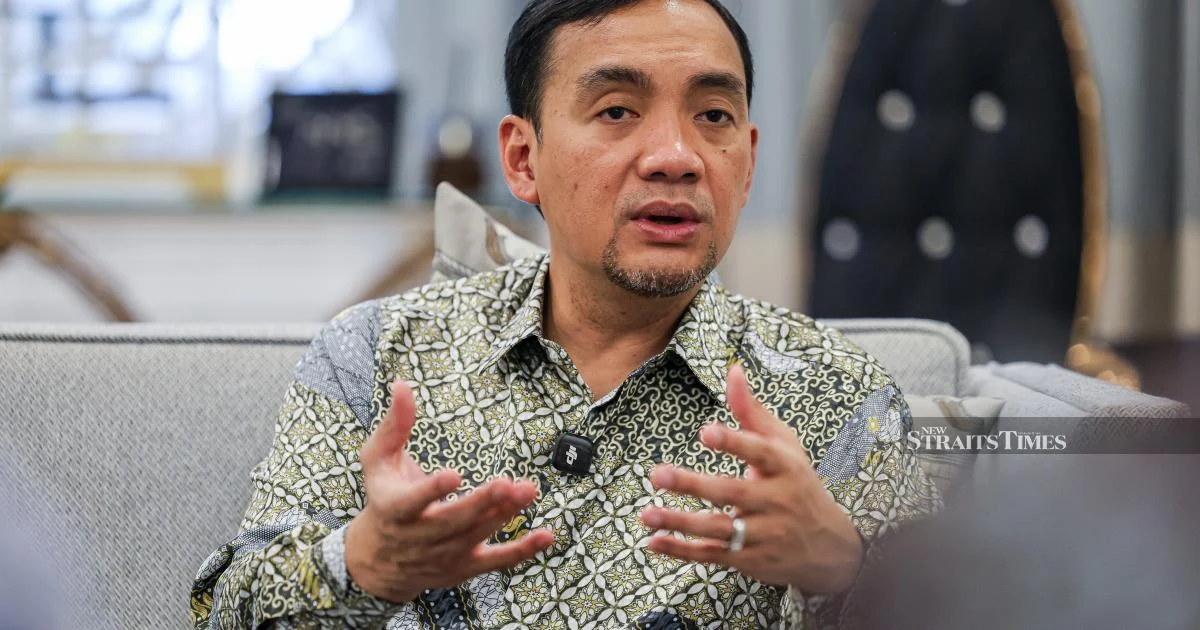
Johor's caretaker Menteri Besar Datuk Onn Hafiz Ghazi has closed the door definitively on any potential political partnership with DAP, even if Barisan Nasional fails to secure an outright majority in upcoming state elections. The statement marks an emphatic reaffirmation of his coalition's political positioning and signals that ideological considerations will trump pragmatic coalition-building if necessary.
The timing of Onn Hafiz's declaration carries particular significance in Malaysia's current political landscape. With opposition pacts constantly shifting and state governments frequently hanging in delicate balance, the explicit rejection of even a contingency alliance with the Democratic Action Party underscores the depth of disagreement between BN and the Chinese-majority party. Rather than leaving room for post-election negotiations, Onn Hafiz has effectively bounded his administration's possible futures, a move that demonstrates confidence in BN's electoral prospects while simultaneously establishing clear red lines for potential coalition partners.
Onn Hafiz framed his position explicitly around ideology rather than mere political tactics or personality clashes. This rhetorical choice distinguishes his stance from typical political maneuvers, which often employ softer language about incompatibility or coordination difficulties. By invoking fundamental ideological differences, he elevates the disagreement to matters of principle that cannot be negotiated away through ministerial allocations or portfolio distributions. For Malaysian voters and political observers, this distinction matters considerably, as it suggests the rejection stems from core policy differences rather than temporary leadership tensions or strategic calculations.
The statement reflects broader patterns within Barisan Nasional's positioning since its 2018 electoral defeat and subsequent recovery. The coalition has worked systematically to rebuild its base and reassert its hold on traditional strongholds, particularly in East Malaysian states and strongholds like Johor. This hardening of coalition boundaries aligns with BN's strategy of presenting itself as a coherent, ideologically consistent alternative to the fragmented opposition, whose various factions frequently struggle to maintain unity.
For Johor specifically, rejecting DAP carries distinct implications. The state has historically been BN's heartland, where the coalition maintains deep organizational roots and enjoys substantial support particularly among Malay and Muslim constituencies. These voter demographics, which form BN's core support base, generally align with political preferences that diverge sharply from DAP's secular, multiethnic positioning. Onn Hafiz's declaration essentially signals that he will not compromise on issues central to these voters' political preferences in pursuit of numerical majorities.
DAP's own strategic positioning becomes relevant context here. The party has expanded significantly beyond its traditional urban, Chinese-majority strongholds, but it continues to face skepticism among Malay-Muslim voters concerning its secular orientation and perceived positioning on religious and constitutional matters. This structural limitation means DAP's potential coalition partners remain restricted, largely confining it to Pakatan Harapan alignments or minority governments dependent on issue-by-issue support. Onn Hafiz's statement effectively confirms that BN will not offer DAP an alternative pathway into state-level executive power in Johor.
Regional political dynamics further contextualize this announcement. Southeast Asian politics increasingly demonstrates polarization between different visions of governance, religious governance, and constitutional interpretation. Onn Hafiz's emphasis on ideological grounds rather than mere political convenience aligns with broader regional trends where political coalitions increasingly reflect fundamental worldview differences rather than simple patronage networks or factional divisions within single parties.
The economic implications warrant consideration as well. Johor's status as Malaysia's second-largest economy and its geographic proximity to Singapore make its political stability and governance approach matters of broader regional interest. Investors and regional analysts monitor state-level political arrangements for signals about governance competence and policy consistency. By publicly committing to ideologically coherent governance, Onn Hafiz may be attempting to assure stakeholders that Johor's administration will maintain stable, predictable policy frameworks regardless of electoral outcomes.
Within the broader Malaysian federation, Onn Hafiz's statement also resonates across other BN-governed states. His explicit rejection of DAP partnership establishes a template that other state leaders might follow, potentially hardening coalition boundaries across multiple state governments simultaneously. This could reshape how post-election negotiations proceed nationwide if no single coalition achieves dominant parliamentary strength, forcing more creative or unconventional governing arrangements.
The statement also reflects generational and leadership dynamics within BN. Onn Hafiz, representing younger party leadership, stakes his authority partly on articulating clear principled positions rather than merely executing strategies determined by party elders. This approach builds his personal political brand while simultaneously reinforcing BN's messaging about ideological consistency and coherence, two attributes the coalition has worked to rehabilitate since 2018.
Moving forward, Onn Hafiz's declaration constrains his own flexibility should electoral outcomes disappoint BN expectations. Should the party fail to secure a simple majority in Johor, he cannot subsequently pivot toward DAP without appearing to reverse sworn principles. This self-imposed limitation represents a calculated bet that Johor voters will deliver sufficient support to make such contingencies unnecessary. It also demonstrates how contemporary Malaysian politics increasingly forces leaders into unambiguous public positions that leave limited room for tactical maneuver, a dynamic that reshapes how elections and post-election negotiations unfold across the country.

