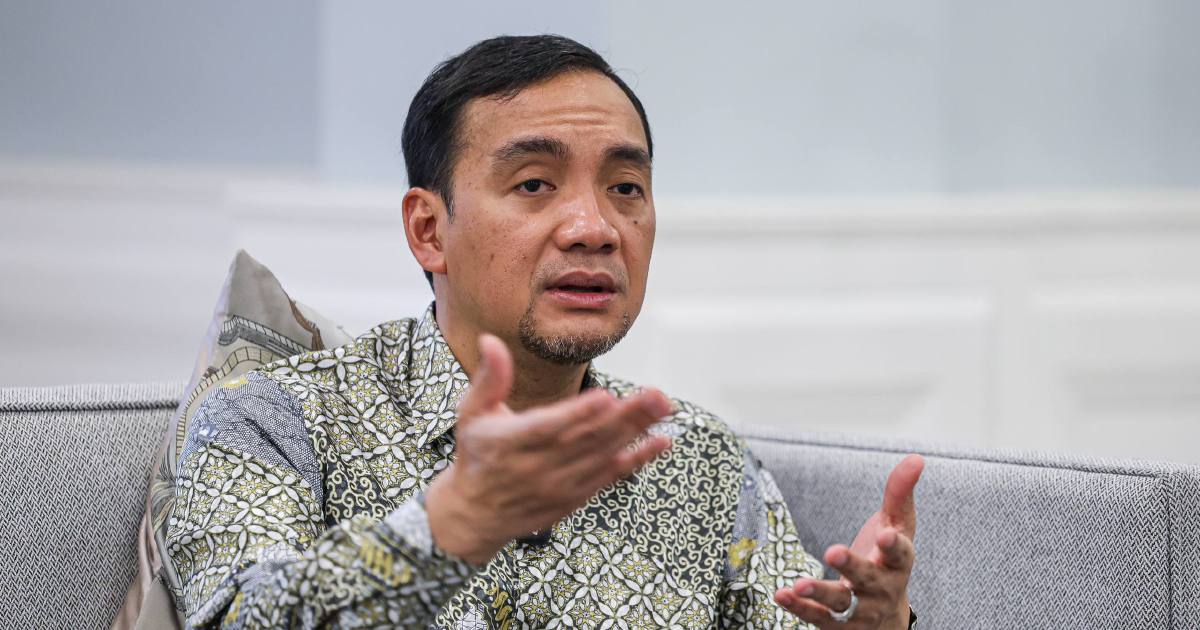
The Johor palace has intervened in the political sphere ahead of the state election, with Sultan Ibrahim and Tunku Mahkota Ismail expressing serious concerns about the tone and conduct expected during the campaign period. Johor Barisan Nasional chairman Datuk Onn Hafiz Ghazi conveyed this message, indicating that the royal household believes maintaining dignified political discourse is essential for the state's democratic process and social harmony.
The intervention by Malaysia's reigning monarch and Johor's regent reflects growing anxiety within institutional circles about the potential for campaign rhetoric to deteriorate into personal vendettas and inflammatory language. Such cautions from the palace carry considerable symbolic weight in Malaysia's constitutional monarchy, where the rulers maintain significant ceremonial and moral authority. The fact that both the King and the Regent chose to communicate this message through a senior political figure suggests the matter is viewed as sufficiently serious to warrant direct royal guidance.
Political campaigns in Malaysia have increasingly become battlegrounds for aggressive personal attacks, particularly at the state level where regional rivalries intensify and local issues dominate discourse. The Johor palace's intervention suggests that both Sultan Ibrahim and Tunku Mahkota Ismail are concerned about maintaining the dignity of public institutions and the integrity of electoral processes. This preemptive stance appears designed to establish clear expectations before campaign activities escalate.
For Johor specifically, state elections carry heightened significance as the economic and administrative hub of Malaysia's southern region. The state's political stability and social cohesion directly impact investor confidence, business continuity, and the welfare of its substantial population. When palace officials issue guidance about campaign conduct, they are implicitly warning that uncivil behaviour could undermine the state's institutional credibility and broader governance framework.
Onn Hafiz's role in communicating this message is particularly noteworthy given his position as Johor BN chairman. The decision to announce the palace's position through the ruling coalition's state-level leadership indicates a deliberate effort to ensure that the government's primary political force receives and respects the royal guidance. This approach also signals to opposition parties that the entire political establishment, supported by royal authority, expects adherence to elevated standards of political conduct.
The broader context of Malaysian politics reveals recurring patterns where campaign seasons become increasingly contentious. State elections, in particular, often feature sharper personal criticisms and more aggressive rhetoric than federal campaigns. The palace's preemptive caution suggests that Johor's leadership has observed troubling trends in recent campaign periods and is determined to prevent similar deterioration this time around.
Political analysts have noted that personal attacks during campaigns can inflict lasting damage on the social fabric of smaller states like Johor, where communities remain relatively tight-knit and political divisions can harden into social fractures. By positioning the palace as a guardian of civil discourse, Sultan Ibrahim and Tunku Mahkota Ismail are leveraging their moral authority to encourage politicians of all stripes to prioritise substance over character assassination.
The timing of this message is strategically important, coming before campaign activities reach fever pitch. Early establishment of expectations allows political parties time to prepare campaign strategies that comply with the palace's guidance while still allowing robust policy debate. This approach differs fundamentally from retroactive criticism, which typically comes too late to prevent damage to public discourse.
For opposition parties in Johor, the palace's intervention carries particular significance as an implicit acknowledgement that all political participants bear responsibility for maintaining civility. The message is not directed solely at the government but represents a broader call for institutional accountability across the political spectrum. This even-handed approach strengthens the palace's moral authority and makes it harder for any party to dismiss the guidance as partisan.
Regional observers point out that Johor's political stability has significant implications for the broader Southeast Asian region, given the state's geographical proximity to Singapore and its role as a crucial economic corridor. Political discord that spills into social disruption could have ripple effects beyond state boundaries. The palace's intervention thus serves not only domestic Malaysian interests but also regional stability considerations.
The emphasis on civility also reflects evolving thinking about democratic governance in Malaysia's monarchical system. Rather than viewing the palace purely as a ceremonial institution, this approach positions royal leadership as a stabilising force that can guide political behaviour toward constructive outcomes. This understanding underscores Malaysia's unique constitutional arrangement, where rulers retain residual authority to influence the moral dimensions of political conduct.
Looking ahead, political parties in Johor will likely interpret this guidance carefully. Those who respect the palace's wishes may gain subtle institutional recognition, while those perceived as flouting the guidance could face subtle disapproval from influential quarters. The palace has effectively established a framework that will allow it to evaluate campaign conduct and implicitly judge which parties have responded appropriately to its call for civility.
Ultimately, the Johor palace's intervention represents an attempt to preserve the integrity of the democratic process while maintaining the dignified standards expected of political leadership in the state. Whether this call for civility influences campaign conduct will depend on how seriously each political participant treats the royal guidance and whether pressure from communities and civil society reinforces expectations for elevated discourse standards.