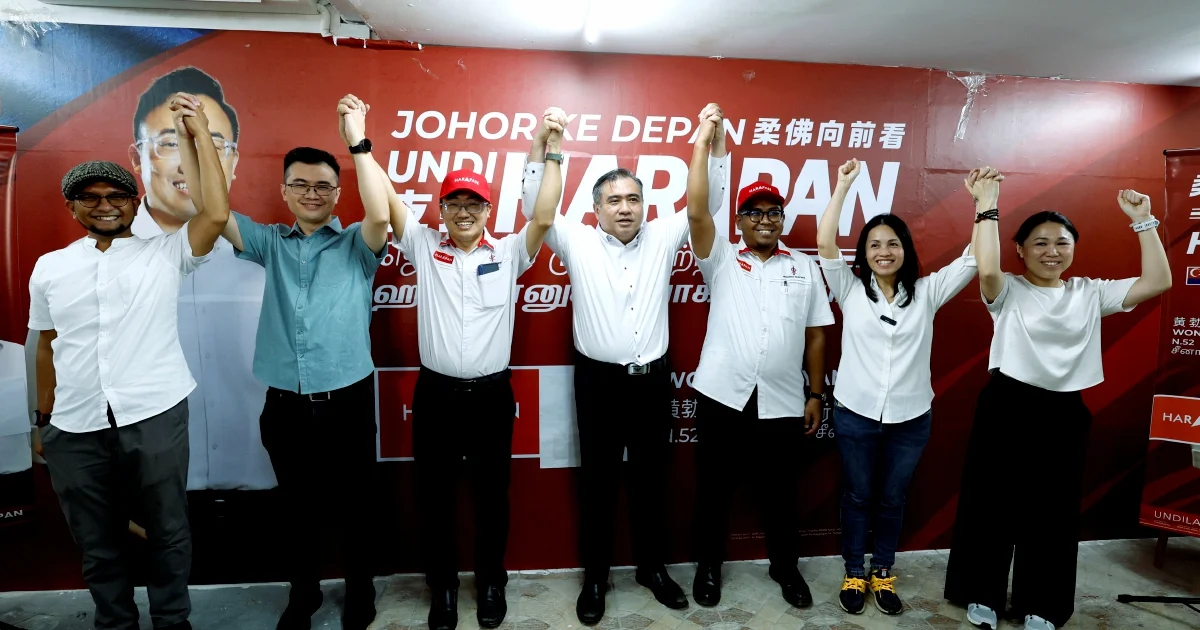
Pakatan Harapan's approach to the upcoming Johor state election reflects a strategic focus on winning the poll first and resolving internal leadership matters afterwards. According to party leadership, the coalition will not pre-empt the process by announcing a specific candidate for the position of Menteri Besar ahead of the election results. This decision underscores a calculated political strategy aimed at maintaining unity and momentum across the coalition's various component parties throughout the campaign period.
The deferment of the Menteri Besar nomination highlights a common practice in Malaysian politics where coalitions prioritise electoral victories before settling contentious leadership appointments. By keeping the door open on the matter, PH aims to preserve goodwill among its member parties and avoid the perception of predetermined outcomes that might discourage voter participation or create friction within the alliance. This approach allows each party to campaign with equal enthusiasm, knowing that leadership positions remain genuinely competitive at the coalition level.
Malaysia's political landscape has seen numerous instances where pre-election announcements of key positions have backfired, either by demoralising coalition partners or by giving opposition parties ammunition to question the legitimacy of electoral mandates. PH's decision to avoid this pitfall suggests lessons learned from past experiences and a recognition that maintaining coalition cohesion requires careful management of expectations and appointments. The strategy also reflects the complex dynamics within PH, where multiple parties bring different constituencies and organisational strengths to the electoral battlefield.
Johor remains strategically significant within Malaysia's political framework, representing one of the nation's most economically dynamic states and a traditional stronghold where ruling coalitions have historically invested substantial political capital. The state's governance structure, its position within national economic corridors, and its influence on federal political calculations make the Menteri Besar position particularly consequential. A PH victory in Johor would strengthen the coalition's position in Parliament and signal shifting voter sentiment in a state where political tides have shifted notably in recent years.
The coalition's top leadership council will ultimately shoulder the responsibility of making the selection, a process that typically involves negotiations among party leaders, assessments of individual candidates' administrative capabilities, and considerations of regional balance and representation. This collective decision-making mechanism ensures that no single party within PH can unilaterally determine the outcome, thereby preserving the coalition's internal equilibrium. Such arrangements are essential for maintaining the fragile partnerships that characterise Malaysian political alliances.
For Johor voters, this deferred announcement means the election will proceed without the distraction of leadership positioning disputes at least in its initial phases. Voters can assess the coalition's overall platform and candidate quality without being asked to vote on a predetermined leadership package. This transparency, or at least the appearance of it, can enhance the perceived legitimacy of whatever leadership arrangement eventually emerges should PH secure victory. Conversely, the strategy also creates uncertainty regarding who will actually govern, which some voters might find unsettling.
The timing and nature of such announcements also carry implications for the wider Southeast Asian region, where coalition politics have become increasingly complex across several democracies. Malaysia's experience in managing multi-party alliances at state and federal levels offers both lessons and cautionary tales for other nations wrestling with similar political configurations. The effectiveness of PH's approach in Johor will likely inform how other coalitions in the region manage internal leadership selection processes during electoral campaigns.
Opposition parties will undoubtedly seek to exploit any perceived vagueness or internal disagreements within PH regarding the Menteri Besar position, painting the coalition as indecisive or internally divided. This risk necessitates clear communication from PH leadership about why the decision has been deferred and how it will be made, ensuring that the strategy is understood as deliberate rather than reactive. The coalition must frame the deferment as a sign of strength and inclusive governance rather than allowing critics to characterise it as weakness or lack of preparation.
From an organisational perspective, delaying the announcement allows PH to maintain flexibility in candidate selection based on campaign performance and emerging circumstances. If certain component parties demonstrate stronger grassroots mobilisation or polling performance during the campaign, this information could influence the final decision. Similarly, any last-minute developments or shifts in voter sentiment can be factored into the appointment process. This adaptive approach contrasts with rigid pre-election commitments that lock coalitions into predetermined choices regardless of changing circumstances.
The broader implications for Malaysian political culture merit consideration as well. The deferment suggests a gradual evolution toward more fluid coalition arrangements where flexibility and merit-based assessment carry increasing weight. This stands in contrast to earlier eras where power-sharing arrangements were more rigidly structured along party and ethnic lines. Whether this shift reflects genuine institutional maturation or merely tactical maneuvering will become clearer once the leadership selection is actually made and the Menteri Besar takes office.
PH's coalition partners will be watching closely to ensure that the eventual decision reflects genuine consensus rather than a fait accompli determined by one or two dominant party leaders. The inclusion of multiple perspectives in the selection process could either strengthen the chosen candidate's legitimacy across the coalition or expose lingering tensions if any party feels excluded or marginalised. The stakes extend beyond simple patronage to encompass fundamental questions about how multi-party coalitions should govern Malaysia's diverse states.

