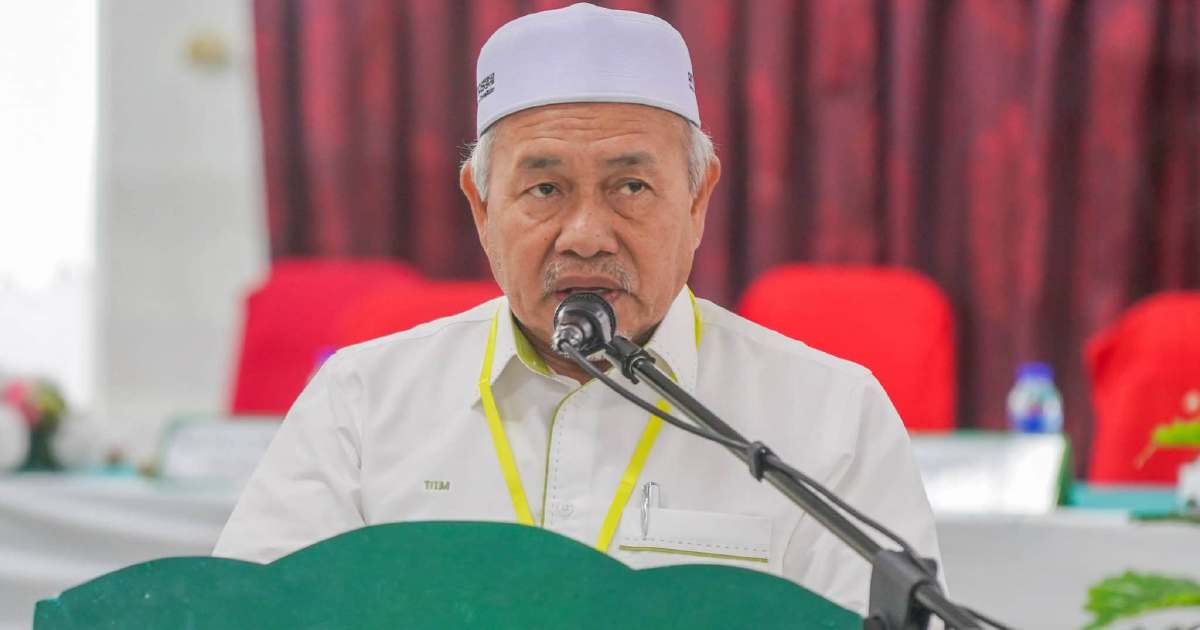
Pas has acknowledged a significant generational gap in its electoral strategy as the Islamic party prepares for the Johor state polls, with party leadership openly discussing the difficulties in mobilising young voters. Datuk Seri Tuan Ibrahim Tuan Man, serving as deputy president, highlighted this demographic headache during comments made in Kota Baru, pointing to young voters as a critical stumbling block in the party's bid to expand its political footprint beyond its traditional support base.
The admission reflects a broader shift in Malaysian electoral dynamics, where younger voters increasingly demonstrate distinct preferences and voting patterns compared to their older counterparts. Pas, which has traditionally drawn strength from conservative and rural constituencies, faces the task of reinventing its appeal to capture the attention of voters aged under 40 who are more digitally engaged, less ideologically aligned to religious messaging, and more focused on economic opportunity and social mobility.
Youth voter engagement has emerged as a defining challenge across Malaysia's political landscape in recent election cycles. Unlike their predecessors, younger Malaysian voters often prioritise pragmatic governance, bread-and-butter issues, and inclusive policy approaches over identity-based or religiously-framed political platforms. This generational shift has forced many established parties to recalibrate their messaging and candidate selection strategies, with mixed results across different regions.
Pas's challenge in Johor specifically reflects both structural and messaging difficulties. The state has undergone significant demographic changes, with urban migration concentrating younger populations in cities like Johor Baru while rural areas where Pas traditionally excels have experienced relative population stagnation. Young urban professionals, particularly those with tertiary education, have historically been less receptive to Pas's core messaging around Islamic governance and moral leadership, instead responding to parties that prioritise economic management and infrastructure development.
The party's previous electoral performance in Johor demonstrates the scale of the youth voter gap. In past elections, Pas secured substantial support in specific districts but struggled to convert younger demographics into reliable voters. The issue is not merely one of voter registration or accessibility; it represents a fundamental mismatch between the party's policy positioning and the priorities of voters who came of age after the financial crisis and who have grown up with the internet as a primary information source.
Digital communication strategies have become increasingly important in reaching younger voters, yet Pas's traditional strength lies in grassroots, community-based mobilisation and mosque-centred networks. While the party has invested in social media presence, the authenticity and resonance of these efforts with digitally native voters remains uncertain. Competitors, particularly younger-focused political movements and opposition parties that emphasise anti-establishment messaging, have demonstrated greater agility in capturing youth attention through platforms like TikTok, Instagram, and YouTube.
The economic dimension further complicates Pas's outreach to young Johoreans. Youth unemployment, particularly graduate unemployment and underemployment in the state, continues to concern policymakers. Young voters increasingly evaluate political parties on their track records and specific proposals for job creation, skills development, and wage progression. Pas's historical emphasis on religious and moral governance, while important to its core supporters, does not automatically translate into confidence on economic delivery among younger demographics making their first major life investments in education and career planning.
Tuan Ibrahim's candid acknowledgement of this challenge suggests Pas recognises the necessity for strategic adjustment. The party cannot simply repeat messaging that succeeds with older voters and expect equivalent results among younger demographics who have fundamentally different information consumption patterns and political priorities. This recognition, while positive, places Pas in a difficult position: overhauling core messaging risks alienating the traditional support base that provides the party's electoral foundation, while incremental changes may prove insufficient to move the youth voter needle significantly.
The Johor state election presents a test case for whether Pas can effectively bridge this generational divide. The state remains politically competitive, with multiple power centres and a diverse electorate spanning rural agricultural regions, established middle-class suburbs, and rapidly developing urban centres. Youth voters will constitute a substantial portion of the voting population, particularly in state constituencies encompassing Johor Baru, Skudai, and other urban areas where the party has traditionally underperformed.
Successful youth voter mobilisation requires Pas to articulate how Islamic governance principles translate into tangible policy outcomes that resonate with younger priorities: affordable housing, quality employment, education accessibility, and environmental sustainability. The party must also address concerns that its governance approach, particularly regarding personal freedoms and cultural expression, aligns with younger voters' expectations for a modern, inclusive society. This represents a delicate balance requiring careful policy communication and candidate selection that projects modernity without appearing to compromise core values.
Other regional political developments suggest that no party has found a perfect formula for youth voter engagement. In neighbouring states and across Southeast Asia, established parties continue grappling with similar challenges of intergenerational political disconnection. The Johor election outcome will offer insights into whether traditional parties can successfully modernise their appeal while maintaining institutional coherence and ideological consistency.
For Pas specifically, the path forward likely involves investing substantially in youth-focused policy development, ensuring younger candidates represent the party in competitive constituencies, and fundamentally rethinking how Islamic governance principles are communicated to generations shaped by different social, economic, and technological contexts. Tuan Ibrahim's acknowledgement of the challenge is a necessary first step; execution will determine whether Pas can transform this recognised weakness into electoral gains among Johor's younger voters.

