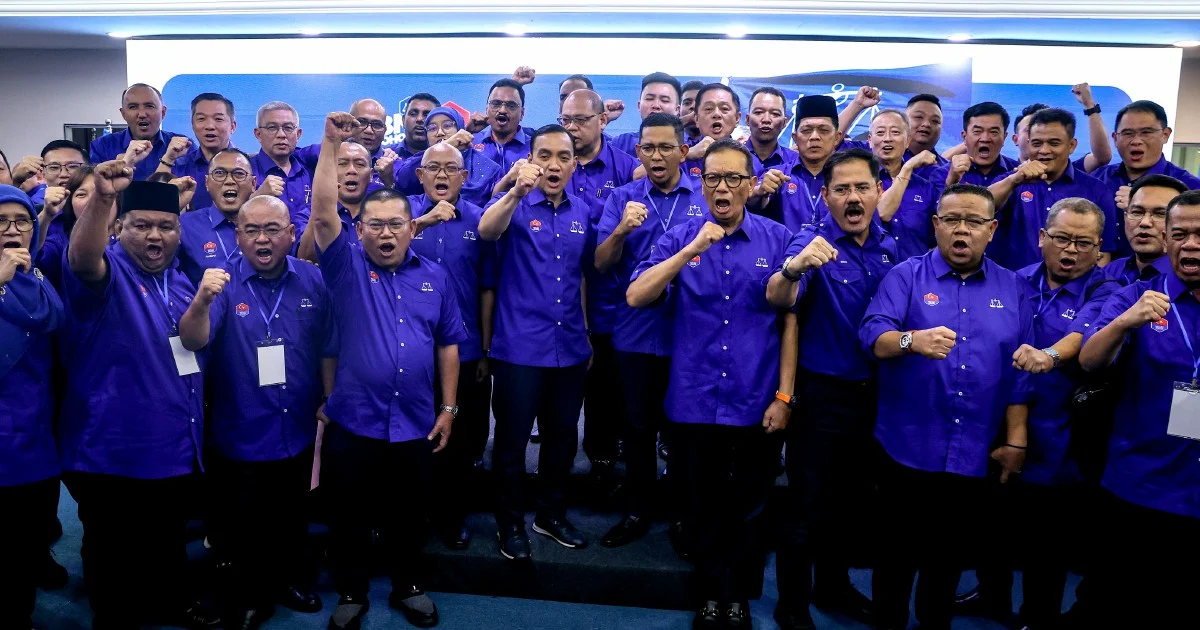
Barisan Nasional has put to rest weeks of political speculation by announcing its official candidate line-up for the Johor state election, with no representation for Parti Wawasan Negara on the ballot. The absence of any Wawasan candidates from the BN roster marks a decisive moment in state politics, as the ruling coalition moves forward with what appears to be a solo strategy rather than the rumoured broader alliance that observers had anticipated.
Talk of a possible cooperation framework had circulated among political insiders for several months, with Pas and Parti Wawasan Negara reportedly exploring avenues to join forces with BN in the forthcoming poll. Such an arrangement, had it materialised, would have fundamentally reshaped Johor's political landscape by consolidating three significant blocs under a single electoral banner. The speculative discourse suggested that such a coalition could enhance BN's organisational capacity and broaden its appeal across different voter demographics, particularly in constituencies where Wawasan or Pas held existing support networks.
Yet the actual candidate announcement dispels this narrative entirely. By fielding candidates under the BN banner alone, the coalition demonstrates a confidence in its own organisational machinery and electoral prospects that may have rendered further partnership negotiations unnecessary. The decision also reflects pragmatic calculations about seat distribution and the political costs of accommodating additional partners, each with their own territorial interests and candidate expectations.
The implications for Wawasan are significant. The party, which has sought to position itself as a moderate force in Malaysian politics, now faces electoral exclusion from the BN machinery in Johor. This outcome potentially constrains Wawasan's ability to contest seats under the established coalition framework, forcing the party to navigate a more challenging political terrain if it opts to field candidates independently or seek alternative alliances.
For Pas, meanwhile, the BN announcement may signal that cooperative overtures from the coalition have limits. Although Pas was not specifically mentioned in today's developments, the pattern of BN proceeding unilaterally raises questions about the scope and nature of any understanding between the two parties at the state level. The Islamic party's relationship with BN remains complex and varies significantly across different state contexts, and Johor's approach may set precedent for how cooperation is structured elsewhere.
The timing of the candidate announcement carries strategic weight. By moving quickly to unveil its full slate, BN establishes momentum heading toward polling day and prevents prolonged speculation that could undermine internal cohesion. Coalition members have investment in seeing a unified front emerge, and the announcement provides clarity about resource allocation and campaign focus across the state's various constituencies.
Johor's political environment has evolved considerably in recent years, with shifting voter preferences and periodic realignments of party alignments. BN's decision to contest primarily on its own organisational strength suggests confidence that recent electoral patterns favour the coalition's existing structure. The composition of BN's candidate list will likely reveal how the coalition has adjusted its approach to address previous vulnerabilities and target swing constituencies.
Regional observers will be monitoring how this Johor template influences BN's strategy in other upcoming state elections. Coalition calculations made for Johor may establish expectations and precedents that shape negotiations in Kedah, Terengganu, and other states preparing for polls. A successful BN campaign without expanded partnership frameworks could reinforce the coalition's conviction that broadening alliances is strategically unnecessary.
The evolution away from tripartite cooperation also reflects the complex mathematics of Malaysian electoral politics, where adding partners creates geometric complications in seat distribution, campaign messaging, and post-election governance arrangements. BN leadership may have concluded that managing coalition coherence with existing partners—UMNO, MCA, MIC, and GPS—demands sufficient attention without incorporating additional political entities with potentially divergent policy priorities.
Looking ahead, stakeholders will scrutinise campaign performance metrics, polling trends, and voter responses to BN's candidate selections to assess whether the coalition's solo approach strengthens or weakens its competitive position. The decision to proceed without Wawasan representation represents not merely an administrative matter but a substantive choice about Johor's political future and the trajectory of coalition politics in Malaysia's largest peninsular state by population.
Wawasan's response to exclusion from BN's candidate roster will also prove telling. The party's subsequent strategic choices—whether to contest independently, seek other partnerships, or adopt a lower profile in Johor—will shape both its own trajectory and the broader landscape of opposition and coalition politics in the state.