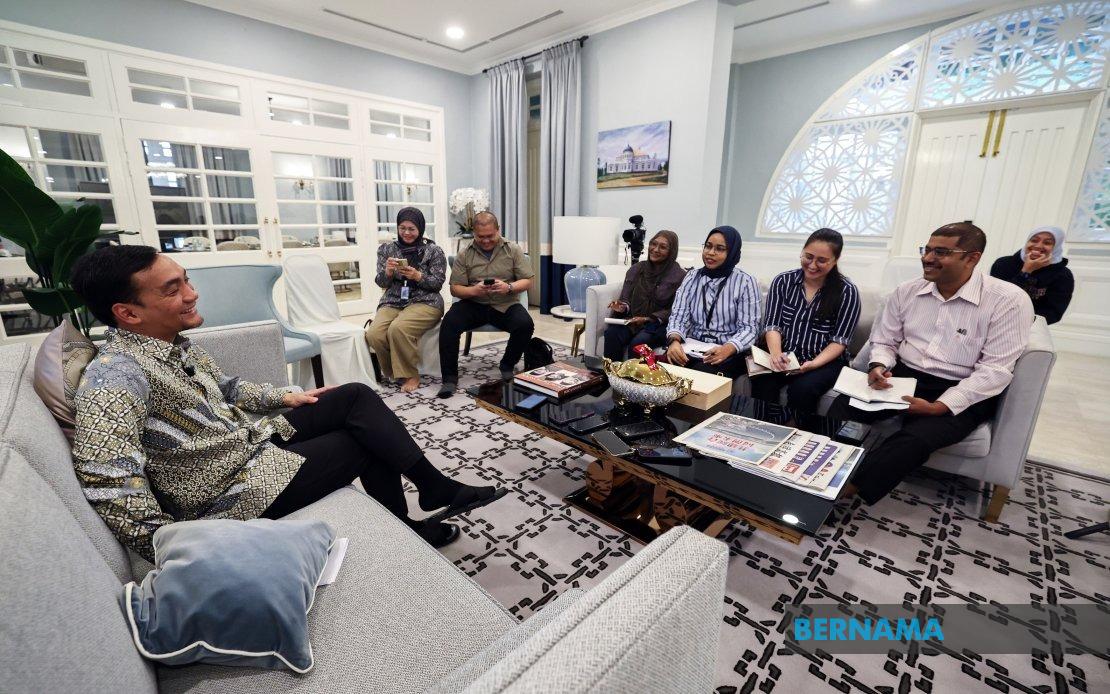
As Johor's Barisan Nasional organisation unveiled its candidate slate for the July 11 state election, Menteri Besar Datuk Onn Hafiz Ghazi sought to manage expectations among party members who failed to secure nomination, framing exclusion from the ballot as a temporary setback rather than a final verdict on their political future. In a media interview at his official residence in Saujana, the Machap assemblyman articulated a vision of inclusive party involvement where those passed over could channel their energies into alternative structures, from parliamentary representation to grassroots party work.
Onn Hafiz's remarks come at a sensitive juncture for BN in Johor, where internal competition for candidacy often generates friction among ambitious party figures. His counsel emphasised that limited seat availability inherently means some aspirants will be disappointed, a reality facing every major political coalition in Malaysia's electoral system. Rather than allowing such disappointment to fester into resentment or defection, the Menteri Besar sought to reframe non-selection as an opportunity for different forms of service aligned with party objectives. This messaging reflects the coalition's efforts to maintain organisational cohesion during the candidate selection phase, traditionally a flashpoint for internal party tensions.
The candidate vetting process remains incomplete, with BN's leadership still finalising approximately 20 percent of its slate as of mid-June. Crucially, Onn Hafiz cautioned that even those at the advanced stages of selection face uncertainty until they physically receive their appointment letters, known as watikahs. Historical precedent supports this caution, as the BN president has previously rescinded issued watikahs in response to changed circumstances or internal deliberations. This fluidity means rejected aspirants cannot entirely rule out late repositioning, though such reversals remain exceptional rather than routine. The extended timeline through nomination day on June 27 preserves some possibility for adjustments, though most selection decisions have effectively crystallised by this stage.
On candidate selection criteria, Onn Hafiz outlined a multi-dimensional framework emphasising community integration and proven capacity to serve constituents over demographic characteristics. The BN philosophy articulated by party leadership coalesces around the concept of WALI candidates—winnable, acceptable, and likeable figures—who command local recognition and enjoy community trust. Age emerged as a secondary consideration under this framework; Onn Hafiz explicitly rejected age as a primary determinant, instead prioritising capability and demonstrated commitment to constituent service. This position implicitly addresses internal BN debates about generational renewal, suggesting that while youth representation matters strategically, it cannot override practical considerations of electability and local standing.
The selection mechanism itself remains hierarchical and centralised, with Onn Hafiz confirming that candidate decisions require endorsement from BN chairman and UMNO president Datuk Seri Dr Ahmad Zahid Hamidi alongside senior coalition figures. This structure prevents individual state leaders from exercising unilateral control over nominations, ensuring that broader BN interests and inter-party balance factor into contentious decisions. Such centralisation, while sometimes frustrating to state-level operatives, serves to moderate intra-coalition conflicts and preserve the federal character of BN governance. For defeated aspirants, this distributes responsibility across multiple leadership levels rather than concentrating blame on the Menteri Besar alone.
Young voters and first-time voters represent a strategically critical demographic in Johor's electoral calculus, with those under 40 representing between 20 and 40 percent of the state's population. Onn Hafiz acknowledged this significance while noting that BN's elected representatives have actively engaged youth constituencies in recognition of their ballot influence. The coalition's emphasis on youth engagement reflects genuine demographic realities—Johor's young population could decisively swing marginal seats—while also potentially justifying generational considerations in candidate selection. This tension between demographic importance and limited candidacy slots inevitably generates competition for nominations among younger aspirants, adding another dimension to selection controversy.
The Menteri Besar explicitly appealed to Johoreans across the state and even those resident in Singapore to exercise their voting rights on July 11, framing electoral participation as essential to representative democracy. This appeal acknowledges the cross-border nature of Johor's labour market, where significant worker populations commute daily to Singapore and may possess voting rights elsewhere. By directing engagement appeals to this mobile population, BN signal awareness of migration patterns that affect electoral constituencies. Higher voter turnout, in Onn Hafiz's calculus, strengthens the legitimacy of electoral outcomes and ensures that resulting governments possess robust mandates for governance.
Onn Hafiz's broader campaign positioning emphasises continuity and delivery, suggesting that the incumbent state government under his leadership merits another term based on demonstrated performance. This emphasis on administrative track record represents the conventional incumbent advantage in electoral competition, though Johor opposition parties have mounted substantive critiques of state governance. The appeal to return BN to power reflects confidence that developmental achievements and service provision outweigh opposition messaging, a gamble that depends heavily on voter perceptions of state-level performance across diverse policy domains from infrastructure to healthcare.
The July 11 election follows a specific electoral calendar that shapes campaign dynamics: nomination day on June 27 provides the formal deadline for candidate registration, while early voting on July 7 accommodates voters unable to cast ballots on the main election day. This compressed timeline from initial candidate announcements through voting day concentrates campaign activity and media attention. For rejected candidates, the abbreviated schedule limits opportunities to build alternative platforms or mount challenges to selection decisions, effectively closing the window for internal party reconsideration. Onn Hafiz's timing in addressing the disappointed aspirants thus serves a pragmatic function of encouraging acceptance before campaign intensity overwhelms alternative considerations.
The broader Malaysian context for Johor's election encompasses ongoing coalition dynamics and federal-state relations within BN's structure. Johor remains a crucial BN stronghold, and electoral performance there carries implications for national coalition health and leadership standing within UMNO. Selection controversies that allow resentment to fester risk fragmenting the grassroots mobilisation essential for maintaining BN's traditional dominance. By publicly encouraging rejected candidates toward alternate roles and emphasising collective mission over individual advancement, Onn Hafiz attempted to preempt defections or passive campaign participation that could diminish BN's electoral machinery. This preventive approach to managing internal dissatisfaction demonstrates sophisticated awareness of how candidate selection disputes can translate into mobilisation problems.
For Southeast Asian observers, Johor's electoral processes reflect the complex interplay between democratic procedure and coalition management in established electoral systems. Malaysia's multi-level federalism creates multiple career pathways for politicians beyond state assemblymen positions, potentially absorbing disappointed candidates into federal parliament or party structures. This differentiated opportunity structure partly explains why state-level selection disappointments, while frustrating, do not necessarily terminate political careers. Onn Hafiz's messaging exploited this structural reality by genuinely offering alternative advancement pathways while maintaining party discipline and coalitional coherence ahead of the decisive July 11 vote.