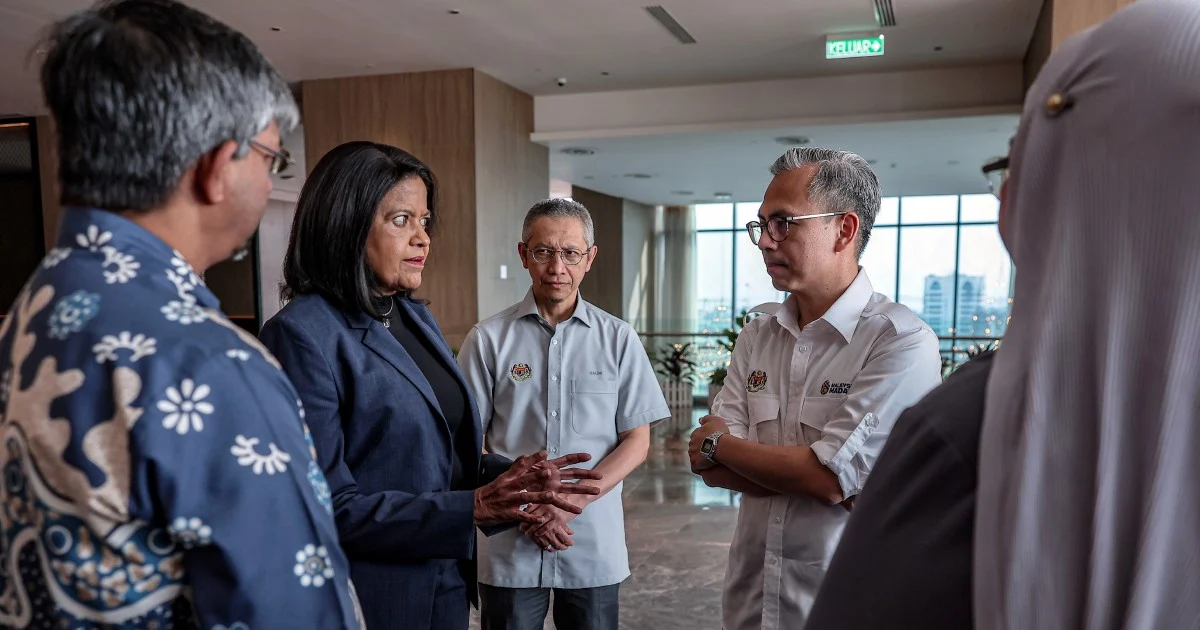
The forthcoming state elections in Johor and Negri Sembilan represent a critical testing ground for the Malaysian Media Council's latest effort to combat election-related disinformation. As digital information flows intensify during electoral campaigns, the MMM has designed an initiative intended to verify media accuracy and maintain public confidence in news sources when voters are making their most consequential democratic decisions.
The initiative arrives at a moment when digital misinformation poses an increasingly sophisticated challenge across Southeast Asia. Election periods create particular vulnerability, as competing political narratives flood social media platforms and messaging services, often outpacing fact-checking efforts. Malaysia has experienced mounting concerns about false claims during previous electoral cycles, prompting media institutions to develop more coordinated and systematic responses to fabricated content.
The MMM's approach represents an institutional effort to bridge the gap between traditional media governance and the rapid spread of information through digital channels. Rather than relying solely on individual news organisations to verify their own content, the council proposes a collaborative framework where media outlets, election officials, and verification specialists work in concert. This structural change reflects recognition that combating misinformation requires coordination across multiple stakeholders rather than isolated institutional efforts.
During the Johor and Negri Sembilan campaigns, the MMM will deploy this mechanism across the state, monitoring media coverage and identifying claims requiring verification. The system will distinguish between legitimate editorial choices, including critical reporting, and demonstrably false factual assertions that mislead voters. This distinction proves essential, as overzealous fact-checking can blur into censorship if it penalises legitimate political criticism or analytical disagreement.
For Malaysian readers and regional observers, the outcomes in these two states carry implications extending beyond their immediate constituencies. Southeast Asia faces persistent challenges with election-related disinformation, from Thailand to the Philippines to Indonesia. A successful Malaysian model could offer valuable lessons for other democracies grappling with similar pressures. Conversely, implementation difficulties could reveal the practical constraints on coordinated media verification in rapidly evolving digital environments.
The testing phase will reveal whether institutional mechanisms can respond with sufficient speed to match misinformation propagation rates. False narratives frequently circulate widely before fact-checks reach comparable audiences, particularly among voters who encounter claims through closed messaging groups rather than public platforms. The MMM's approach will be evaluated partly on whether it can overcome this timing disadvantage through early detection and rapid distribution of verified information.
Public trust in electoral processes depends significantly on information quality during campaigns. When voters encounter contradictory claims from competing sources, they struggle to make informed choices. If the MMM's initiative successfully establishes a credible, neutral arbitration mechanism, it could substantially improve voters' confidence in their ability to distinguish reliable reporting from propaganda. However, if various political actors question the council's neutrality or accuse it of bias toward particular candidates or parties, the mechanism risks becoming another contested political battleground.
The initiative also addresses a structural gap in Malaysia's media ecosystem. Individual journalists and editors operate under different ethical codes and organisational pressures. A coordinated council framework can establish consistent standards and prevent selective application of verification depending on political alignment. This uniformity itself becomes valuable, as voters can develop expectations about how different types of claims will be assessed regardless of which outlet reports them.
Implementation will encounter practical obstacles. Distinguishing between false statements and matters of interpretation requires judgment, creating inherent subjectivity. Claims about economic policy impacts, for instance, involve forecasts and assumptions where reasonable people disagree. The MMM must develop clear protocols for identifying unambiguous falsehoods while recognising legitimate areas of political contestation where verification plays no role.
Resource constraints will also test the initiative's viability. Comprehensive monitoring of all campaign statements across both states requires substantial staffing and technical capability. The council will need to prioritise which claims receive verification effort, inevitably leaving some false narratives unchallenged. Transparency about these prioritisation decisions becomes important for maintaining the mechanism's credibility.
The political context surrounding the initiative matters considerably. If major political parties view the MMM as hostile to their interests, they may discourage their supporters from accepting the council's findings or may themselves circulate competing claims about the council's bias. Building cross-party acceptance requires demonstrating consistent application of standards regardless of which candidates or parties benefit from particular verdicts.
Regional patterns suggest that successful misinformation initiatives require multiple reinforcing components rather than single interventions. Media literacy among voters, transparent sourcing by journalists, platform accountability for content distribution, and institutional fact-checking all work together more effectively than any one mechanism alone. The Johor and Negri Sembilan elections will generate valuable data about which combinations prove most effective within Malaysia's specific political and media environment.
As these elections proceed, observers throughout Southeast Asia will be monitoring whether the MMM succeeds in establishing a credible, efficient, and politically sustainable system for protecting election-era information integrity. The outcomes will shape not only how Malaysia addresses misinformation in future campaigns but potentially influence how other regional democracies approach similar challenges.

