The upcoming Johor and Negeri Sembilan state elections will serve as a testing ground for the Malaysian Media Council's newly developed Rapid Response Election Initiative, a coordinated effort designed to identify and neutralize misinformation before it spreads during campaign periods. With voting scheduled for July 11 in Johor and August 1 in Negeri Sembilan, the sequential timing offers the MMC a valuable opportunity to pilot the programme and make real-time adjustments before the second election takes place.
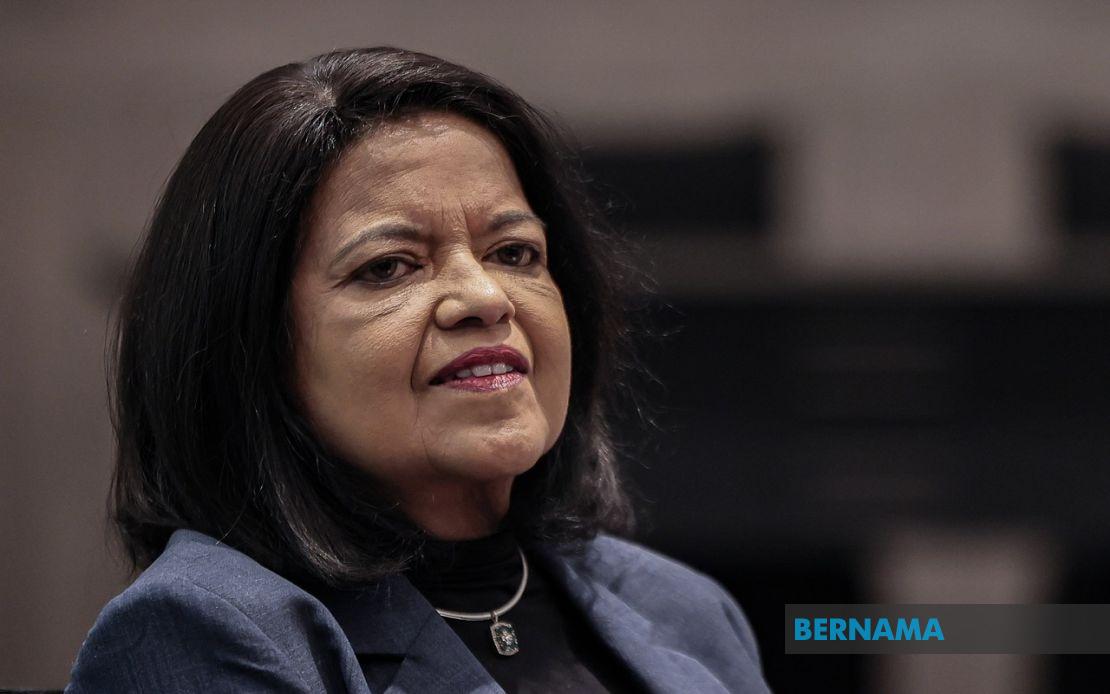
MMC chairperson Tan Sri Nallini Pathmanathan outlined the strategic advantage of this arrangement at a Media Dialogue Session held alongside National Journalists' Day (HAWANA) 2026 celebrations in Butterworth. She emphasized that insights gained from monitoring the Johor campaign can be immediately incorporated into the Negeri Sembilan exercise, allowing the council to refine its approach and identify gaps in the system as it operates in practice. This iterative approach transforms potential weaknesses into learning opportunities across both electoral contests.
The initiative addresses a specific and growing problem: the proliferation of content fraudulently attributed to legitimate media organizations. This encompasses fabricated news graphics bearing authentic logos, digitally manipulated screenshots presented as genuine reporting, and entirely forged articles carrying the mastheads of established news outlets. Such material poses a particular threat during elections because voters may inadvertently accept false information as credible if it appears to come from trusted journalistic sources. The MMC's mechanism aims to provide rapid verification of disputed content, cutting through the fog of misinformation before falsehoods take root in public consciousness.
The operational framework distributes responsibilities across multiple stakeholders, each playing a defined role within the verification ecosystem. The MMC functions as a coordination hub rather than an arbiter of truth, a distinction that protects its institutional credibility and avoids the appearance of political interference. Individual media organizations themselves conduct verification of content claiming to originate from their platforms, ensuring that decisions about authenticity come from the entities with the most intimate knowledge of their own output and editorial standards. This decentralized approach builds in safeguards against any single institution wielding excessive power over information verification during the sensitive period of electoral competition.
Supporting agencies contribute specialized expertise to the framework. The Election Commission serves as the authoritative reference point for queries concerning election procedures, voting regulations, candidate eligibility, and other matters falling within its statutory domain. Bernama, Malaysia's national news agency, takes responsibility for amplifying verified information to the broader public through its distribution networks and relationships with media partners. Content Forum Malaysia provides technical guidance on digital platform engagement and media literacy initiatives, while the Department of Community Communications and National Information Dissemination Centres extend verified information into grassroots communities where misinformation often circulates most freely. The Malaysian Communications and Multimedia Commission stands ready to invoke regulatory tools when necessary, providing a backstop mechanism for cases requiring formal action or technical intervention by platform operators.
The initiative deliberately narrows its scope to avoid overreach into politically sensitive territory. Nallini was explicit that the mechanism does not evaluate the truthfulness of political manifestos, campaign promises, or claims made by competing candidates and parties. Such judgments would inevitably invite accusations of partisan bias and undermine the system's credibility with all participants in the electoral process. Instead, the framework maintains laser focus on a more limited but critically important task: determining whether specific content genuinely originated from the media organizations to which it is attributed. This distinction allows the system to function as a neutral arbiter of a factual, verifiable matter rather than as an adjudicator of political truth.
The practical operation of the mechanism can be illustrated through concrete examples. Consider a digitally fabricated graphic bearing a major news organization's logo, claiming that a particular candidate has withdrawn from the race. Such material could circulate widely on social media within minutes, potentially influencing voting intentions before verification becomes possible. Under the MMC's system, the media organization involved would receive the disputed content, review its archives and systems, and confirm within minutes that it never published such a report. That clarification could then be rapidly disseminated through official channels and fact-checking platforms, allowing the correction to reach audiences before the misinformation has calcified into widespread belief. Similarly, ambiguous claims about electoral procedures or voting eligibility could be referred directly to the Election Commission for authoritative clarification, ensuring that confusion on such matters does not persist.
The timing of this initiative reflects mounting concerns about the role of synthetic and artificially generated content in electoral contexts. The technological capacity to create convincing false images, videos, and text has advanced dramatically, while the computational resources required to produce such material have simultaneously become more accessible and affordable. During intense election campaigns, when political actors have strong incentives to spread damaging misinformation about opponents, the combination of sophisticated technology and financial incentive creates a genuine threat to informed democratic participation. The MMC's framework represents recognition that traditional fact-checking mechanisms, which typically operate on longer timescales, cannot keep pace with the velocity at which digital misinformation now spreads.
Complementing the rapid response system, the MMC will implement a public awareness campaign centered on the bilingual slogan "Who Said It? What's The Source?" and its Malay equivalent "Siapa kata? Sos mana?" The campaign aims to cultivate skepticism and verification habits among voters, encouraging citizens to pause before accepting and sharing information they encounter online. Nallini framed this not as an instruction to remain silent or withdraw from public discourse, but rather as an invitation to engage in more thoughtful information consumption. She acknowledged that democratic participation inherently involves reading, debating, and sharing information, yet emphasized that such engagement depends fundamentally upon the reliability of the information circulating through public channels.
The initiative represents a collaborative rather than top-down approach to combating misinformation, with multiple institutions bringing their particular strengths and expertise to a common challenge. Communications Minister Datuk Fahmi Fadzil's presence at the Media Dialogue Session signaled government support for this decentralized model, which avoids concentrating power over information verification in any single state agency. The participation of senior figures from Bernama, content platform representatives, and leaders from private media organizations demonstrated broad institutional buy-in for the framework. This multi-stakeholder coalition acknowledges that no single entity possesses sufficient reach, expertise, and credibility to address the misinformation challenge unilaterally.
For Malaysian voters and the broader Southeast Asian region, the Johor and Negeri Sembilan elections represent more than routine electoral contests. They constitute a consequential test of whether democracies can develop practical, scalable responses to misinformation threats without sacrificing institutional independence or democratic openness. The success or failure of the MMC's initiative could influence how other democracies in the region approach similar challenges, particularly as artificial intelligence and synthetic media technologies become increasingly sophisticated. The framework's emphasis on transparency, institutional separation of powers, and public education suggests a pathway toward defending democratic integrity that respects the legitimacy of electoral competition and the intelligence of voters.

