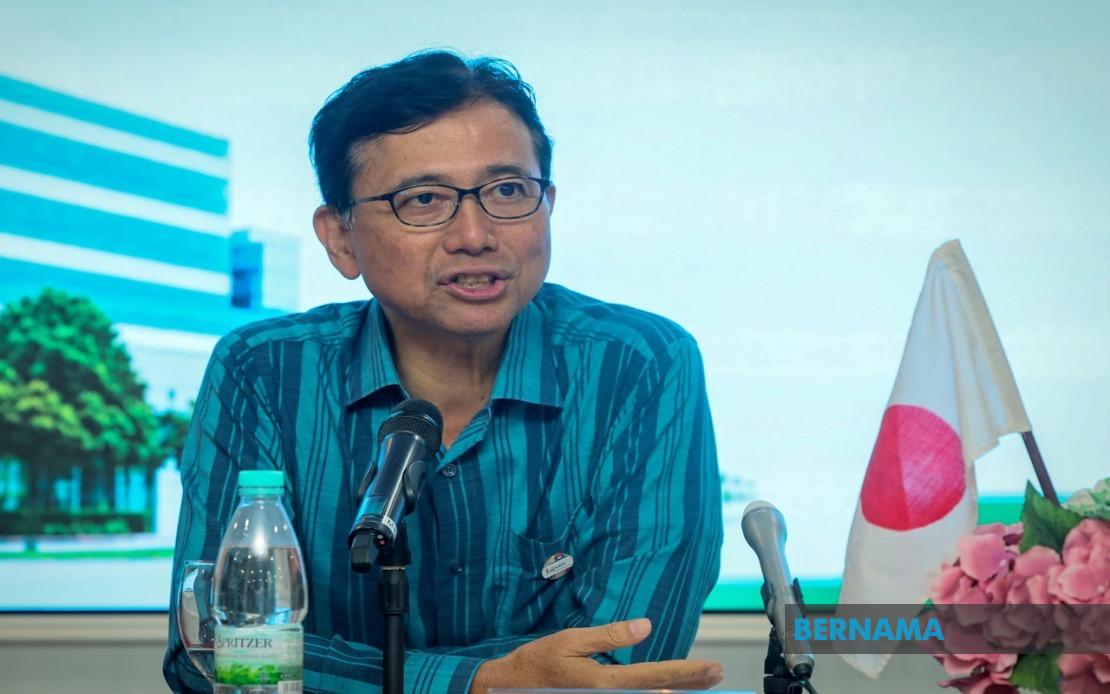
Japan's reimagined approach to regional engagement through its updated Free and Open Indo-Pacific framework represents a significant shift towards technology-driven cooperation that directly benefits Malaysia's aspirations to emerge as Southeast Asia's premier digital and technology hub, according to Japanese Ambassador to Malaysia Noriyuki Shikata. The framework, unveiled by Prime Minister Sanae Takaichi in May, signals Tokyo's willingness to move beyond traditional economic partnerships into frontier domains including artificial intelligence, cross-border data flows, submarine cable infrastructure and satellite systems—sectors where Malaysia holds considerable geographic and strategic advantage.
Building upon the original FOIP concept introduced by former Prime Minister Shinzo Abe in 2016, the updated iteration represents a deliberate recalibration of Japan's regional strategic posture. Where the initial framework emphasized broad principles of peace and stability across the Indo-Pacific, Takaichi's evolution distils these concepts into concrete economic and security outcomes. This pragmatic reorientation acknowledges the reality that regional prosperity increasingly depends on industrial resilience, technological sovereignty and collaborative capacity development rather than abstract geopolitical principles. The framework's explicit focus on the Global South reflects Japan's understanding that sustained regional growth requires inclusive development partnerships rather than hierarchical arrangements.
The economic teeth behind this strategic vision arrives through the POWERR Asia initiative, a dedicated US$10 billion financing mechanism designed to strengthen ASEAN member states' energy independence and supply chain security. This substantial commitment enables partner nations like Malaysia to diversify fuel procurement, build strategic fuel reserves and secure access to critical raw materials essential for advanced manufacturing and technology production. For Malaysian policymakers navigating global supply chain volatility and energy market uncertainties, such dedicated financial support provides tangible tools for implementing economic resilience strategies without incurring additional sovereign debt burdens.
The alignment between Japan's updated FOIP and Malaysia's own digital transformation agenda extends beyond rhetorical compatibility into concrete operational opportunities. Japanese Ambassador Shikata explicitly identified Malaysia's semiconductor positioning as a focal point for expanded investment flows, with particular emphasis on advanced packaging technologies, artificial intelligence infrastructure development and cloud computing ecosystems. These represent precisely the high-value manufacturing segments that Malaysia's government has identified as central to transitioning the economy away from traditional labour-intensive production towards knowledge-intensive industries commanding premium margins and sustained employment quality.
The broader bilateral relationship context illuminates why this strategic alignment carries particular significance for Malaysian development prospects. The Comprehensive Strategic Partnership established between Japan and Malaysia in December 2023 fundamentally reorients the historical relationship structure. The original Look East Policy, which guided Malaysia-Japan ties from the 1980s onwards, centered on technology transfer and manufacturing competency building within a primarily hierarchical framework. The CSP replaces this model with a genuinely collaborative arrangement premised on co-creation, knowledge reciprocity and symmetrical innovation partnerships. This conceptual shift proves consequential because it positions Malaysian technology entrepreneurs and enterprises as creative equals rather than manufacturing appendages.
Prime Minister Datuk Seri Anwar Ibrahim's recent engagements with major Japanese industrial corporations including Mitsubishi Corporation, ENEOS, DENSO, IBM and Marubeni provide concrete evidence of this evolving partnership architecture taking operational form. These interactions between Malaysia's political leadership and Japan's commanding industrial heights signal serious intent from both sides to translate strategic partnership language into binding commercial commitments. The involvement of companies spanning energy, automotive components, semiconductors and information technology indicates Japanese corporate recognition that Malaysia represents genuine opportunity for profitable expansion rather than a mature market warranting incremental optimization.
The quantum computing and artificial intelligence dimensions merit particular attention given their implications for Malaysia's economic trajectory across the coming decade. These technologies represent the genuine frontier of value creation in the global economy, with applications spanning financial services, healthcare, manufacturing optimization and digital infrastructure. Malaysian participation in co-developing these capabilities rather than merely consuming them represents a fundamental departure from traditional economic structures. Equally important, such collaborative development initiatives create employment pathways for Malaysia's substantial technology graduate population while building institutional knowledge and intellectual property assets domestically rather than concentrating them in foreign corporations' overseas research facilities.
Critical infrastructure protection and supply chain security, the other dimensions Shikata highlighted as emerging focus areas, carry particular urgency for Malaysia given the nation's geographic position within contested regional waters and its functional role as a critical node within regional digital and logistics networks. Japanese technological expertise in infrastructure resilience and supply chain visibility aligns closely with Malaysian vulnerabilities identified through pandemic disruptions and geopolitical tensions in the South China Sea. Cooperative security arrangements developed through this framework could substantially improve Malaysia's capacity to maintain operational continuity during regional disruptions while reducing dependency on any single external power for critical system protection.
The framework's explicit acknowledgment of alignment with the ASEAN Outlook on the Indo-Pacific represents another significant dimension often overlooked in headline coverage. Rather than presenting itself as an alternative vision to ASEAN's own regional preferences, Japan's updated FOIP positions itself as complementary and reinforcing. This diplomatic positioning proves crucial for Malaysia, which occupies a position between major power competition and ASEAN solidarity. By adopting a collaborative rather than hegemonic stance, Japan creates conditions under which Malaysia can simultaneously deepen Japan partnerships while maintaining strategic autonomy and ASEAN solidarity, avoiding the binary choice trap that constrains other regional states.
For Malaysia's business environment specifically, the framework creates conditions for Japanese firms to undertake longer-term strategic investments beyond the quarterly earnings horizons that characterize purely cost-arbitrage manufacturing investment. High-value technology partnerships, joint research initiatives and collaborative infrastructure development generate employment stability, professional skills development and local innovation ecosystem strengthening unavailable through traditional foreign direct investment models. Malaysian enterprises gain meaningful access to Japanese technological expertise, quality standards and global market networks previously available only through subordinate relationships within Japanese corporate hierarchies.
Looking forward, the concrete manifestations of this strategic partnership will determine its ultimate regional significance. Joint initiatives in quantum computing, artificial intelligence and critical infrastructure protection require sustained commitment transcending multiple political cycles in both capitals. The depth of Japanese corporate investment in Malaysia's technology ecosystem will ultimately determine whether this partnership framework represents genuine reorientation or represents another iteration of aspirational regional rhetoric. Initial indicators—Anwar Ibrahim's Japanese visits, the POWERR Asia financing commitment and Ambassador Shikata's explicit endorsement—suggest serious intent, though the test lies in the cumulative effect of implementation decisions across the coming years.

