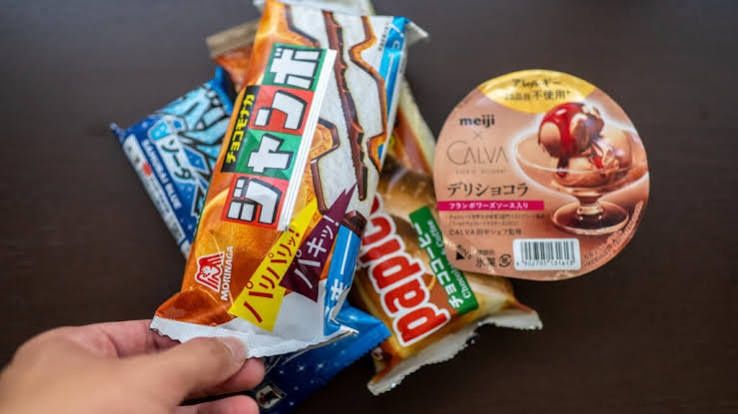
Japan's antitrust regulator has moved decisively against what authorities believe may be a widespread price-fixing conspiracy among the nation's dominant ice cream producers. The Japan Fair Trade Commission conducted simultaneous raids on Tuesday at the headquarters of six major manufacturers—Meiji Co., Morinaga Milk Industry Co., Lotte Co., Ezaki Glico Co., Morinaga & Co., and Akagi Nyugyo Co.—on suspicion that company officials have engaged in sustained collusion to artificially elevate consumer prices. According to sources familiar with the investigation, the coordination is alleged to have persisted for several years, with executives reportedly communicating via email and face-to-face meetings to synchronize the timing and magnitude of price increases.
The timing of the enforcement action is particularly notable given Japan's booming ice cream market, which achieved record revenues exceeding 660 billion yen in the fiscal year ending March as consumers sought relief during the nation's hottest summer since records began in 1989. This seasonal surge in demand would ordinarily benefit producers through volume increases, yet the coordinated price elevation suggests companies may have exploited both favourable market conditions and broader inflationary pressures to expand margins. The JFTC is investigating whether the firms justified their price hikes solely through genuine cost pressures from raw material expenses, or whether they capitalized on inflation as cover to raise prices beyond economically defensible levels.
Public disclosures from the targeted companies confirm the enforcement action. Five of the six firms released statements on Tuesday or Wednesday acknowledging that JFTC officials had conducted on-site inspections and pledging full cooperation with the investigation. Natsuyo Suzuki, representing Akagi Nyugyo, similarly confirmed the inspection and committed to assisting investigators. The measured, professional responses from the companies suggest awareness that non-cooperation would invite additional regulatory scrutiny, though the statements conspicuously avoid either admitting or denying wrongdoing.
The pattern of suspected collusion appears unmistakable when examined chronologically. Since approximately 2022, all six companies have implemented retail price increases with striking synchronicity, raising prices at nearly identical times each year according to local media reports. This temporal correlation, combined with alleged internal communications directing coordinated action, forms the evidentiary foundation for the JFTC's intervention. Such parallel behaviour among competitors, particularly in an oligopolistic market dominated by these six players, typically signals either extraordinary coincidence or deliberate coordination—a distinction the regulator is positioned to clarify through its investigation.
The ice cream sector's market structure provides context for understanding why regulators might scrutinize coordinated behaviour more intensely in this industry than others. Japan's ice cream market is highly concentrated, with these six firms controlling the vast majority of domestic production and retail sales. This market concentration means that when the leading players move in lockstep on pricing, individual consumers face limited alternatives and effectively bear the consequences of any collusive arrangement. For households budgeting through inflationary periods, synchronized price increases across nearly all major brands represent a meaningful erosion of purchasing power with minimal competitive relief.
The legal consequences for confirmed cartel activity in Japan carry meaningful weight. If the JFTC's investigation concludes that collusion occurred, the regulator possesses authority to mandate that the implicated firms restructure their business practices to prevent recurrence and to levy financial penalties. The combination of mandatory operational reforms and monetary fines creates incentives for compliance with competition law, though Japanese enforcement actions have historically resulted in penalties lower than those administered by antitrust authorities in the European Union or United States. Nonetheless, the reputational damage and operational disruption from a formal cartel finding would substantially impact these manufacturers.
The investigation also reflects broader global trends in antitrust enforcement. Regulators worldwide have intensified scrutiny of pricing practices during inflationary periods, recognizing that companies sometimes exploit macroeconomic conditions as justification for margin-expanding increases. The JFTC's specific focus on whether price hikes exceeded justified cost increases mirrors approaches adopted by competition authorities from Seoul to Singapore, which are similarly examining whether domestic firms have used inflation as cover for profit maximisation rather than cost recovery. This coordinated global attention to inflation-era pricing suggests a regulatory consensus that consumers warrant protection from anti-competitive conduct even in economically turbulent environments.
For Malaysia and other Southeast Asian economies, the Japanese investigation carries instructive implications. Regional ice cream and frozen dairy markets share structural similarities with Japan's sector, featuring a small number of dominant producers competing across multiple product categories and distribution channels. Malaysian consumers and regulators may find value in monitoring whether similar synchronised pricing patterns emerge domestically, particularly as inflationary pressures persist across the region. The JFTC's enforcement action demonstrates that even wealthy, sophisticated markets with established competition frameworks require active regulatory vigilance to prevent collusive behaviour.
The broader economic significance extends beyond the ice cream category itself. If the JFTC substantiates cartel allegations, the case will reinforce that Japanese authorities possess both the investigative capability and institutional will to challenge anti-competitive conduct by major corporations, regardless of their market prominence or economic importance. This sends a deterrent message to producers across multiple sectors that coordinated pricing strategies carry genuine legal risk. Conversely, if the investigation concludes without finding violations, it would signal either that the companies operated independently despite parallel pricing, or that sufficient ambiguity exists regarding intent and communication to preclude legal action—an outcome that would reduce competitive law enforcement's practical deterrent effect.
The investigation's progression will likely unfold over several months as the JFTC interviews company officials, examines internal communications, and consults economic experts regarding cost justifications for the price increases. Industry participants and competitors will watch closely for signals regarding the regulator's evidentiary standards and enforcement philosophy, as outcomes in high-profile cases shape behaviour across entire sectors. Consumers, meanwhile, have an immediate practical interest in the investigation's outcome, as a successful enforcement action might eventually moderate price trajectories in a category touching millions of households annually, particularly during summer months when ice cream consumption peaks.

