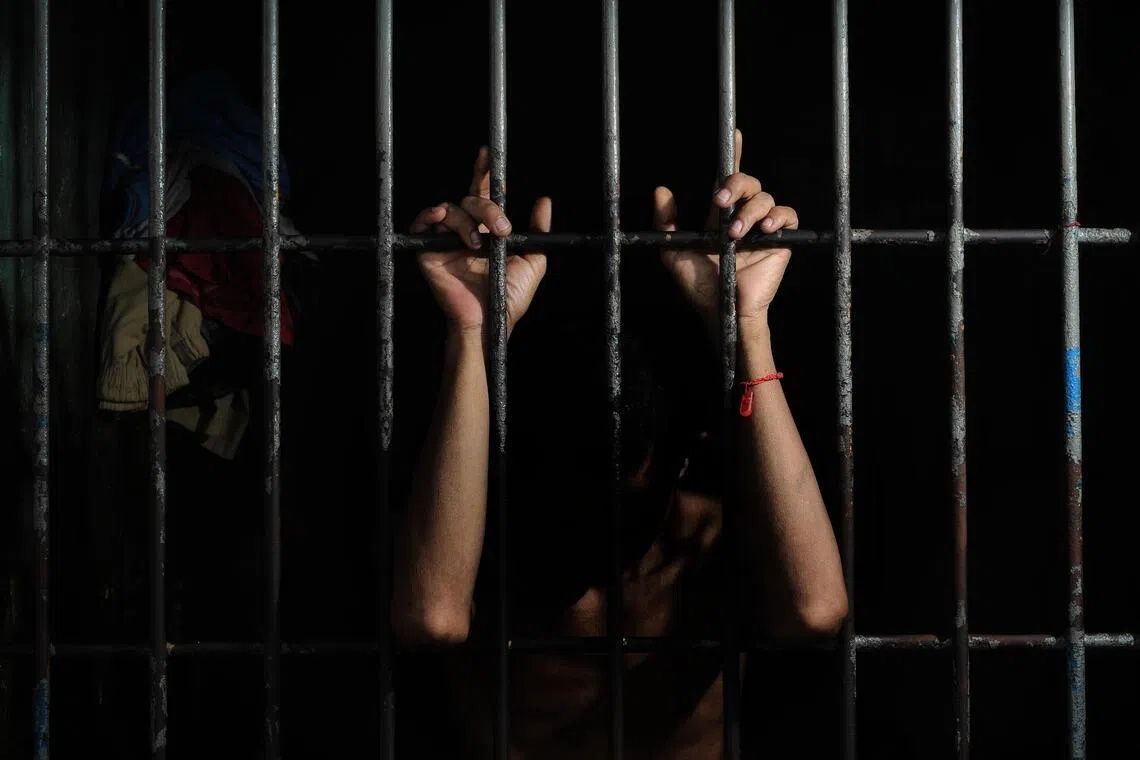
A mother in western Japan has filed a landmark lawsuit against the state, seeking 100 million yen in compensation after her 16-year-old daughter died following a traumatic 18-day detention and intensive police interrogations. The case, filed at Kobe district court in June, represents the latest and most tragic documented instance of Japan's controversial "hostage justice" system, where authorities are accused of using prolonged detention and coercive questioning to extract confessions from suspects rather than establishing guilt through evidence. The teenager, identified only as Runa in court documents, weighed just 20 kilograms at the time of her death in December, five months after her release from custody—a physical deterioration that experts say resulted directly from the psychological trauma and stress disorders she developed during her ordeal.
Runa's arrest in June of the previous year stemmed from an allegation that she had assaulted a patient at a care facility for people with disabilities located in Hyogo Prefecture, where she worked. According to the lawsuit, the alleged incident occurred during a Valentine's Day celebration and involved Runa attempting to prevent a patient from biting another resident by gently pressing her hand against the patient's chin. This characterization of her actions as a defensive intervention rather than an assault became central to her legal defence, yet authorities initially treated the case with sufficient seriousness to justify detention. Despite Runa's consistent assertions of innocence and the apparent minor nature of the alleged contact, prosecutors twice requested extensions of her detention while simultaneously blocking her lawyer's appeals to a judge for her release.
The conditions under which Runa was held exemplify the criticisms that international human rights organisations have levelled at Japan's criminal justice framework for decades. During her confinement, she was isolated from her family and permitted contact only with her legal representatives, a restriction that advocates argue exacerbates psychological stress and vulnerability to coercion. More troublingly, she faced repeated interrogations designed to extract a confession, with investigators employing intimidation tactics including threats of reformatory placement and the suggestion that she would be prevented from seeing her mother unless she admitted guilt. According to Masahiro Sasaki, the lawyer representing Runa's mother, interrogators used leading questions such as "You did it, didn't you? Just tell the truth," a pattern documented in Runa's personal journal written while detained.
The psychological toll of this detention manifested in severe mental health consequences that ultimately proved fatal. Medical examinations conducted after her release diagnosed Runa with acute stress disorder, eating disorder, and post-traumatic stress disorder—three conditions that compound one another and severely impact physical health. The eating disorders in particular, combined with the emotional trauma, created a cascade effect leading to progressive physical deterioration. It was only after Runa vomited, collapsed, and received emergency medical treatment at an outside hospital that prosecutors agreed to release her on grounds of non-prosecution, effectively dropping all charges. By this point, however, the damage to her physical and psychological wellbeing had become irreversible.
Runa's case illuminates fundamental structural problems within Japan's criminal justice system that extend far beyond individual prosecutorial misconduct. The legal framework places considerable weight on confessions as evidence, creating perverse incentives for authorities to secure admissions of guilt rather than conduct thorough investigations. This dynamic is particularly pronounced in cases involving young suspects who lack the experience and resilience of adult defendants and are more susceptible to psychological pressure. Runa's age—16 at the time of arrest—should have rendered detention justifiable only when absolutely necessary according to juvenile justice principles, yet prosecutors proceeded with detention and sought extensions despite the alleged victim having no prior record of delinquency and residing under parental supervision, factors that would typically suggest minimal flight risk or likelihood of evidence destruction.
The term "hostage justice," widely used in critiques of the Japanese system, encapsulates how suspects effectively become bargaining chips held by the state until they provide the confession authorities seek. Critics argue that innocence is not presumed but rather must be proven through the defendant's actions—specifically, their willingness to confess and cooperate. Those who maintain their innocence or exercise their right to silence face extended pre-trial detention, creating a perverse incentive structure that rewards false confessions and punishes those who insist on their legal rights. This systemic bias has resulted in numerous documented cases of wrongful conviction, many of which were only discovered years or decades after the fact.
The Iwao Hakamada case provides a sobering historical parallel and context for understanding why Runa's case resonates so powerfully within Japan. Hakamada spent nearly five decades on death row, becoming the world's longest-serving death row inmate before his convictions were quashed in 2024. The Supreme Court's review of his case determined that his confessions had been extracted through what the court explicitly characterised as "inhumane" interrogations. His eventual exoneration represents not merely a correction of individual injustice but an indictment of systemic practices that have persisted across generations of criminal cases. If such coercive methods could land an innocent man on death row for half a century, the mechanisms that enabled Runa's detention and interrogation clearly remain inadequately reformed.
The lawsuit filed by Runa's mother demands not only financial compensation but also accountability and public acknowledgment of the state's role in her daughter's death. The complaint explicitly characterises Runa as "one of the most tragic victims of hostage justice," framing her case as emblematic of broader systemic failures rather than an isolated aberration. Her mother's public statement—"I want to know what happened to her, and why she was arrested, detained and had to die"—reflects the fundamental questions that continue to plague Japan's justice system. These are not merely technical legal questions about procedure but existential inquiries about whether a justice system that prioritises extracting confessions over establishing truth can claim legitimacy.
International human rights bodies have repeatedly condemned hostage justice practices, yet structural reform has proceeded slowly. The Kobe District Public Prosecutors Office declined to comment on the pending lawsuit, citing their status as defendants, a response that underscores how deeply embedded these practices remain within institutional structures. For Malaysian and Southeast Asian observers, Runa's case serves as a cautionary example of how criminal justice systems can become corrupted when procedural safeguards are eroded and when efficiency in securing convictions supersedes the imperative to protect fundamental rights. The case also demonstrates how vulnerable populations—in this instance, a teenage girl with a disability working in a care facility—face compounded risks within systems that systematically disadvantage those who cannot mount robust legal defences.

