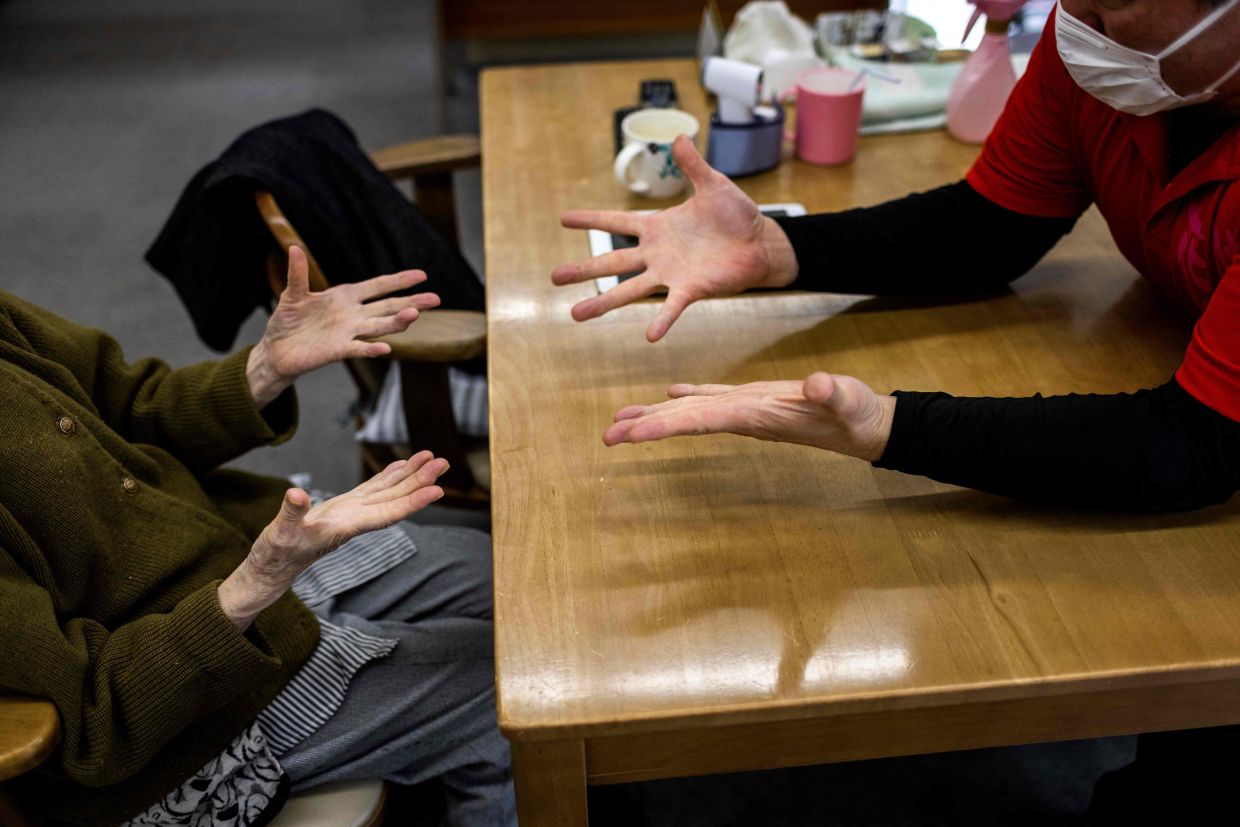
Japan's aging crisis has triggered an unusual and deeply uncomfortable conversation: Could voluntary amputation of immobilised limbs offer a solution to the nation's collapsing care infrastructure? This audacious premise forms the crux of a newly adapted film based on Yo Kusakabe's 2003 novel "Haiyoshin (Useless Body)", which has ignited fierce debate across the country since its theatrical release last month. The 70-year-old former geriatric specialist from Osaka, who once treated elderly patients directly, now argues that in a nation facing catastrophic caregiver shortages, removing paralysed or unresponsive limbs could fundamentally reshape how society manages the care of its oldest citizens—provided such interventions occur with explicit patient consent.
The scale of Japan's demographic crisis cannot be overstated. Nearly one person in three is now aged 65 or older, making Japan home to the world's second-oldest population after Monaco. Government projections reveal an anticipated shortage of approximately 570,000 caregivers by 2040, a gap that threatens to destabilise the entire care ecosystem. Unlike many developed nations that have gradually prepared infrastructure for aging populations, Japan faces a compressed timeline where the proportion of elderly citizens has surged within a single generation. This demographic acceleration has created unprecedented pressure on family members, institutional care facilities, and the broader healthcare system, rendering traditional solutions insufficient for the scale of need emerging across the country.
Kusakabe's central argument, while provocative, emerges from observable realities within Japanese care settings. He contends that immobilised limbs—whether paralysed through stroke, dementia, or degenerative disease—serve no functional purpose for bedridden patients while substantially increasing the physical labour required of caregivers. A patient's inert arm or leg must be carefully maneuvered during dressing, bathing, and repositioning; these appendages become entangled in bedding and clothing, create lifting complications, and significantly amplify the musculoskeletal strain experienced by predominantly female care workers already working exhausting shifts. By removing such non-functional limbs, Kusakabe suggests, the weight reduction alone would ease the biomechanical burden on caregivers whilst potentially improving mobility outcomes for patients confined to wheelchairs or beds. The proposition rests on a utilitarian calculus: if consent is secured and suffering is genuinely reduced, why should society prohibit such interventions?
Interestingly, Kusakabe's fictional framework presents amputation as potentially beneficial for elderly patients themselves, at least in the narrative's initial portrayal. During his medical career, he encountered patients who expressed genuine longing to be rid of limbs that caused constant discomfort, convulsed unpredictably, or hindered their remaining capacity for movement and independence. Within the film's story, amputees experience liberation from chronic pain and discover unexpected agility—tossing balloons and manoeuvring wheelchairs with newfound dexterity. This reframing challenges conventional Western assumptions about bodily integrity and dignity, instead posing a philosophical question that Kusakabe frames starkly: Is it more dignified to struggle painfully pulling an unresponsive arm through a sleeve, or to accept amputation and eliminate that suffering entirely? The question forces confrontation with unstated assumptions about what constitutes a life worth living and whose judgments about such matters should prevail.
Yet Kusakabe's perspective on Japanese end-of-life care practices reveals a deeper cultural contradiction that may render amputation solutions impossible within the current system. Japan's insurance framework heavily subsidises feeding tubes and intravenous nutrition for patients aged 75 and older, creating financial incentives toward aggressive life-prolongation regardless of prognosis or patient preference. Families often resist withdrawal of such interventions not from careful ethical deliberation but from psychological inability to "do nothing" when their elderly relatives approach death. This contrasts sharply with Scandinavian models, particularly in Sweden and Denmark, where palliative care best practice explicitly permits cessation of feeding when elderly patients cease eating naturally. Kusakabe argues that Japan's cultural framework—which equates aggressive medical intervention with moral righteousness and views allowing natural death as abandonment—prevents the rational, compassionate approach to end-of-life decision-making that might make amputation discussions medically and ethically coherent. The very society that might theoretically benefit from his proposal is culturally unprepared to engage such questions.
The film adaptation has attracted responses spanning the spectrum from fascinated engagement to moral outrage. Online reviewers have labeled it variously as "shocking," "the year's most controversial film," and "terrifying madness"—yet notably, some commentators have found unexpected logic in the amputation concept. One reviewer on the cinema information website eiga.com observed that while amputation might initially seem ruthless and unethical, the proposal contains elements of rational consideration often absent from broader elderly care debates. This mixed reception reflects genuine societal uncertainty about how to navigate the care crisis ethically and practically. The film itself ultimately undercuts its own premise by introducing tragedy that shatters the protagonist's confidence in amputation's efficacy, suggesting that even Kusakabe acknowledges the concept's ultimate inadequacy as a systemic solution.
Kusakabe's novel was originally deemed "unfilmable" when first published more than twenty years ago, reflecting the profound taboo surrounding any discussion of altering elderly bodies outside conventional medical treatment. That it has finally reached cinematic release in 2024 signals a subtle shift in Japanese willingness to examine uncomfortable truths about care sector collapse. The surrounding controversy, while intense, has paradoxically achieved what Kusakabe likely intended: forcing public confrontation with the reality that current care systems cannot sustain themselves, that family members are breaking under unsustainable pressure, and that conventional approaches to elderly dignity may require fundamental rethinking. Whether amputation represents a viable or ethical path forward remains deeply contested, but the film has succeeded in piercing the silence surrounding systemic care failures.
The broader context of "kaigo satsujin" (caregiving murders) underscores the crisis's severity. An investigation by Japan's public broadcaster NHK in 2016 revealed that care-related homicides—instances where overwhelmed family members or professional caregivers kill elderly charges—occurred roughly once every two weeks across the nation. These tragedies represent not moral failure by individual caregivers but systemic breakdown, instances where the psychological and physical burden of care exceeded human capacity to sustain it without violence. Kusakabe's provocative suggestion that amputation might become a viable option if such tragedies continue escalating reflects his conviction that unless Japan acknowledges the care crisis's true severity and implements radical responses—whether amputation, genuine palliative care frameworks, or massive investment in care infrastructure—the human cost will continue mounting.
For Malaysia and other Southeast Asian nations with rapidly aging populations, Kusakabe's radical proposal carries significant implications. While Malaysian society has marginally more time before demographic pressures reach Japan's intensity, the trajectory is clear and accelerating. Malaysian policymakers confronting their own care infrastructure challenges may dismiss Kusakabe's amputation concept as culturally unthinkable, yet the underlying analysis—that conventional approaches to elderly care are unsustainable—demands serious engagement. The question becomes not whether amputation should occur in Malaysia, but rather what genuine innovations in care delivery, palliative frameworks, and social support systems the region must pioneer before facing comparable crisis. Kusakabe's thought experiment, however extreme, serves as urgent warning: demographic change waits for no nation, and delayed action compounds exponentially.
Ultimately, Kusakabe himself appears to concede that amputation represents a poor philosophical fit for Japan's cultural values, even as it might offer theoretical utility within certain medical frameworks. He observes that Japan's inability to embrace bold, rational approaches to end-of-life care—rooted in deep cultural convictions about the moral imperative of life-prolongation—probably makes something as radical as A-care fundamentally incompatible with Japanese society. Yet by articulating this proposition and seeing it adapted into cinema reaching mass audiences, he has accomplished something perhaps more valuable: forcing collective examination of why current systems fail, and what actual alternatives—whether palliative care reform, professional caregiver support, or family-centered policy innovation—must be pursued urgently before crises force equally extreme responses.