Jalan Burma stands as one of George Town's most compelling microcosms of Penang's layered heritage, offering visitors and locals alike a journey through the island's colonial past, multicultural identity, and contemporary food renaissance—all within a single arterial road that stretches nearly five kilometres from the heritage zone towards the affluent Pulau Tikus neighbourhood. For travellers seeking to navigate Penang's historic core without overwhelming themselves with the usual tourist itineraries, this thoroughfare provides an organic pathway connecting heritage hotels, Michelin-recognised eateries, and stories etched into the very fabric of George Town's streetscape.
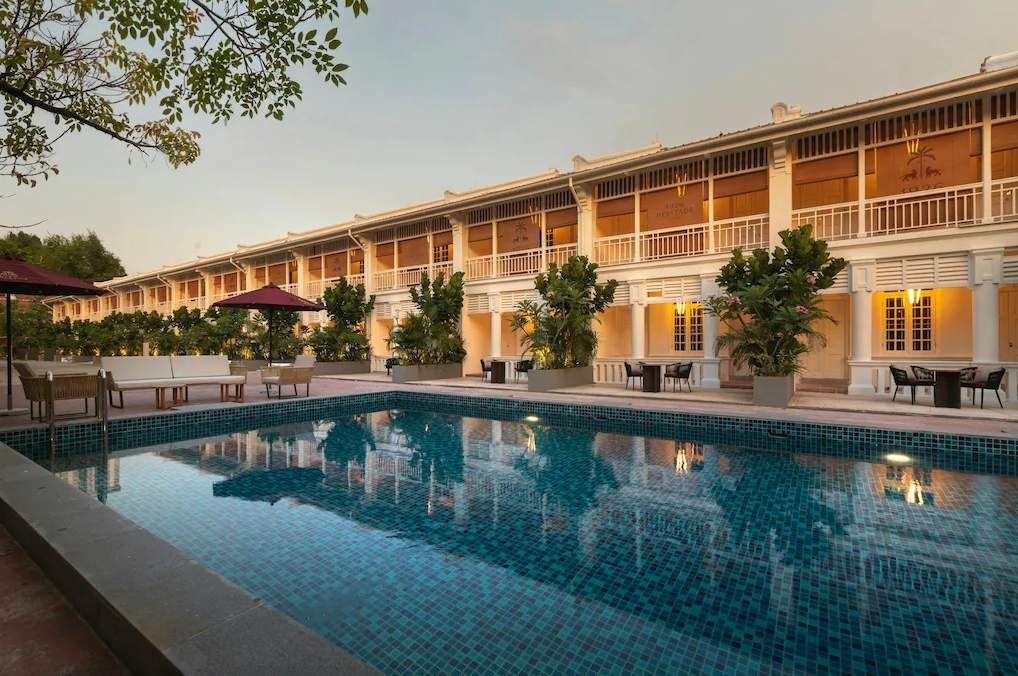
The road's recent prominence owes much to the revitalised colonial architecture now housing contemporary hospitality ventures. The Komtar hotel, which celebrated its centennial in 2026, represents one such success story—originally constructed in 1926 as residential quarters for British and local government officials, the building exemplifies the Anglo-Malay architectural style that defined Penang's colonial era. When the Penang Development Corporation converted the property into a hotel in 1999, the original 24 interconnected link houses were carefully repurposed rather than demolished, preserving their historical integrity while introducing modern comforts. Today, the hotel operates 78 rooms and suites distributed across these heritage structures, featuring six distinct categories ranging from the Heritage Room suitable for solo travellers to the expansive Straits Suite, demonstrating how Penang's restoration efforts balance conservation with contemporary hospitality demands.
What distinguishes Jalan Burma from other heritage precincts in George Town is its magnetic pull for food tourism, particularly among those following Michelin's increasingly influential guide to Southeast Asian dining. Penang boasts 74 Michelin-recognised establishments overall, with the majority concentrated in George Town itself—a split comprising two one-star venues, 33 Bib Gourmand selections, and 39 Michelin Selected spots. Rather than relegating these accolades to high-end restaurants, many reside in modest coffeeshops and food courts, democratising culinary excellence in ways that resonate with Penang's egalitarian food culture. Jalan Burma encapsulates this phenomenon, hosting several Bib Gourmand-listed stalls that draw both discerning tourists and knowledgeable locals, creating an intergenerational conversation about what constitutes worthy eating experiences in a city already legendary for its food credentials.
The Duck Blood Curry Mee establishment exemplifies the type of establishment that has benefited from Michelin recognition, sitting mere doors from the Komtar hotel and representing the kind of accessible, flavour-driven dining that justifies the guide's expansion beyond fine dining territories. Nearby, Restoran Old Green House serves as the original location of the Bib Gourmand-listed Green House Prawn Mee & Loh Mee, though a secondary Green House Prawn Mee outlet exists further along the road towards Jalan Penang. This proliferation of branches underscores how Penang's most celebrated food establishments expand to meet demand while locals maintain particularities about which iteration best represents the original—a dynamic that enriches rather than diminishes the eating experience, offering multiple access points to beloved flavours.
Jalan Burma's nomenclatural history reveals how thoroughly Penang's geography encodes the island's multicultural heritage. Originally designated as Burmah Road on colonial-era maps and signboards, the thoroughfare was subsequently known by multiple monikers across different linguistic communities: three Malay variants including Jalan Tarek Ayer (Water Cart Road) and two each in Hokkien and Cantonese. These names reflected practical realities—the road originally facilitated the transport of water via bullock carts during Penang's early development phases. When a significant Burmese settlement emerged in the nineteenth-century Pulau Tikus area, the primary road underwent renaming to reflect this demographic shift, a toponymic transformation that persists today through street names like Rangoon Road, Mandalay Road, and Moulmein Close scattered throughout the vicinity.
The Dhammikarama Burmese Temple, established two centuries ago along lanes branching from Jalan Burma, anchors this cultural geography, serving as a visible testament to nineteenth-century Burmese migration patterns and the religious infrastructure communities established to maintain cultural continuity in diaspora. Walking these streets requires acknowledging that what appears as contemporary heritage preservation actually represents centuries of layered settlement, commerce, and identity formation—each street name, temple, and architectural detail constituting an archaeological deposit of Penang's cosmopolitan past. For Malaysian travellers accustomed to multicultural environments, Jalan Burma offers a particularly legible narrative of how such diversity materialises in urban geography and commercial life.
Navigating Jalan Burma on foot reveals dimensions that automobile transit obscures entirely. The approximately five-kilometre stretch from the heritage zone's periphery to Pulau Tikus maintains generally pedestrian-friendly conditions, though certain sections lack dedicated pathways, requiring visitors to navigate alongside vehicular traffic. The road's safety profile—enhanced by consistent foot traffic and commercial activity—makes it suitable for extended exploration, particularly for those willing to wander beyond predetermined tourist routes. The Komtar Octopus Pedestrian Bridge provides both practical infrastructure and a viewing vantage point over the thoroughfare, while an information board below the bridge offers simplified historical context, though deeper understanding requires either local knowledge or independent research into Penang's complex naming traditions.
Accommodation options directly on or immediately adjacent to Jalan Burma have multiplied as heritage restoration projects accelerated throughout the 2010s, transforming the road from primarily commercial/residential character into a destination in itself. The Komtar hotel exemplifies this shift, offering guests direct access to the street's most vibrant food outlets while maintaining the architectural and atmospheric qualities that make the heritage zone compelling. The hotel's provision of contemporary amenities—including high-tech water filtration systems in individual rooms—indicates how heritage hospitality balances historical authenticity with modern expectations. For travellers seeking immersive heritage experiences without sacrificing comfort or convenience, such properties position Jalan Burma as a compelling alternative to the more crowded Lebuh Chulia or Beach Street corridors.
The dining trajectory along Jalan Burma typically follows predictable patterns: early-morning or late-morning visits favour noodle establishments and traditional breakfast stalls, while afternoon hours accommodate longer explorations interspersed with coffeeshop visits and adjacent heritage zone shopping. Visitors commonly chart routes encompassing Lebuh Campbell, Lebuh Kimberley, and Beach Street—requiring approximately four kilometres of round-trip walking—thereby accumulating substantial pedestrian distances while transitioning between culinary and visual cultural experiences. The physical exertion, though demanding in Penang's tropical heat, becomes integral to the experience rather than an obstacle, positioning food consumption within broader bodily engagement with urban geography.
Root House by Gen, the modern Chinese restaurant situated within the Komtar hotel itself, represents how heritage-adjacent dining has evolved to accommodate guests seeking elevated culinary experiences without departing the immediate vicinity. Such establishments curate multiplate meals—six courses or more—designed as progressive experiences rather than singular transactions, demanding temporal commitment and digestive preparedness that contrasts sharply with street-food rapid consumption. This coexistence of culinary modes—from quick curry-noodle bowls to elaborate tasting sequences—within essentially overlapping geographical territories reflects Penang's sophisticated approach to food culture, where quality need not correlate with formality or investment level.
Jalan Burma's position relative to other major cultural venues further amplifies its significance within George Town's tourism infrastructure. The Hin Bus Depot, operating as a weekend marketplace featuring local vendors, artisans, homemade food and beverages alongside live musical entertainment, sits within reasonable reach, establishing Jalan Burma as one node within broader circuits of heritage engagement rather than an isolated destination. For Malaysian travellers particularly, such interconnected pathways through cultural zones facilitate organic, self-directed exploration that respects individual pacing and preferences rather than imposing rigid tour-group schedules. This autonomy—to dawdle at a curry stall, linger over architectural details, or spontaneously join weekend marketplace activity—represents perhaps Jalan Burma's greatest appeal, transforming heritage tourism from passive consumption into active participation.

