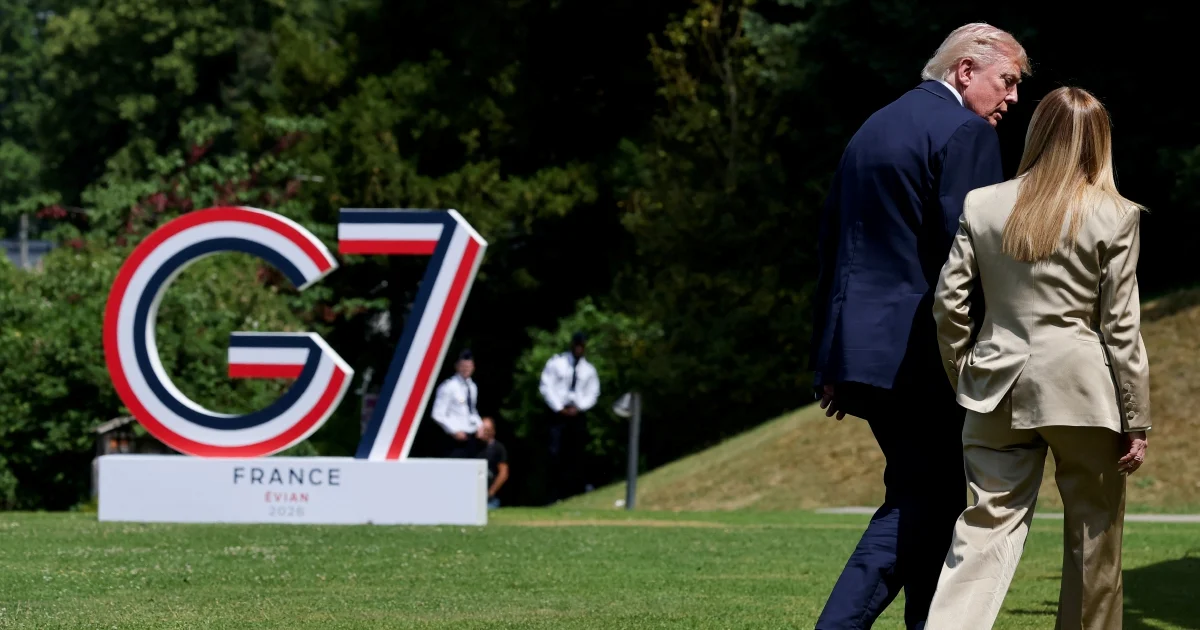
Italy's government expressed profound displeasure on Friday following reported statements by US President Donald Trump in which he characterized Prime Minister Giorgia Meloni as having actively pursued a photograph with him, comments perceived in Rome as dismissive and mocking of the Italian leader. The reported remarks triggered an immediate diplomatic rebuke, with Foreign Minister Antonio Tajani subsequently cancelling a trip to the United States that had been scheduled for the coming period. The incident underscores emerging tensions in the relationship between Washington and one of Europe's historically closest allies to the American administration, raising questions about the durability of transatlantic coordination under the Trump presidency's second term.
The controversy centres on Trump's characterization of an encounter between himself and Meloni, with the American president's reported language suggesting that the Italian prime minister had been eager or even desperate to secure the photo opportunity. Such language, whether joking or otherwise intended, struck Italian officials as disrespectful and diminishing toward a fellow democratic leader of a G7 nation. The timing of these remarks proved particularly awkward given Italy's significant role in European affairs and its historical alignment with American strategic interests throughout the post-Cold War period.
Tajani's decision to cancel his Washington visit carries symbolic weight beyond the immediate diplomatic calendar. The foreign minister, who serves as one of Meloni's senior coalition partners as head of the Forza Italia party, essentially signalled that the Italian government views Trump's comments as sufficiently serious to warrant a visible response. By withdrawing from scheduled engagement with American counterparts, Rome has sent a clear message that such language toward its prime minister will not pass unacknowledged or without consequence.
The episode reflects broader sensitivities within the Italian government regarding its standing and treatment by the Trump administration. Meloni, who leads a right-wing coalition government, has historically positioned herself as aligned with conservative American positions and has sought to maintain close ties with Washington. The reported mocking comments, therefore, feel particularly stinging, as they appear to undermine the carefully cultivated relationship that the Italian leadership has sought to build. For Meloni personally, a leader who has worked to establish herself as a serious and significant political figure on the international stage, such characterizations carry the sting of perceived disrespect.
The incident also arrives amid broader questions about how the Trump administration plans to engage with traditional European allies. Italy, as a founding member of NATO and the European Union, has historically been a cornerstone of Western alliance structures. Whether the reported remarks represent a deliberate attempt to needle Rome or merely reflect Trump's characteristic communication style remains unclear, but either interpretation creates complications for maintaining the close coordination that both sides have traditionally emphasized.
Within the Italian political context, the government's robust response serves multiple purposes. Domestically, Meloni must demonstrate to her coalition partners and voters that she will not tolerate disrespect from foreign leaders, regardless of their power or influence. The cancellation of Tajani's visit provides visible evidence of such resolve. Additionally, the response allows Meloni to position herself as defending Italian sovereignty and dignity against external disparagement, a positioning that carries particular resonance in Italian political culture, where national pride and international standing remain consequential themes.
The diplomatic fallout illustrates how Trump's personal communication style, even when engaged for purposes of humour or media spectacle, carries serious consequences in interstate relations. Where previous American presidents have often calibrated their public remarks about allied leaders with careful attention to diplomatic niceties, Trump has demonstrated a tendency toward directness and casual disrespect that many international interlocutors find jarring. For European allies already accustomed to a more formal diplomatic register, such conduct creates genuine friction and raises questions about the nature and durability of alliance commitments.
Looking forward, the question becomes whether this incident represents an isolated flare-up or a harbinger of strained relations between Rome and Washington. Italy's government faces pressure to maintain transatlantic coordination on significant security and economic issues, particularly regarding Ukraine, NATO, and European integration challenges. Yet if the Trump administration continues to treat Italian leadership with perceived disrespect, Italian officials may find it increasingly difficult to justify continued alignment without domestic political cost. The cancellation of Tajani's visit establishes a boundary regarding acceptable conduct, but whether that boundary will be respected in subsequent interactions remains to be seen.
The episode carries resonance beyond Italy as well. Other European leaders will closely observe how Rome navigates this tension and whether the Trump administration adjusts its approach or doubles down on its reported characterizations. The handling of America's relationship with Italy may well set a template for how the administration engages with other allied governments, particularly those led by conservative figures like Meloni who have sought alignment with American positions. For Southeast Asian nations watching the evolution of American alliance management, the Italian case provides instructive observations about the volatility and unpredictability now evident in Washington's approach to traditional diplomatic partnerships.

