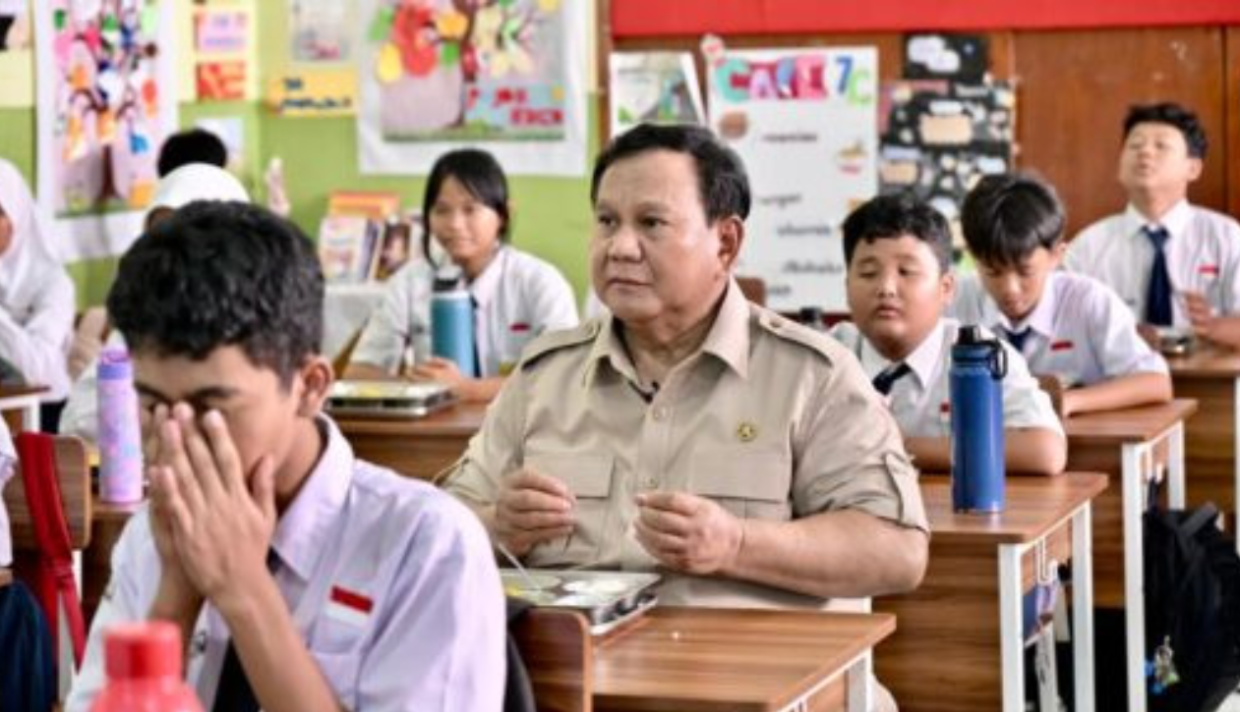
President Prabowo Subianto's signature free nutritious meal programme, designed to tackle malnutrition across Indonesia's schools, has become embroiled in a deepening political and public health controversy that threatens its continued operation. The initiative, which has already reached 61 million students and pregnant women nationwide by March, now faces coordinated calls for suspension and comprehensive review from multiple quarters including the National Commission on Human Rights, student activists, civil society organisations, and legal challengers at the Constitutional Court.
The National Commission on Human Rights formally raised alarm bells this week, documenting what it characterises as systematic failures across the scheme's implementation. Commissioner Pramono Ubaid Tanthowi outlined serious deficiencies ranging from inadequate execution of the core mission to insufficient public disclosure about operations and recurring food safety emergencies. The commission's statement emphasised that these shortcomings amount to violations of fundamental human rights, specifically breaching children's entitlements to adequate nutrition, public access to health protection, information disclosure, and compensation mechanisms for those harmed by food contamination incidents. This framing elevates the debate from mere administrative mismanagement to a human rights accountability issue, lending moral weight to calls for programme suspension.
Persistent food poisoning cases represent the most visible manifestation of operational breakdown. Since the programme's launch last year, thousands of documented poisoning incidents have eroded public confidence and raised questions about the supply chain, kitchen hygiene standards, and quality assurance protocols. The problem appears systemic rather than isolated, suggesting that the rapid expansion of the programme across the archipelago has outpaced the capacity to maintain food safety standards. Adding to these concerns, three former heads of the National Nutrition Agency (BGN) have been removed from their positions and subsequently named as corruption suspects, fuelling perceptions of financial mismanagement within the implementing bureaucracy.
The human rights commission has advocated for a strategic recalibration toward vulnerable populations in remote and underserved areas rather than the current blanket approach. This recommendation reflects growing recognition that universal coverage without adequate quality control may represent poor resource allocation. By focusing resources on Indonesia's most marginalised regions and populations, the programme could potentially deliver greater nutritional impact per rupiah spent whilst simultaneously reducing the logistical complexity that appears to be driving implementation failures.
Student protests have intensified the political pressure on government, with university rallies across the nation demanding an immediate halt to the programme. This groundswell of youth activism suggests that concerns extend beyond policy technocrats into the broader population, particularly among educated Indonesians who form influential opinion leaders in their communities. The protests signal that President Prabowo's administration cannot easily dismiss opposition to the scheme as merely the complaints of political opponents or bureaucratic obstructionists.
Seven separate petitions filed with Indonesia's Constitutional Court add a legal dimension to the political challenge. These submissions primarily contest whether the Rp 335 trillion (US$18.86 billion) budgeted for the programme in the 2026 state budget can constitutionally be funded by partly redirecting education allocations. The petitioners, including teachers' representatives and civil society coalitions, argue that the Constitution mandates 20 per cent of all state revenues flow toward education specifically to enhance teacher compensation and educational quality. By diverting education funds toward nutrition programmes, the government is undermining this constitutional commitment during a period when many Indonesian educators remain substantially underpaid.
During emotional testimony at Constitutional Court hearings, an educator detailed how the initiative exacerbates educational inequity by allowing budgetary constraints that leave teachers underpaid despite constitutional protections for their welfare. This personal testimony bridges the abstract constitutional argument with lived experience, illustrating how budget reallocation decisions have concrete consequences for ordinary Indonesians. Edy Kurniawan Wahid, representing petitioners through the Indonesian Legal Aid Foundation, has argued that programme implementation should be suspended pending Constitutional Court judgment, contending that proceeding with disputed legal foundations amounts to governance overreach.
Muhammadiyah, Indonesia's second-largest Islamic organisation representing millions of adherents, has joined the opposition coalition, with spokesperson Muhammad Busyro Muqoddas characterising the programme as having caused greater damage than benefit. The participation of such prominent religious organisations signals that opposition transcends secular political boundaries and encompasses significant segments of Indonesia's faith-based civil society. This coalition breadth suggests the government faces unexpectedly organised and institutionally diverse resistance that cannot be readily dismissed as partisan opposition.
The government has nevertheless resisted calls for suspension, with Government Communications Agency head Muhammad Qodari framing any halt as a betrayal of President Prabowo's campaign commitments to voters. This rhetorical positioning frames the controversy as a question of democratic mandate rather than programme efficacy, suggesting the administration views the initiative through primarily political rather than technocratic lenses. However, maintaining a programme facing both human rights violations findings and constitutional legal challenges carries its own political risks.
The newly appointed National Nutrition Agency leadership under Nanik Sudaryati Deyang has announced plans for comprehensive kitchen audits during the upcoming mid-June to mid-July school holiday period. This operational response signals recognition that current implementation requires urgent stabilisation. Deputy head Agustina Arumsari outlined intentions to review beneficiary data accuracy and redesign incentive structures that currently provide flat payments to kitchens regardless of actual beneficiary numbers served. The agency is also considering consolidating some catering units to improve operational efficiency and safety compliance, acknowledging that the current sprawling network may exceed institutional capacity.
The audit initiative represents a tacit admission that the programme's explosive expansion has created management problems requiring systematic attention. By pausing new facility designations and conducting comprehensive reviews of approximately 27,000 existing sites nationwide, the BGN appears to be attempting remediation without suspension. This middle-ground approach seeks to address operational failures whilst preserving the programme's existence, though sceptics question whether such reforms can succeed given the depth of documented problems.
For Malaysia and the broader Southeast Asian region, Indonesia's experience with the free meals programme offers cautionary lessons about rapid social programme expansion without adequate institutional capacity building. While nutritional support for schoolchildren represents a worthy objective shared across the region, the Indonesian case demonstrates how insufficient planning, weak oversight mechanisms, and inadequate quality control can transform a well-intentioned initiative into a liability. Malaysia, with its own school meal schemes, should note how human rights commissions and civil society organisations increasingly scrutinise nutrition programmes, and how constitutional concerns about budget allocation have become central to accountability debates in regional democracies.

