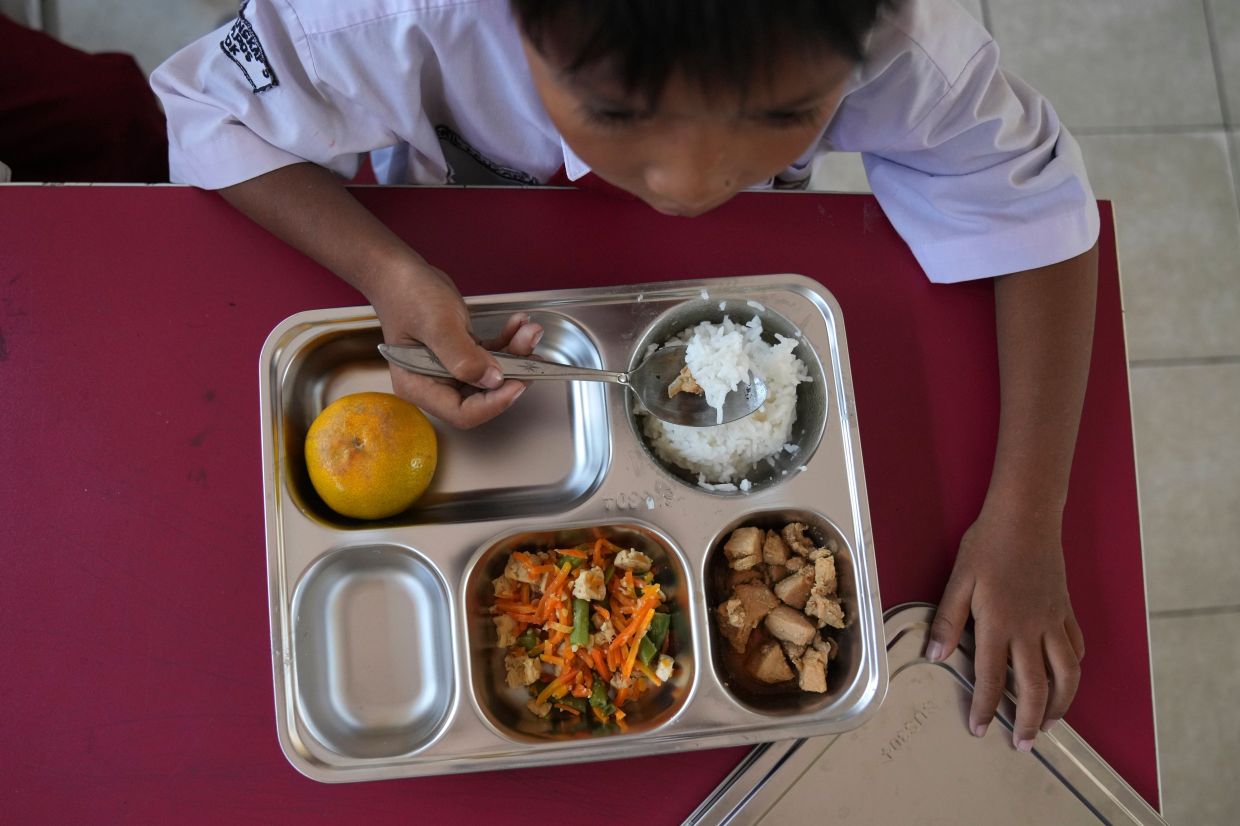
Indonesia Corruption Watch has intensified pressure on the government to suspend President Prabowo Subianto's signature free meals initiative, insisting that authorities broaden their investigation into corruption allegations and dismantle the National Nutrition Agency entirely. The call comes as the government grapples with mounting criticism over the US$15 billion scheme, which serves more than 60 million people across the country but has been plagued by reports of mismanagement and procedural irregularities since its rapid rollout.
Wana Alamsyah, heading the law and investigation division at Indonesia Corruption Watch, argues that the scope of the current graft inquiry is insufficient. Beyond the recent detention of Dadan Hindayana, the former head of the National Nutrition Agency, and four colleagues including two deputy directors, investigators should examine the broader ecosystem of vendors, procurement officials, and other beneficiaries who may have exploited the programme's governance weaknesses. The agency itself, established barely two years ago, has already become a colossal undertaking managing meals for nearly 65 million recipients—a scale that Wana contends outpaced adequate safeguards.
The timing of official action has drawn scrutiny from watchdog groups. Reports of contaminated food, poor nutritional quality, and ultra-processed meals have circulated across social media and local media outlets for months, yet the government only moved to investigate after Hindayana's dismissal this month. Wana suggests the government delayed action because it faced mounting pressure, only intervening once the fiscal strain of fuel subsidies intensified during regional tensions. By detaining high-profile officials, the administration may be attempting to legitimise a strategic recalibration of the programme without appearing to capitulate to public criticism.
The programme's implementation strategy has drawn particular scrutiny from policy researchers and think tanks throughout Southeast Asia. Rather than targeting resources to genuinely disadvantaged areas—rural regions and economically depressed communities where malnutrition remains acute—the government deployed the meals initiative universally across all schools. This blanket approach, critics argue, wastes resources and fails to address root causes of nutritional deficiency in the communities most in need. Multiple independent studies have flagged uneven distribution, inconsistent food quality, and substantial inefficiencies in budget allocation as systemic issues baked into the programme's architecture.
Financial markets have reacted with concern. Investors scrutinising Indonesia's fiscal position have grown nervous about a scheme consuming resources equivalent to what some smaller economies spend on defence. With the government already allocating substantial sums to fuel subsidies amid international geopolitical tensions, questions about whether the meals initiative delivers the promised benefits in employment generation, public health outcomes, and broader economic stimulus have intensified among both domestic and foreign analysts.
The new head of the National Nutrition Agency, Nanik S. Deyang, has signalled a strategic pivot toward efficiency and restraint. Rather than chasing the original target of reaching 82.9 million recipients, the agency now prioritises nutritional quality and plans to spend less than the budgeted 268 trillion rupiah—approximately US$14.9 billion—by concentrating resources on remote and underserved regions. The agency has imposed a moratorium on constructing new kitchens, instead repurposing existing facilities such as school canteens. This represents a tacit acknowledgement that the original deployment lacked careful planning and may have prioritised rapid expansion over sound management.
Underlying the governance failures is a structural vulnerability identified in multiple independent reports: the network of 102 foundations managing kitchens across 38 provinces exhibits troubling connections to politically-aligned individuals. The Indonesia Corruption Watch analysis uncovered ties between kitchen operators and politicians, government officials, military figures, law-enforcement personnel, and commercial networks. Such patronage arrangements create perverse incentives where contracts and positions flow based on political loyalty rather than capability or competitive merit. A separate study by the Centre of Economic and Law Studies found that 79 percent of surveyed respondents identified potential conflicts of interest in the direct appointment of vendors—a damning assessment of transparency and procedural integrity.
Public demonstrations in June and subsequent protests across major cities reflect grassroots frustration with both the programme's sprawl and the government's response to criticism. In Jakarta, police deployed over 6,000 officers and military personnel to manage demonstrations by students calling for the programme's cancellation and protesting broader concerns about public spending priorities. The scale of the security response underscores how contentious the issue has become within Indonesia's political landscape and suggests simmering public scepticism about whether massive subsidy programmes genuinely improve living standards or simply redistribute resources through inefficient channels.
President Prabowo has declared zero tolerance for corruption within the initiative, warning officials and partners that no exceptions will be made. His statement, issued shortly after Hindayana's detention, signals an attempt to salvage the scheme's political credibility while maintaining the presidency's ownership of the flagship policy. However, analysts suggest this rhetorical firmness masks deeper questions about whether the programme's fundamental design—its scale, speed of rollout, and vulnerability to patronage—can be reformed sufficiently to meet public expectations for effective governance.
For Malaysia and other Southeast Asian nations observing Indonesia's experience, the free meals scheme offers cautionary lessons about scaling ambitious social programmes. Rapid expansion without proportionate investment in monitoring, transparent procurement, and genuine needs-based targeting can quickly overwhelm governance capacity. The scandal illustrates how even well-intentioned policies designed to address poverty and malnutrition can become vehicles for rent-seeking behaviour when institutional safeguards remain weak. Neighbouring countries contemplating similar large-scale feeding or subsidy initiatives may benefit from Indonesia's painful experience as a case study in the importance of sequenced, carefully-managed implementation over politically-driven expansion.

