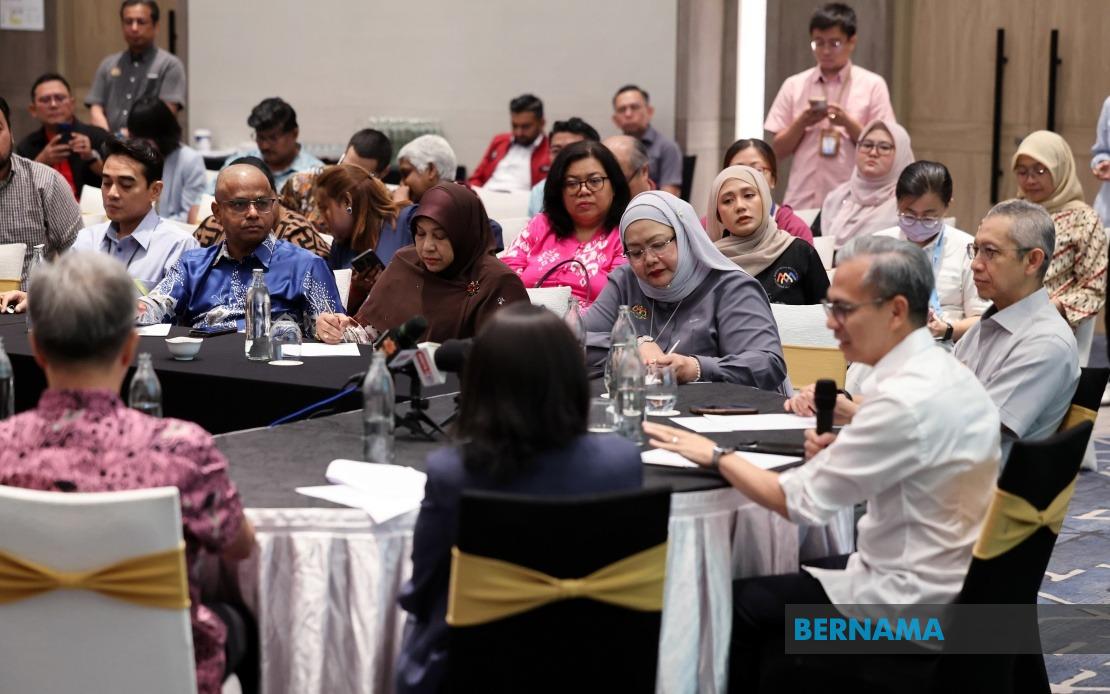
The HAWANA 2026 Summit formally commenced at the PICCA@Arena Butterworth Convention Centre on June 20, as media professionals, dignitaries and strategic collaborators from Malaysia and throughout the ASEAN region streamed into the venue. The gathering marks a significant moment for the journalism community, bringing together practitioners who have travelled across Southeast Asia to participate in what has become one of the region's most important platforms for recognising media excellence and fostering professional dialogue.
Early arrivals at the convention centre took advantage of the opening hours to tour exhibition displays showcasing media innovations, technologies and industry initiatives, as well as a specially curated photographic gallery highlighting journalistic achievement. The informal mingling environment allowed seasoned reporters, editors and media managers to reconnect across organisational boundaries—a particularly valuable opportunity given the demanding nature of modern news cycles that often keep journalists confined to their newsrooms. These networking moments frequently yield collaborative discussions and knowledge-sharing that extend well beyond the formal conference proceedings.
The presence of delegates from across ASEAN underscores the summit's growing significance as a mechanism for deepening professional ties and institutional cooperation throughout Southeast Asia. By convening journalists from multiple countries and media systems, HAWANA creates space for understanding diverse approaches to news gathering, editorial standards and audience engagement across the region. This cross-border dimension reflects broader recognition that journalism challenges—from combating misinformation to adapting to digital transformation—transcend national boundaries and benefit from shared expertise and solutions.
The summit operates under the central theme of 'Media Integrity Strengthens Credibility', a concept that resonates powerfully in the contemporary information environment. As audiences navigate increasingly fragmented media landscapes and encounter proliferating claims of varying reliability, journalism's foundational commitment to verification, accuracy and transparency becomes ever more vital. This thematic focus acknowledges that media institutions' legitimacy ultimately rests upon consistent demonstration of these professional values across all platforms and formats.
Prime Minister Datuk Seri Anwar Ibrahim will formally open the proceedings, signalling government recognition of journalism's essential democratic function. The scheduled attendance of approximately one thousand media practitioners represents a substantial convening of the country's journalism workforce, spanning print, broadcast, digital and multimedia sectors. Such comprehensive representation provides opportunity for sector-wide discussions on common challenges, emerging technologies and the evolving relationship between journalists and their audiences.
The Ministry of Communications has entrusted the Malaysian National News Agency, Bernama, with coordinating the summit's execution. As Malaysia's principal news gathering and distribution organisation, Bernama brings institutional experience and sector knowledge to the logistical and programmatic dimensions of the event. This institutional arrangement reflects Bernama's established role as a facilitator of professional standards and information dissemination throughout the Malaysian media ecosystem.
Historically, HAWANA—the National Journalists' Day observance—has functioned as an annual moment for the journalism community to pause and collectively acknowledge the professional dedication required to operate in an increasingly complex information environment. The evolution toward a multi-day summit format with international participation indicates expanding ambitions to leverage this occasion for substantive capacity-building, professional development and strategic discussion among regional media practitioners. These enlarged gatherings create opportunities for smaller news operations and independent journalists to access expertise and networking typically available only to larger institutional players.
The summit's emphasis on recognising professional contributions and standards represents an important counterweight to ongoing challenges affecting journalism globally. Press freedom organisations have documented increasing pressures on journalistic independence across multiple Southeast Asian contexts, including economic pressures on news businesses, legal threats and shifting audience trust. By celebrating journalistic professionalism and creating space for dialogue about maintaining ethical standards under difficult circumstances, HAWANA offers a form of institutional affirmation and collective problem-solving.
For Malaysian media practitioners specifically, international participation provides opportunity to benchmark local approaches against regional peers, understand how journalists in neighbouring countries address similar challenges and explore potential collaborative reporting ventures. These connections frequently generate subsequent partnerships in investigative projects, resource-sharing arrangements and cross-border coverage of regional issues affecting multiple countries.
The conference arrives at a moment when journalism's business models, technological infrastructure and audience relationships are undergoing accelerated transformation. Digital platforms have fundamentally altered how news reaches audiences and how audiences engage with journalistic content. Simultaneously, artificial intelligence applications are beginning to reshape certain routine reporting functions. Against this backdrop, gatherings that bring journalism professionals together to discuss integrity, credibility and professional standards serve important functions in helping the sector navigate change while maintaining core commitments to accuracy, fairness and public accountability.

