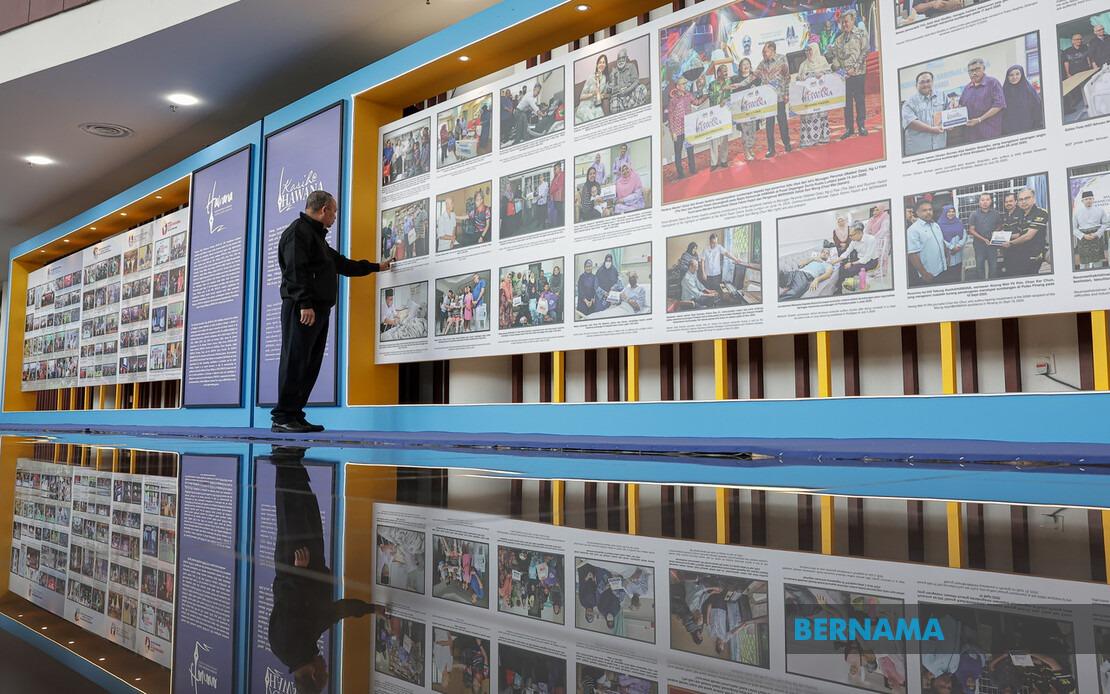
Penang's Butterworth district is hosting the National Journalists' Day (HAWANA) 2026 celebration, with the multifaceted event serving as a critical juncture for Malaysia's media landscape. The gathering brings together industry bodies and media organisations to engage with persistent challenges facing journalism while reaffirming the sector's commitment to professional standards. Notably, the celebration attracts approximately 1,000 media practitioners domestically and internationally, underscoring the national significance attached to this annual observance.
The lead-up to the main ceremony tomorrow has been punctuated by a series of substantive programmes designed to strengthen industry cohesion and address strategic questions confronting contemporary journalism. These preliminary events signal an industry grappling seriously with transformation rather than simply commemorating past achievements. The Malaysian Federation of Media Clubs (GKMM) organised the Malaysia Media Retreat 2.0, convening representatives from 15 media clubs across the country. This initiative reflects growing recognition that scattered media organisations require structured mechanisms to coordinate on shared concerns and amplify collective voice.
The GKMM presidency, held by Mohamad Fauzi Ishak, characterised the retreat as more than a ceremonial gathering. Rather, it functions as a substantive assessment platform for federation development since the GKMM's formal establishment on October 24, 2022. The coming third annual general meeting will proceed without election processes, suggesting stability in leadership and focus on operational matters rather than internal jockeying. This decision potentially reflects institutional maturity and consensus among member clubs about current directional priorities.
Communications Minister Datuk Fahmi Fadzil officiated the retreat proceedings, signalling government engagement with media sector self-organising efforts. The presence of Bernama's Chief Executive Officer Datin Paduka Nur-ul Afida Kamaludin and Editor-in-Chief Arul Rajoo Durar Raj underscored the national news agency's central role in orchestrating the broader HAWANA framework. Government participation in these pre-event activities demonstrates sustained policy interest in journalism's institutional development and the media's professional capacity-building mechanisms.
The Malaysian Press Institute (MPI) has programmed a town hall session titled "2035: Will Journalists Still Exist?" at Han Chiang University College of Communication, directly confronting an existential question that preoccupies newsrooms globally. This forward-looking enquiry moves beyond defensive posturing about journalism's relevance, instead positioning the profession as actively designing its own future. The three-part panel featuring MPI president Datuk Yong Soo Heong, New Straits Times Press deputy group managing editor Farrah Naz Abd Karim, and Media Prima's Azhari Muhidin combines leadership, editorial practitioner, and content infrastructure perspectives.
The town hall's substantive focus on artificial intelligence, digitalisation, and shifting news consumption patterns reflects recognition that journalism faces structural rather than cyclical disruption. These forces compel fundamental reassessment of how newsrooms operate, what skills practitioners require, and which business models sustain quality reporting. The multi-stakeholder composition of the panel enables cross-organisational knowledge-sharing on adaptation strategies and technological integration challenges. Such forums create space for candid discussion about industry transition risks without defensive institutional positioning.
The Malaysian Media Council (MMC) has scheduled engagement sessions and networking activities for tomorrow, extending the celebration's reach beyond ceremonial platforms into facilitated practitioner exchange. Regional media representatives from Malaysia's northern states will participate in these informal yet structured networking opportunities. Such mechanisms recognise that professional development and problem-solving often occur through peer consultation rather than top-down directive, building horizontal relationships across competing news organisations who nonetheless share systemic challenges.
Prime Minister Datuk Seri Anwar Ibrahim's scheduled officiating of the main HAWANA 2026 ceremony at PICCA @ Butterworth Arena tomorrow reflects the highest political acknowledgement of journalism's institutional importance. The Premier's presence signals government recognition that press freedom, media professionalism, and journalism sustainability merit executive-level attention. This positioning elevates HAWANA beyond trade association protocol into the realm of national governance priorities, though it also raises questions about press independence dynamics when political leaders ceremonially acknowledge the profession's contributions.
The central theme, "Media Integrity, Foundation of Credibility," directly engages contemporary scrutiny of journalism's trustworthiness amid misinformation proliferation and audience fragmentation. This framing positions integrity not as aspirational abstraction but as foundational infrastructure underpinning credibility—the essential asset that distinguishes professional journalism from unverified online commentary. The thematic choice suggests industry consensus that reasserting integrity standards represents the most pressing strategic priority for reestablishing journalism's informational authority amid competitive noise.
The RIUH @ HAWANA Carnival, a three-day programming running at the convention centre, introduces experiential and public-facing dimensions beyond professional networking. This carnival approach expands HAWANA's reach beyond industry practitioners into broader audience engagement, potentially introducing journalism sector realities to general publics. Such public programming can cultivate appreciation for investigative reporting, editorial standards, and professional accountability mechanisms that citizens often take for granted.
The Communications Ministry's role as organiser, with Bernama serving as implementing agency, embeds the celebration within state institutional frameworks. This structural positioning reflects Malaysia's public broadcasting heritage while also raising questions about editorial distance between government and national news infrastructure. The government's continued partnership role in journalism's premier professional celebration underscores the continuing evolution of Malaysian press-state relationships in an era of institutional renewal.
Cumulatively, HAWANA 2026 represents Malaysian journalism's attempt to navigate technological disruption, audience transformation, and credibility challenges through institutional solidarity and professional dialogue. The comprehensive programming agenda demonstrates that while individual news organisations compete fiercely, the sector recognises shared interests in professional standards, technological adaptation, and audience trust. Whether these forums translate into concrete newsroom changes or remain largely ceremonial remains an open question, but the thematic substance suggests serious engagement with journalism's structural transformation.

