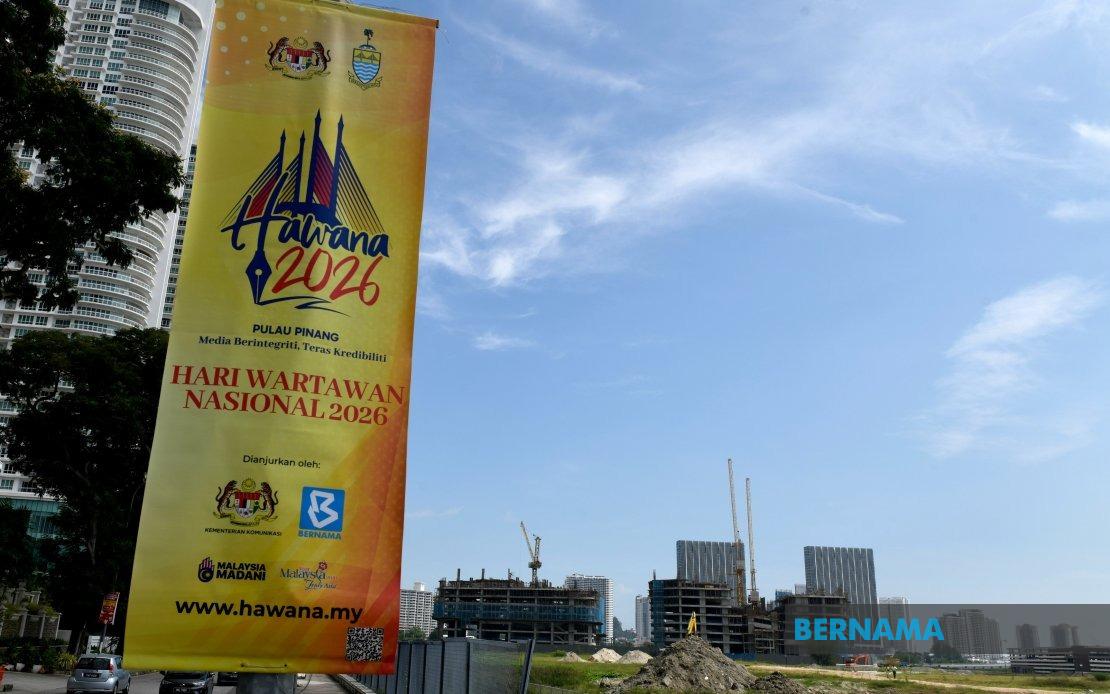
Penang is preparing to welcome the main celebration of HAWANA 2026, the National Journalists' Day, in what organisers describe as a landmark opportunity to position the state as a premier regional destination while energising its burgeoning creative industries. The three-day event, centred at the PICCA Convention Centre @ Butterworth Arena, will unfold from June 19 to 21, with Prime Minister Datuk Seri Anwar Ibrahim officiating the main proceedings on June 20. State Tourism and Creative Economy Committee chairman Wong Hon Wai outlined the broader strategic vision behind hosting the prestigious gathering, emphasising how the convergence of media professionals and visitors will translate into measurable economic uplift across multiple sectors.
The selection of Penang as the inaugural host of HAWANA represents more than ceremonial recognition; it signals confidence in the state's capacity to orchestrate large-scale international events whilst leveraging its distinct positioning within Malaysia's tourism landscape. Wong noted that the event affords Penang an exceptional platform to unveil its multifaceted appeal—from heritage architecture and cultural vibrancy to culinary traditions and emerging creative ventures. The anticipated presence of media representatives spanning Malaysia and the broader ASEAN region will generate what organisers term high-value exposure, substantially amplifying Penang's visibility among decision-makers and influencers who shape regional travel patterns and investment flows.
Economic projections for the event underscore its significance for local stakeholders. The influx of approximately 1,000 media practitioners and associated visitors is expected to stimulate demand across critical hospitality and service sectors. Hotels throughout Penang and particularly in Seberang Perai, identified as the primary venue, are already reporting robust advance bookings. Beyond accommodation, the event will create incremental activity for food and beverage establishments, transportation services, retail outlets, and heritage attractions—sectors that form the backbone of Penang's tourism economy. Wong conveyed that tourism operators have expressed confidence in their readiness to accommodate the visitor surge, with Seberang Perai offering sufficient lodging capacity to comfortably absorb the June influx.
The strategic importance of media engagement in tourism promotion cannot be overstated, particularly in an era when narrative-setting and authentic storytelling drive destination selection. Wong articulated a sophisticated understanding of media's dual role: as both information conduits and legitimacy conferrers. Journalists and content creators, by documenting and contextualising Penang's offerings with accuracy and depth, effectively market the destination to broader audiences whilst simultaneously building confidence among prospective visitors. This symbiotic relationship—where media practitioners gain access to compelling stories whilst destinations secure credible exposure—underpins the event's design and expected outcomes.
Within Penang's creative economy specifically, HAWANA 2026 offers a rare convergence of visibility and validation. The state government views media partnerships as instrumental in elevating local creative talent, art forms, and innovation onto regional and national stages. By facilitating media coverage of creative practitioners and cultural initiatives, Penang strengthens both the economic viability of its creative sectors and the state's broader cultural identity. This dimension proves particularly relevant for Southeast Asian economies where creative industries increasingly contribute to GDP and employment whilst differentiating destinations in competitive markets.
The accompanying RIUH Pi HAWANA Carnival represents the public-facing dimension of the celebration, with organisers expecting approximately 30,000 visitors across the three-day period. The carnival's free-admission model democratises access whilst amplifying footfall and economic multiplier effects. Over two dozen local creative brands will exhibit and conduct hands-on workshops, enabling visitors to engage directly with innovators and entrepreneurs rather than passively consuming cultural content. This experiential approach aligns with contemporary tourism trends emphasising authentic interaction and creative participation over conventional sightseeing.
Cultural programming will anchor the carnival's appeal. Twenty food vendors will showcase Penang's gastronomic diversity—a significant drawing power for both domestic and international visitors. Sixteen live performances from established local artists including Exists, Bunkface, Masdo, Sakura Band, Budak Nakal Hujung Simpang, and Chelsea Ng will provide entertainment while elevating the profile of Penang's music and performance sectors. The curation of performers suggests deliberate attention to genre diversity and generational breadth, appealing to varied audience demographics and reinforcing Penang's reputation as a vibrant cultural hub.
The overarching theme—Media Integrity Strengthens Credibility—carries particular resonance in contemporary media environments characterised by widespread misinformation and eroding public trust. The Malaysian government's emphasis on professional standards and ethical journalism practice reflects regional and global preoccupations with information quality and institutional accountability. By centering this theme, HAWANA 2026 positions Penang not merely as a tourism showcase but as a venue for substantive professional discourse on media's societal responsibilities and credibility imperatives.
For Malaysian readers, the implications extend beyond Penang's immediate interests. The success of HAWANA 2026 may establish a template for leveraging major media and professional events as catalysts for broader tourism and creative economy development. Southeast Asian nations increasingly recognise that international professional gatherings generate spillover benefits across multiple sectors whilst enhancing national and regional soft power. Penang's experience could inform how other Malaysian states approach event tourism and creative sector promotion.
The event also reflects Malaysia's positioning within ASEAN's emerging creative economy landscape. As regional competition intensifies for creative talent, investment, and recognition, events like HAWANA 2026 serve as mechanisms for showcasing professional standards, cultural vitality, and economic dynamism. The participation of ASEAN-based media practitioners will facilitate knowledge exchange and relationship-building whilst elevating awareness of Malaysian creative outputs regionally.
Looking forward, the success of HAWANA 2026 will likely be measured not only through visitor numbers and media coverage but through longer-term indicators such as subsequent tourism booking patterns, creative sector investment, and international media representation of Penang. Tourism board officials and state policymakers are evidently approaching the event as a strategic investment with anticipated returns extending well beyond the three-day celebration period, reflecting sophisticated understanding of event tourism's catalytic potential in reshaping destination perception and economic trajectory.

