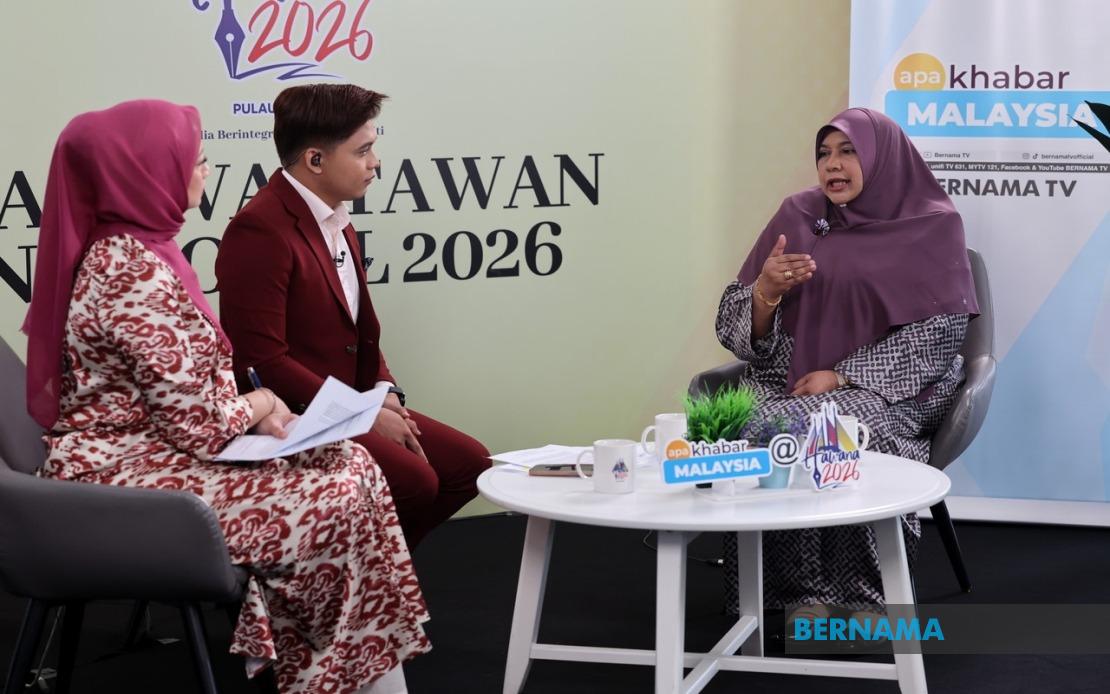
Penang will host the culminating summit of National Journalists' Day (HAWANA) 2026 tomorrow, drawing approximately 1,000 media professionals from across Malaysia and internationally. The event, themed "Media Integrity Strengthens Credibility," represents a significant moment for the journalism community to collectively reflect on the profession's role in upholding standards of information dissemination. Prime Minister Datuk Seri Anwar Ibrahim will officiate the summit at 3 pm, underscoring the government's commitment to supporting the media sector as a fundamental pillar of democratic society and informed public discourse.
The gathering brings together an impressive lineup of senior government officials and media industry leaders. Penang Chief Minister Chow Kon Yeow, Communications Minister Datuk Fahmi Fadzil, and Communications Ministry secretary-general Datuk Abdul Halim Hamzah are among those scheduled to attend. From the media sector, Malaysian National News Agency (Bernama) chairman Datuk Seri Wong Chun Wai and chief executive officer Datin Paduka Nur-ul Afida Kamaludin will participate, alongside senior executives from major local media organizations, reflecting the breadth of professional engagement across the industry.
Datin Paduka Nur-ul Afida, who chairs the HAWANA 2026 Working Committee, has articulated the deeper purpose of this annual celebration. Beyond simply honouring journalists for their work, HAWANA functions as a crucial platform for strengthening professional networks and fostering genuine relationships within the media community. By bringing journalists, media organizations, and the broader public together, the event seeks to demystify journalism and build mutual understanding about the profession's role in society. This networking dimension proves particularly valuable in Southeast Asia, where media collaboration and knowledge-sharing across borders can enhance regional journalism standards and investigative capacity.
A notable aspect of this year's HAWANA is the partnership with MyCreative Venture, a communications ministry agency, which has extended the celebration's reach through the RIUH Pi HAWANA Carnival. This three-day carnival, running at the PICCA Convention Centre parking lot, brings together over 24 local creative product brands and 20 food and beverage vendors, alongside interactive workshops. The inclusion of performances by artists such as Exists, Bunkface, Masdo, Sakura Band, Budak Nakal Hujung Simpang, and Chelsea Ng transforms HAWANA from a purely professional affair into a community cultural event, making journalism celebration accessible to ordinary Malaysians beyond media circles.
The broadcast strategy for tomorrow's summit demonstrates commitment to nationwide reach and transparency. Bernama TV will provide live coverage, with subsequent broadcasts by RTM and TV AlHijrah complemented by distribution across local social media platforms. This multi-channel approach ensures that citizens throughout Malaysia—from Sabah to Perlis—can witness the event and understand the industry's ongoing dedication to professional standards. Such comprehensive coverage also serves an educational function, allowing younger journalists and journalism students to observe how the profession recognizes and celebrates its finest practitioners.
During the summit, Prime Minister Anwar Ibrahim will distribute contributions from Tabung Kasih@HAWANA to veteran journalists in financial need, addressing the profession's welfare obligations. Additionally, the Prime Minister will present awards to winners of the HAWANA-DBP Pantun Festival, held on May 9, celebrating the intersection of journalism with traditional Malaysian literary forms. The presentation of HAWANA Awards and HAWANA Special Awards will recognize individuals who have significantly advanced journalism standards and strengthened public understanding through their work, establishing role models for the profession's future generation.
The historical significance of HAWANA dates to May 29, 1939, when the Utusan Melayu newspaper published its first edition—a milestone that marked the beginning of organized journalism in Malaysia. By anchoring HAWANA's annual celebration to this date, the profession maintains connection with its foundational mission: delivering accurate, authentic, and authoritative information to the public. This historical grounding proves especially relevant in contemporary Malaysia, where concerns about misinformation and information disorder challenge journalists' traditional gatekeeping role.
Leading up to tomorrow's summit, HAWANA 2026 has already conducted multiple preparatory events demonstrating sustained professional engagement. The HAWANA 2026 Media Forum on May 7 facilitated substantive discussions about contemporary journalism challenges, while the Strategic Partner Meeting on June 4 coordinated support from industry stakeholders. The Fun Walk HAWANA 2026 on June 14 brought journalists and members of the public together in celebration, generating grassroots enthusiasm that extends beyond institutional frameworks. These cumulative events indicate that HAWANA functions not as a single ceremonial occasion but as a broader movement affirming journalism's centrality to Malaysian society.
For regional observers, tomorrow's event carries broader implications for Southeast Asian media development. As countries across ASEAN grapple with digital transformation, rising authoritarianism, and economic pressures on traditional media, Malaysia's public affirmation of journalism's value through HAWANA demonstrates commitment to maintaining professional standards. The gathering of 1,000 media practitioners represents collective determination to preserve journalism integrity in an era of rapid technological and political change, offering a model that other Southeast Asian nations might emulate in supporting their journalism communities.
The Ministry of Communications, acting through Bernama as implementing agency, has positioned HAWANA as the principal national platform for recognizing journalists' dedication and celebrating their professional contributions. This governmental backing, evident in ministerial participation and resource allocation, signals that journalism is understood as essential infrastructure for democratic governance and informed citizenship. By organizing comprehensive celebrations that engage both industry professionals and general public audiences, Malaysia's media sector reinforces journalism's legitimacy and social importance at a moment when these require active articulation and defense.
The Penang location itself carries symbolic weight, representing Malaysia's geographic and cultural diversity. By hosting HAWANA in this major northern hub rather than exclusively in Kuala Lumpur, organizers demonstrate that journalism development and celebration extend throughout the nation, with regional voices and regional media practitioners holding equal standing in the profession's collective narrative. This decentralization approach encourages media participation from all Malaysian states and reinforces the principle that quality journalism serves all communities, regardless of location.

