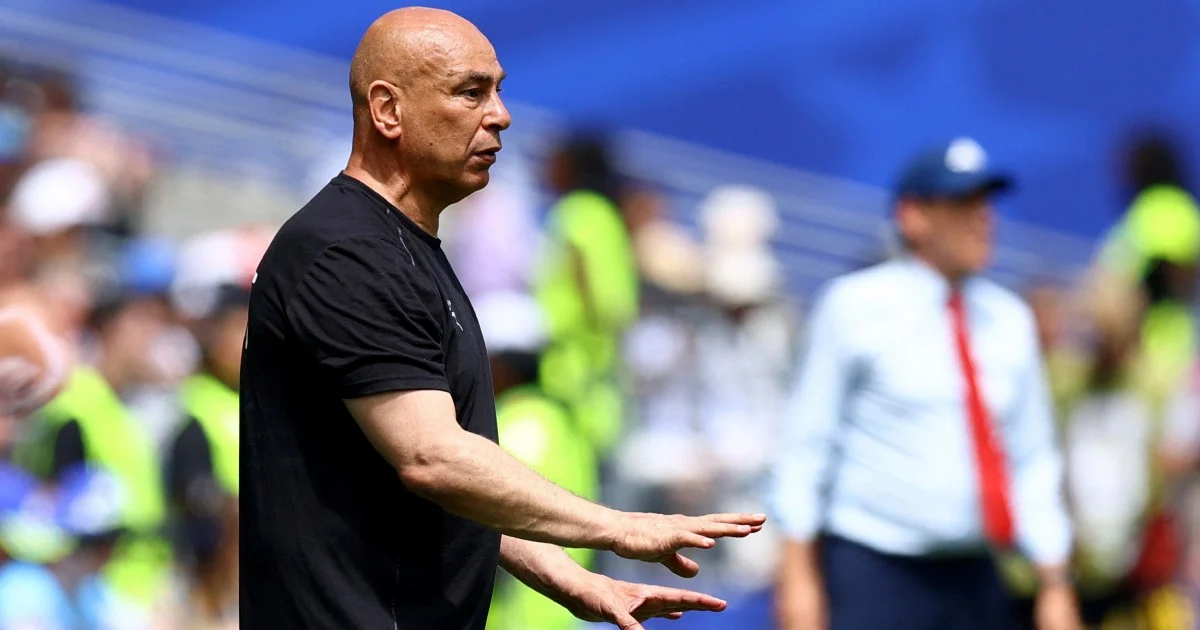
Egypt's hopes of achieving an unprecedented World Cup breakthrough rest partly on maintaining squad cohesion, something coach Hossam Hassan has taken pains to emphasise in the lead-up to their Group G fixture against New Zealand at Vancouver's BC Place stadium on Sunday. Hassan has publicly dismissed suggestions of friction between management and Mohamed Salah, the Liverpool forward who remains central to Egypt's attacking ambitions at the tournament.
The emergence of rumours regarding potential discord within the squad appears to have prompted Hassan to address the matter directly. In competitive international football, particularly when a nation carries the weight of historical underachievement at a global stage, even minor rifts can quickly metastasise into distracting narratives. Egypt, despite possessing considerable talent, has struggled to translate regional dominance into World Cup success, making squad stability especially critical during knockout-phase preparation.
Salah's significance to the Egyptian project cannot be overstated. The 31-year-old winger has long served as both the team's creative fulcrum and its primary goal-scoring threat, bearing considerable responsibility for Egypt's offensive output. Any suggestion of tension between the player and coaching staff naturally invites scrutiny, particularly given the high stakes involved in World Cup competition where marginal improvements in morale and coordination often determine outcomes.
Hassan's public reassurances appear designed to project an image of organisational unity at a moment when Egypt faces what could prove a defining contest. New Zealand, their immediate opponent, presents a team with limited World Cup pedigree but possessed of a defensive organisation that could frustrate Egypt's passing game. The pressure surrounding this match stems not merely from the need to collect points, but from Egypt's broader historical context—the nation has never advanced beyond the group stage in World Cup finals.
From a regional perspective, Egyptian football carries symbolic weight across the Arab world and throughout Africa. Success at the World Cup would represent vindication for the national programme and provide considerable pride across North Africa. Conversely, early elimination would reignite familiar debates about whether Egypt's talent translates effectively to the global stage when measured against preparation and squad harmony.
The timing of Hassan's intervention suggests he recognises that external narratives about internal conflict can undermine player confidence and distract from tactical preparation. Modern international football increasingly operates within a media environment where speculation about dressing-room dynamics spreads rapidly, potentially affecting player psychology. By proactively addressing such claims, Hassan seeks to establish a clear counter-narrative centred on collective purpose.
Salah's particular standing within Egyptian football gives his involvement in any rumoured controversy outsized resonance. The player commands genuine affection among supporters and possesses sufficient individual quality that any perceived marginalisation would provoke significant debate. His confirmation as fully committed to the squad's objectives thus holds genuine importance for maintaining supporter morale and team focus.
The manager's stance also reflects pragmatism regarding squad management during tournaments. International football creates unique pressures where players must balance club commitments with country obligations, sometimes creating tension. However, at World Cup moments, such considerations become secondary to national purpose. Hassan's messaging appears calibrated toward ensuring all stakeholders—players, supporters, and media—understand that internal cohesion ranks paramount.
Looking toward Sunday's encounter, Egypt faces a New Zealand side determined to prove that traditional football powerhouses hold no monopoly on World Cup competitiveness. The Oceania representatives will approach the fixture with defensive solidity and tactical discipline, forcing Egypt to demonstrate both technical excellence and patience. Such challenges are precisely where squad morale and management credibility become tangible advantages.
For Malaysian and Southeast Asian observers, the Egyptian situation holds instructive parallels regarding how Asian football nations navigate World Cup pressures. Regional teams regularly face expectations to succeed beyond what their historical records might suggest, creating psychological complexity. Hassan's approach—emphasising internal unity while publicly backing key personnel—represents a conventional but nonetheless important playbook for managing group dynamics during high-pressure tournaments.
The broader context surrounding this fixture encompasses Egypt's evolution as a football nation. The country has produced technically gifted players and developed increasingly sophisticated tactical approaches, yet consistent World Cup success remains elusive. Breaking through psychologically and practically requires not merely individual talent but collective resilience. Hassan's insistence on squad harmony reflects understanding that Egypt's path to historic World Cup advancement depends on maintaining the mental discipline necessary to compete effectively against more established nations.
As Egypt prepares for New Zealand, the narrative centering on Salah and Hassan becomes symbolic of something larger—whether the African powerhouse can convert talent into tournament success. The coach's public confidence in squad unity serves as both genuine reassurance and psychological preparation, setting the foundation for what the team hopes represents a turning point in Egyptian World Cup history.

