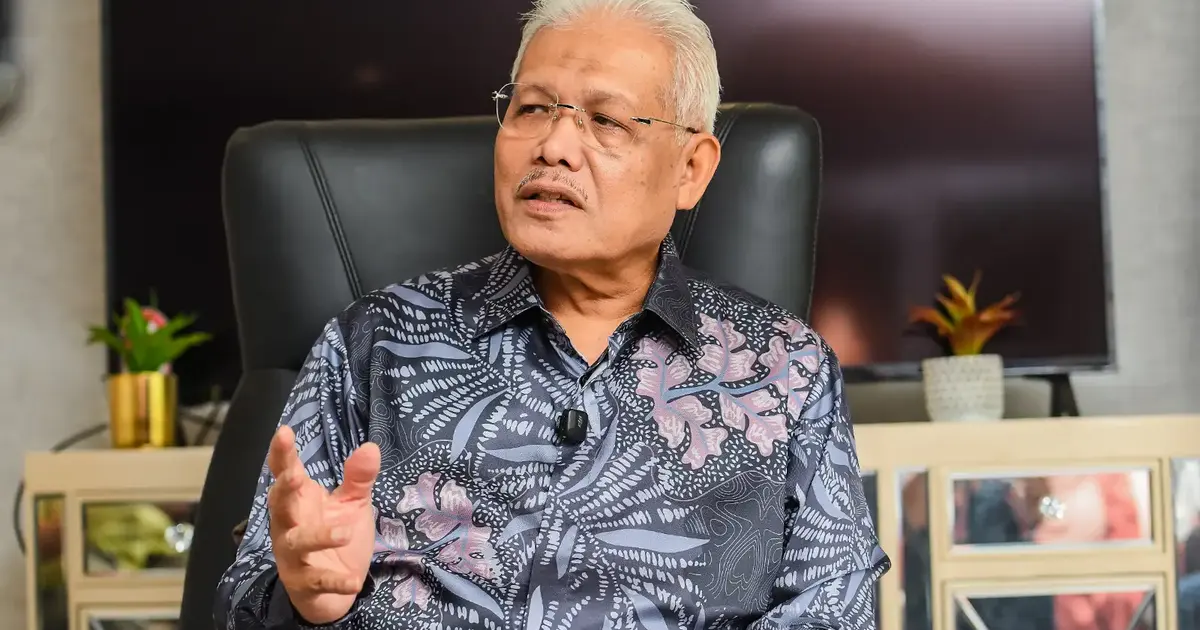
Hamzah Zainuddin's re-emergence in Malaysian politics is fundamentally altering the public perception of Perikatan Nasional, with political observers arguing that the coalition has strategically positioned him as the linchpin of their modernised electoral approach. Analysts tracking the opposition alliance contend that his involvement represents a deliberate pivot toward reassuring middle-ground voters who may have harboured reservations about the coalition's ideological direction in previous election cycles.
The PAS-led alliance has faced persistent criticism that its messaging lacks appeal beyond its traditional base of support. By elevating Hamzah to a central campaign role, coalition strategists appear intent on countering narratives that paint Perikatan Nasional as rigidly ideological or resistant to pragmatic governance. Political commentators suggest this recalibration reflects sophisticated campaign thinking, recognising that electoral victories in competitive constituencies increasingly depend on capturing swing voters uncomfortable with extreme positions from either end of the political spectrum.
Hamzah's profile within Malaysian politics carries particular significance given his extensive experience in federal administration and his reputation for technocratic problem-solving. Observers note that his association with the coalition lends a veneer of governmental competence and administrative credibility that complements PAS's grassroots organisational strength. This complementary positioning allows Perikatan Nasional to simultaneously appeal to voters prioritising economic management and social stability while maintaining the coalition's mobilisation capabilities across rural and semi-urban constituencies.
The strategic deployment of Hamzah as the public face of their election campaign suggests coalition leadership recognises that Malaysia's political landscape has shifted markedly since the last general election. Analysts point out that voters increasingly demand parties demonstrate capacity for inclusive governance transcending factional or religious particularism. By positioning Hamzah prominently, Perikatan Nasional signals commitment to multifaith coalition-building and secular governance frameworks that acknowledge Malaysia's diverse demographic composition.
The messaging around moderation carries substantial implications for Malaysia's evolving political equilibrium. Historically, opposition coalitions have struggled to project unified images of pragmatism and restraint, often fragmented by ideological tensions between constituent parties. By rallying behind Hamzah's measured public persona, coalition architects hope to paper over internal differences and present a cohesive alternative government capable of managing the economy, addressing urban-rural disparities, and maintaining social cohesion without radical institutional restructuring.
Regional political analysts have begun examining how Perikatan Nasional's repositioning might influence Southeast Asian perceptions of Malaysian governance. Countries across the region have watched Malaysian politics with considerable interest, particularly given the nation's role as an influential Muslim-majority democracy. A coalition projecting moderate, business-friendly governance appeals strongly to both regional counterparts and international investors who seek political stability and predictable policy frameworks. Hamzah's elevation potentially signals that Malaysian opposition politics is maturing toward consensus-based approaches rather than ideologically charged confrontation.
The timing of Hamzah's return carries additional significance given mounting economic pressures across Malaysia and broader Southeast Asia. Analysts suggest that voters confronting inflation, employment uncertainty, and rising living costs increasingly prioritise economic competence over ideological consistency. By foregrounding Hamzah's administrative experience and market-friendly credentials, Perikatan Nasional attempts to frame the election narrative around economic management and fiscal responsibility rather than cultural or religious policy debates that traditionally divided coalition supporters.
Within the coalition itself, Hamzah's prominence may serve functions beyond campaign messaging. His positioning could facilitate negotiation of seat allocations and policy platforms among PAS, Bersatu, and allied parties by providing a neutral figure acceptable to multiple factions. Analysts note that opposition coalitions have historically fractured over questions of leadership hierarchy and portfolio distribution; a consensus candidate potentially offers coalition architects a mechanism for managing these endemic tensions while preserving electoral unity through the crucial pre-election period.
Critical observers, however, caution that projected moderation carries inherent contradictions given coalition composition and historical party positions. Sceptical analysts question whether messaging emphasising centrism can be credibly sustained when coalition architects include parties with records of advancing religious nationalism and restricting civil liberties. They argue that campaign rhetoric projecting moderation may dissipate rapidly once electoral victory is secured, revealing underlying ideological commitments obscured during the campaign phase. This strategic ambiguity itself becomes a core electoral gamble, betting that swing voters prioritise short-term economic stability over longer-term institutional direction.
For Malaysian voters evaluating Perikatan Nasional's positioning, Hamzah's centrality raises fundamental questions about which coalition narratives reflect genuine commitment to inclusive governance versus expedient campaign positioning. As GE16 approaches, the discrepancy between projected moderation and institutional reality will likely become increasingly salient, determining whether Perikatan Nasional's repositioning strategy succeeds in expanding electoral appeal or whether voters perceive it as sophisticated repackaging masking unchanged ideological commitments.

