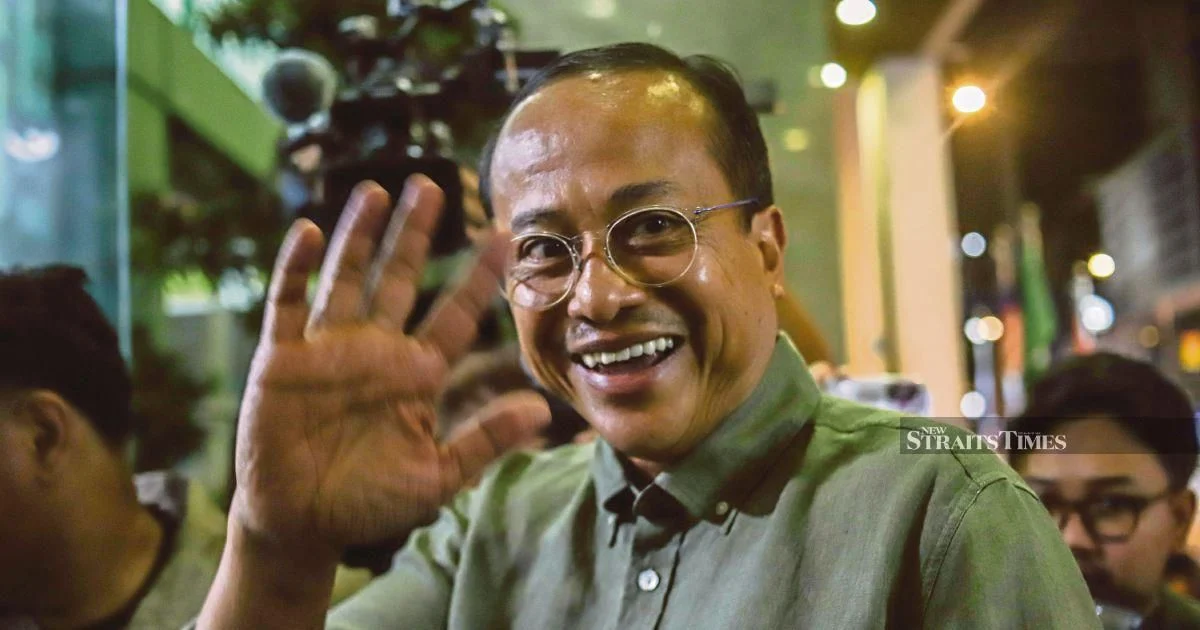
Datuk Seri Hamzah Zainudin's tenure as Opposition Leader in the Dewan Rakyat remains administratively incomplete, as the Perikatan Nasional coalition has not yet transmitted the formal notification required to validate his appointment. The Larut member of Parliament, who represents the primary opposition force in Malaysia's current political landscape, thus occupies a position of ambiguous standing within Parliament's institutional framework.
This administrative delay raises significant questions about the operational clarity within the country's parliamentary system. Typically, the Official Opposition designation carries specific rights and recognition, including priority in debates, enhanced questioning opportunities during parliamentary sessions, and formal status within the legislative body. Without proper notification lodged with Parliament, these entitlements remain technically unclaimed, creating a peculiar situation where Hamzah functions as de facto Opposition Leader while lacking formal acknowledgement.
The absence of notice from Perikatan Nasional—the coalition comprising Parti Islam Se-Malaysia, Bersatu, and Gerakan—suggests either procedural delays or potential hesitation regarding the internal arrangements within the opposition bloc. Such delays often indicate either bureaucratic inefficiency or substantive disagreements among coalition partners about leadership positioning and representation. In Malaysian politics, such interim periods can become strategically significant if competing factions vie for influence during the transition.
For Malaysian parliamentarians and political observers, this situation underscores persistent gaps between political reality and institutional protocol. While Hamzah commands support from the combined Perikatan MPs, the absence of formal parliamentary recognition means he operates without the statutory framework that legitimises the Opposition Leader role. This distinction, though appearing technical, holds practical implications for parliamentary procedure and media coverage of opposition activities.
The delay also reflects broader challenges in coalition management within Perikatan Nasional. Managing a multi-party alliance while maintaining unified opposition strategy requires coordinated communication and swift administrative action. Procedural steps, such as submitting formal leadership notices, demonstrate coalition cohesion to both Parliament and the public. Protracted delays can inadvertently signal internal disorganisation or contested authority—perceptions that weaken opposition effectiveness against the governing coalition.
Historically, Malaysia's Opposition Leader position has occasionally faced recognition complications, though such extended delays remain uncommon. The role carries constitutional weight in parliamentary democracy, serving as the formal check on executive power and symbolising organised resistance to government policies. Formal recognition typically follows swiftly after coalition agreement, making the current lag noteworthy.
For regional observers tracking Southeast Asian politics, Malaysia's situation illustrates how coalition dynamics can complicate institutional processes even in mature democracies. The efficiency with which opposition coalitions formalise their arrangements often predicts their broader effectiveness in scrutinising government. Delays may handicap opposition effectiveness during crucial parliamentary periods, reducing their ability to mount coordinated challenges.
Stakeholders including civil society organisations and parliamentary analysts have likely noticed this anomaly. The transparency and promptness with which legislative bodies process such administrative matters affect public confidence in institutional functioning. When formal procedures lag without clear explanation, observers question whether procedural rules apply uniformly or whether political considerations override standard protocols.
The implications extend to how Perikatan Nasional projects itself as an alternative government-in-waiting. Opposition coalitions require institutional credibility alongside policy platforms to establish themselves as viable government options. Delays in executing routine administrative procedures can undermine perceptions of competence and readiness. Conversely, swift and orderly handling of such matters reinforces the impression of an organised, professionally managed alternative.
Moving forward, the focus centres on when Perikatan Nasional will submit the required formal notice. The sooner this occurs, the sooner Hamzah gains full institutional standing as Opposition Leader, complete with all attendant parliamentary privileges and formal recognition. This procedural closure also allows Parliament's administrative processes to operate within their normal framework rather than in uncertain terrain.
Meanwhile, Hamzah continues functioning in the Opposition Leader capacity without the formal mantle, a situation that parallels informal power structures sometimes emerging in Malaysian politics where practical authority diverges from statutory recognition. This tension between de facto and de jure authority ultimately proves untenable in functioning parliamentary systems, necessitating prompt resolution.

