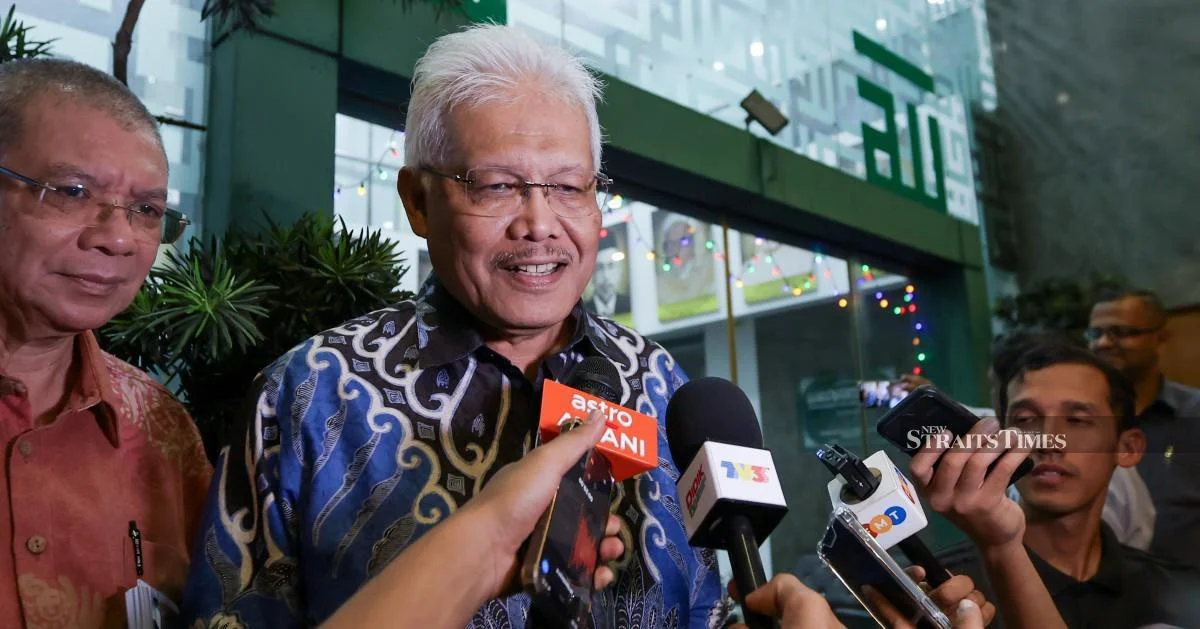
Datuk Seri Hamzah Zainudin is set to reclaim the opposition leader's seat in the Dewan Rakyat from Monday onwards, according to the updated parliamentary seating arrangement released this week. The repositioning represents a significant reshuffling of opposition bench hierarchy, with Bersatu president Tan Sri Muhyiddin Yassin relocating further along the front row—a physical manifestation of the evolving power dynamics within Malaysia's anti-government parliamentary bloc.
The seating chart carries considerable symbolic weight in Malaysia's Westminster-style legislature. The opposition leader's designated seat sits directly across from the Prime Minister and government frontbench, positioning the occupant at the institutional heart of parliamentary scrutiny and debate. Hamzah's return to this prominent placement after a period of relative sidelining underscores his rehabilitation within opposition circles and reflects the complex recalibration of alliances that has characterised Malaysian politics since the 2022 general election.
Muhyiddin's repositioning, while not unprecedented in Malaysian parliamentary history, signals a diminishment of his immediate frontline role despite his continued stewardship of Bersatu, the Malay-Muslim nationalist party that emerged from UMNO's fractious 2020 split. The former Prime Minister's trajectory—from leading the government during the Perikatan Nasional administration to holding the symbolic helm of opposition ranks, now to second-tier seating—encapsulates the turbulence of recent Malaysian political history. His movement down the bench, though technically minor in physical terms, carries interpretive weight regarding his standing within the current opposition coalition architecture.
Hamzah, a veteran politician and former Defence Minister, brings substantial parliamentary experience to his resumed position. His elevation or reinstatement in this role indicates that opposition MPs have collectively determined his suitability for representing their collective interests in daily parliamentary exchanges with government ministers and backbenchers. The opposition leader position requires not merely political clout but also rhetorical prowess, tactical acuity, and the respect of disparate coalition partners—factors that evidently weigh in Hamzah's favour.
The timing of this seating realignment deserves closer examination, as it typically signals broader shifts in opposition coordination rather than occurring arbitrarily. In Malaysia's current parliament, the opposition comprises a heterogeneous collection of parties including PKR, DAP, Amanah, and the aforementioned Bersatu, alongside independent MPs and representatives from Sabah and Sarawak-based parties. Maintaining cohesion across this sprawling coalition requires careful negotiation and, frequently, symbolic concessions regarding leadership representation and parliamentary positioning. Hamzah's appointment thus likely reflects negotiations among these various stakeholders regarding spokesperson roles and coalition leadership for the coming parliamentary session.
The Dewan Rakyat's physical layout—where proximity and positioning remain loaded with meaning—continues to shape political psychology and public perception. Television coverage of parliamentary proceedings invariably focuses on exchanges between government and opposition fronts, making the opposition leader's seat one of the most visible positions in Malaysian politics. Sitting directly opposite the Prime Minister or relevant government spokesperson, the opposition leader becomes the default voice of dissent, critique, and alternative policy perspectives projected to both MPs and the Malaysian public watching proceedings.
For Hamzah personally, the return to frontbench prominence offers an opportunity to rebuild his political profile and demonstrate renewed relevance. The Defence Ministry portfolio he previously held carries security responsibilities that remain central to Malaysian governance, and his prior experience in such consequential roles could inform his questioning and interventions on government policy. His visibility in the opposition leader's seat will inevitably attract media scrutiny and offers platforms for articulating opposition positions on matters ranging from economic policy to national security concerns.
Muhyiddin's transition to a secondary bench position, conversely, raises questions about the trajectory of Bersatu within the broader opposition constellation. Despite holding the party presidency, his reduced parliamentary prominence may reflect broader coalition dynamics or leadership preferences that privilege other figures. Bersatu's political positioning has remained contentious since its 2020 emergence, with the party oscillating between government participation and opposition status depending on prevailing coalition configurations. This latest development suggests the party is settling into opposition legitimacy, though the repositioning of its president may indicate internal or external pressures regarding factional leadership within that role.
The practical implications of this seating rearrangement extend beyond ceremonial considerations. In parliamentary systems, the opposition leader typically enjoys certain procedural privileges, including priority in question time, enhanced speaking opportunities during debates, and symbolic recognition as the senior anti-government voice. These functional advantages strengthen an opposition leader's capacity to shape legislative agendas, frame policy discussions, and mobilise parliamentary attention toward issues their coalition considers priorities. Hamzah's acquisition of these procedural benefits thus translates into tangible parliamentary influence.
Malaysian parliamentarians and observers familiar with the institution recognise that such structural changes frequently precede substantive shifts in legislative strategy or coalition positioning. The seating realignment may thus signal forthcoming changes in opposition tactics, parliamentary coordination, or public messaging regarding government performance. Hamzah's installation as opposition leader could presage more assertive questioning of government policies, revised coalition positions on legislative priorities, or reorganised parliamentary committees through which opposition MPs exercise oversight functions.
Looking forward, the reshaped opposition bench leadership presents both opportunities and challenges. Hamzah gains platform and procedural advantages for challenging government policies and articulating alternative visions, while the reconfigured opposition coalition attempts to present unified fronts on contentious issues. However, the heterogeneous composition of Malaysia's opposition remains a persistent vulnerability—with DAP representing largely urban, primarily Chinese constituencies, PKR maintaining Anwar Ibrahim's multiethnic coalition structure, and Bersatu commanding Malay-Muslim grassroots support, reconciling divergent interests and policy preferences remains a perpetual struggle.
The Monday implementation of this seating arrangement marks another chapter in Malaysia's ongoing political evolution since the 2022 election fundamentally altered parliamentary mathematics and governance configurations. As the Dewan Rakyat reconvenes with its recalibrated opposition frontbench, parliamentary dynamics will reveal whether this structural repositioning translates into substantive changes in legislative discourse and government accountability mechanisms.

