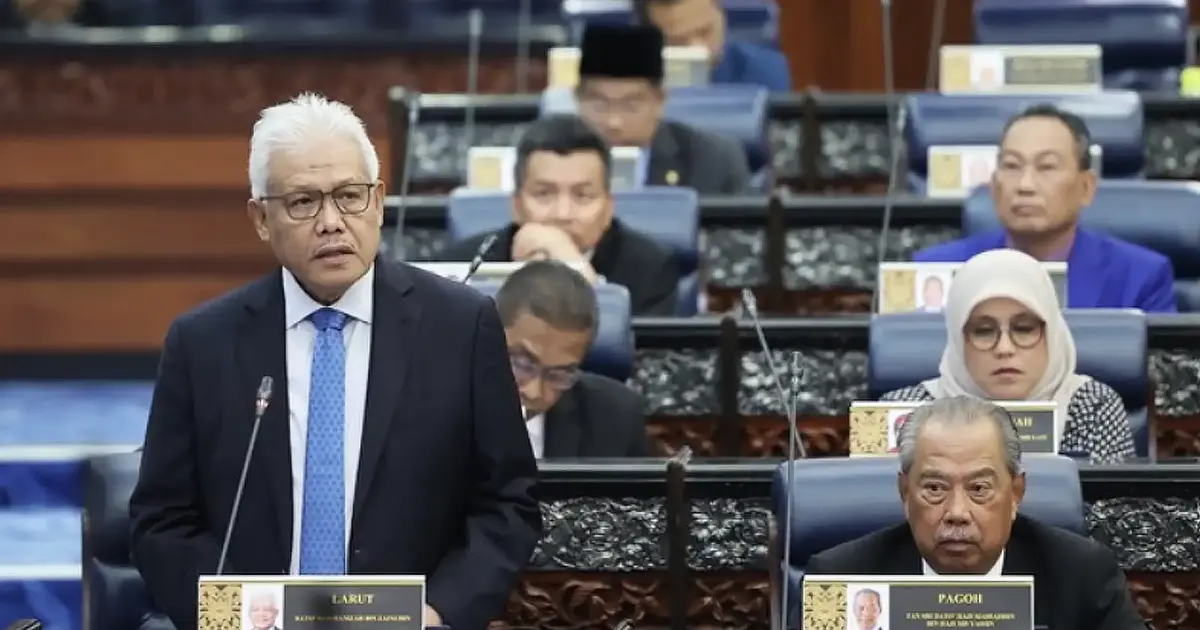
Datuk Seri Hamzah Zainudin has reclaimed his position as opposition leader in the Dewan Rakyat, marking a significant shift in the parliamentary seating arrangement that reflects the evolving political landscape in Malaysia. The reshuffle has seen Tan Sri Muhyiddin Yassin, president of Bersatu, relocated substantially from his previous vantage point near the opposition leader's seat, with the Bersatu chief now positioned eight seats further back along the front bench.
This reconfiguration of parliamentary positions carries weight beyond mere ceremonial rearrangement. The seating hierarchy in the lower house traditionally mirrors the influence and standing of political figures within their respective coalitions and the broader parliament. Hamzah's return to the primary opposition leader's seat underscores a realignment within the Pakatan Harapan coalition and signals to both the government and the public the party's confidence in his leadership credentials during this session.
Muhyiddin's relocation represents a tangible acknowledgement of shifting dynamics within Malaysia's complex political ecosystem. The Bersatu leader has navigated turbulent political waters in recent years, and his previous proximity to the opposition leader's seat had been a point of interest among political observers tracking the relative positions of major figures in the chamber. The move down eight seats, while seemingly modest in numerical terms, carries symbolic significance in parliamentary tradition and custom.
The opposition leadership structure has been subject to considerable flux as Malaysia continues to work through the implications of recent electoral cycles and coalition negotiations. Hamzah's consolidation of the opposition leader's role is likely to stabilize expectations within the parliamentary framework and provide clearer organizational structure during legislative proceedings. This clarity benefits not only the opposition parties themselves but also the government in terms of knowing precisely which figure to engage with during formal parliamentary business.
For Malaysian political observers, the seating change offers insight into the current balance of power among opposition-aligned parties. Bersatu, which has shifted between government and opposition alignments in recent political history, finds itself in a repositioned role that appears to reflect its current standing relative to other major opposition forces. The party's movement away from the most prominent positioning in the front row may indicate either a deliberate choice to recalibrate its parliamentary strategy or an adjustment necessitated by coalition considerations.
The Dewan Rakyat's physical layout and seating arrangements serve as daily reminders of the political hierarchy to members and observers alike. When major figures are repositioned, particularly over short spans of seats in the front row where visibility and proximity to proceedings are heightened, the message resonates through political circles. Hamzah's restoration to the lead opposition position effectively broadcasts renewed or reinforced leadership authority, while Muhyiddin's adjustment signals a recalibration of status or role within the current parliamentary configuration.
For regional and international observers watching Malaysian politics, such developments provide tangible indicators of internal restructuring. Southeast Asian governments and political analysts closely monitor shifts in Malaysian parliamentary dynamics, as the country's political trajectory often influences broader regional political conversations. The repositioning of key figures can indicate whether coalitions are stabilizing or if additional instability may be anticipated in coming legislative periods.
This seating arrangement also carries practical implications for committee work and parliamentary functioning. Opposition leaders typically have greater speaking time and procedural privileges during parliamentary sessions. Hamzah's positioning at the forefront of the opposition benches ensures that his voice remains prominent during government questioning and legislative debates, amplifying the opposition's ability to hold the executive accountable. This restoration of position may enhance the opposition's effectiveness in scrutinizing government policies and actions during parliamentary proceedings.
The broader context of Malaysian politics in recent years has been characterized by coalition reshuffling and strategic realignments that have sometimes surprised observers. Bersatu's journey through various political alignments has been particularly notable, and its current positioning relative to other opposition components reflects the party's evolving role. Muhyiddin's management of Bersatu during periods of both government participation and opposition status has required considerable political dexterity, and the party's current parliamentary position represents one dimension of that ongoing navigation.
Moving forward, parliamentary observers will monitor whether this seating arrangement stabilizes or signals further changes in the opposition's internal hierarchy. Such developments often precede or follow shifts in coalition dynamics, policy disagreements, or leadership challenges. The arrangement also sets the stage for how the opposition will coordinate its parliamentary strategy during the current session, with clear leadership positioning typically enabling more coherent questioning and legislative responses from opposition benches.
Ultimately, while seating adjustments in parliament may appear purely procedural to casual observers, they frequently embody deeper truths about political relationships, power dynamics, and strategic positioning. Hamzah's return to the opposition leader's seat represents a consolidation of authority and clarity in the opposition's parliamentary presence, while Muhyiddin's repositioning reflects the complex calculations that determine each party's standing within Malaysia's intricate political configuration. These arrangements will likely influence parliamentary dynamics and coalition interactions throughout the current legislative term.

