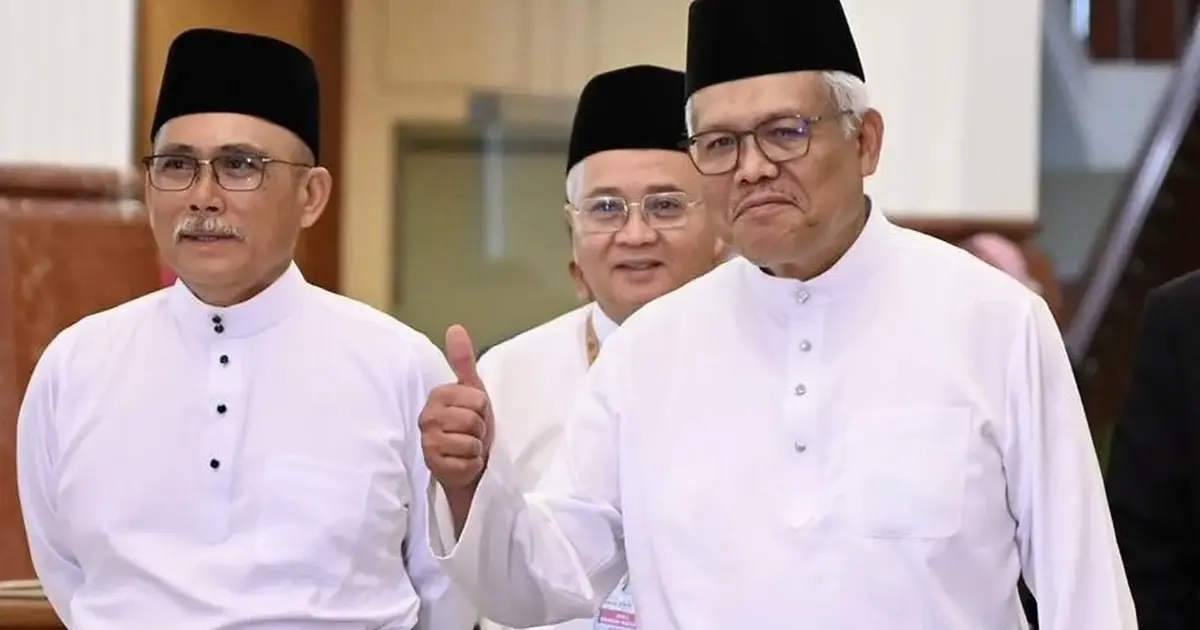
Hamzah Zainuddin, the Larut MP, has been positioned as opposition leader following consolidated support from PAS and a significant bloc of Bersatu parliamentarians, according to Kiandee, who holds the suspended position of Bersatu vice-president. The move represents a strategic consolidation within Malaysia's opposition ranks, bringing together key components of what has historically been a fragmented political force.
Kiandee's statement underscores the degree to which PAS has thrown its weight behind Hamzah's leadership, offering bloc support rather than scattered individual endorsements. This unified backing from the Islamist party signals a coordinated approach to opposition politics, suggesting that PAS leadership has assessed Hamzah as the most viable figure to marshal opposition forces against the current government. The bloc endorsement carries particular significance given PAS's substantial parliamentary representation and its mobilising capacity across Malaysia's Muslim-majority constituencies.
Within Bersatu, Hamzah's elevation appears to have generated majority consensus among the party's MPs, though the suspended status of Kiandee himself raises questions about factionalism within the outfit. The Bersatu component of his support base is particularly noteworthy given the party's complicated political trajectory and internal divisions that have characterised its recent history. That a majority of the party's parliamentary members have coalesced around Hamzah suggests either a genuine consensus or a significant realignment within Bersatu's internal dynamics.
The opposition leader designation carries practical implications for parliamentary procedure and the government's accountability mechanisms. As opposition leader, Hamzah would gain formal recognition in the Dewan Rakyat, access to parliamentary privileges including official question time allocations, and the standing to table motions and speak on behalf of the organised opposition. These institutional advantages extend beyond symbolic recognition, providing substantive tools for legislative oversight and public advocacy.
Hamzah's background as Larut MP for the constituency in Perak positions him within one of Malaysia's economically mixed regions, balancing urban and rural interests. His representation of this geographically and demographically diverse seat may have contributed to his broader appeal across the opposition coalition. Perak itself has been a competitive political battleground, and Hamzah's successful parliamentary tenure there demonstrates electoral credibility that translates into political leverage.
The consolidation of opposition leadership has implications for how the current government operates in parliament. A recognised opposition leader with demonstrated majority backing among opposition MPs can orchestrate more coherent questioning during question time, coordinate legislative positions on contentious bills, and present a unified messaging front to Malaysian media and voters. This structural coherence is typically absent when opposition politics becomes fragmented across competing figures.
Kiandee's willingness to publicly affirm this arrangement, despite his own suspended status within Bersatu, suggests either personal alignment with the decision or broader party machinery acceptance. The fact that a suspended official made this announcement raises curiosity about internal party processes and whether the statement represents officially sanctioned communication or individual commentary. His position gives the statement credibility within Bersatu circles, though the suspended status introduces ambiguity about his current standing within formal party hierarchies.
The opposition's previous struggles with unified leadership have weakened its parliamentary effectiveness and narrative coherence. Malaysian voters have frequently expressed frustration with opposition fragmentation that diffuses legislative impact and complicates public accountability messaging. Hamzah's elevation addresses these structural problems by establishing a single focal point for opposition coordination, potentially improving the opposition's ability to present alternative policy visions and scrutinise government performance.
Regionally, Malaysia's opposition dynamics reflect broader patterns in Southeast Asian democracies where coalition-building and leadership selection become critical to electoral competition. The mechanisms through which opposition figures consolidate support, and the basis of their legitimacy, matter considerably for how regional democracies function. Hamzah's emergence as opposition leader, contingent on PAS and Bersatu endorsement rather than electoral outcomes, exemplifies how parliamentary mathematics shape political outcomes independent of public voting patterns.
The timing of this announcement may reflect broader recalibrations within opposition politics as Malaysia approaches future electoral contests. Establishing clear leadership can facilitate fundraising, attract media attention, and provide organisational focus during campaign periods. For voters assessing opposition viability, having an identifiable leader with institutional backing from multiple parties offers clearer differentiation from the governing coalition.
Looking forward, Hamzah's effectiveness as opposition leader will likely depend on his ability to maintain the coalition consensus that elevated him. PAS and Bersatu support bases have distinct ideological orientations and voter demographics, requiring diplomatic skill to prevent fragmentation. His parliamentary performance, media engagement, and ability to mobilise MPs for legislative challenges will gradually determine whether this consolidation represents durable political realignment or temporary tactical positioning ahead of electoral cycles.

