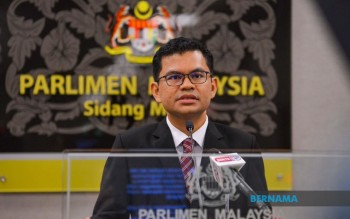
The National Economic Action Council has instructed two key ministries to conduct a thorough review of recommendations submitted by the Malaysian Plastics Manufacturers Association, signalling government commitment to supporting a sector that underpins numerous downstream industries. Economy Minister Akmal Nasrullah Mohd Nasir confirmed that both the Ministry of Investment, Trade and Industry and the Economy Ministry will scrutinise the MPMA's proposals, which centre on structural cost disadvantages and competitiveness concerns facing the plastics manufacturing ecosystem in Malaysia.
The plastics sector confronts mounting pressures from global supply chain disruptions and escalating raw material expenses, headwinds that have prompted industry bodies to seek government intervention. During a presentation to the NEAC, the MPMA highlighted specific grievances relating to cost structures and the competitiveness gaps that downstream manufacturers encounter when compared against rival nations. A particularly contentious issue concerns the disparity in raw material pricing between Malaysia and competing countries, a concern that resonates across the entire value chain from resin suppliers to finished goods manufacturers.
The industry's significance to Malaysia's broader economic framework cannot be overstated. Last year, the plastics sector generated sales valued at RM62.69 billion, a modest decline from RM64.78 billion in 2024, underscoring the headwinds currently buffeting manufacturers. Within this market, packaging applications dominate at 45 per cent of total output, while electrical and electronics components constitute 29 per cent, reflecting the sector's critical role as a supplier to automotive, consumer goods, technology, and industrial equipment manufacturers. For Malaysian readers, this interconnectedness means that cost pressures in plastics manufacturing can ripple through supply chains affecting prices and competitiveness across multiple industries.
Akmal Nasrullah emphasised that any government response must balance multiple competing interests whilst safeguarding Malaysia's long-term economic standing. The examination process will weigh the wellbeing of the entire industrial chain, fiscal sustainability, and the country's competitive position in international markets. This holistic approach reflects recognition that piecemeal solutions favouring one segment could inadvertently disadvantage others or strain public finances in ways that undermine broader macroeconomic objectives.
A particularly significant aspect of the government's review concerns the proposed introduction of Extended Producer Responsibility on a voluntary foundation. The EPR framework, which assigns manufacturers greater accountability for their products throughout their lifecycle including end-of-life management, carries substantial cost implications that warrant careful evaluation. The government will assess how such measures would affect small and medium enterprises that form the backbone of Malaysia's plastics manufacturing ecosystem, alongside examining whether recycling infrastructure possesses sufficient capacity and technological readiness to support widespread implementation.
Akmal Nasrullah articulated an optimistic vision of how a well-designed circular economy framework could strengthen Malaysia's industrial resilience. By encouraging greater utilisation of recycled materials, manufacturers could reduce dependence on virgin raw material imports, thereby insulating the sector from volatile global commodity prices and geopolitical supply disruptions. Additionally, developing a domestically-sourced recycled materials market would create new business opportunities whilst addressing environmental objectives, representing a potential win-win outcome for both industrial competitiveness and sustainability goals.
Despite the specific challenges facing plastics manufacturers, the broader Malaysian economy demonstrates considerable strength and resilience. The government remains confident that the economy will sustain its current growth trajectory and meet the official target range of 4.0 to 5.0 per cent expansion for 2026. This optimism rests upon tangible evidence from economic data collected during the first half of this year, which collectively paint a picture of an economy buoyed by multiple growth drivers operating in concert.
First quarter 2026 figures reveal that Malaysia's gross domestic product expanded at 5.4 per cent, a performance driven by the combined momentum of domestic consumer and business spending, robust services sector activity, steady manufacturing output, and resilient international demand for electrical and electronics exports. These growth sources suggest diversification within the economy, meaning that weakness in any single sector has not derailed overall momentum. The government will release preliminary second quarter GDP estimates on July 17, with comprehensive final figures following on August 14, providing a clearer picture of whether first quarter strength proves sustainable.
Inflationary pressures remain contained, with the consumer price index registering 2.0 per cent in May 2026 compared to 1.9 per cent the preceding month, indicating that price pressures remain manageable and within the implicit comfort zone of Malaysian policymakers. More strikingly, international trade performance has accelerated sharply, with total merchandise trade reaching almost RM1.5 trillion during the January to May period, representing 18.3 per cent growth compared to the same timeframe in 2025. This export-led momentum suggests that Malaysian manufacturers remain competitive in global markets despite rising input costs affecting some sectors like plastics.
Exports surged 24.3 per cent to RM793.8 billion whilst imports climbed 11.8 per cent to RM661.1 billion, generating a trade surplus of RM132.8 billion. The outpacing of export growth relative to import expansion indicates that Malaysian producers are successfully capturing market share internationally, a particularly encouraging sign given the challenging global conditions that have characterised recent years. For plastics manufacturers specifically, this broader context suggests that government support for addressing their structural cost disadvantages operates within a framework of overall economic health and export competitiveness.
The government's decision to conduct a detailed examination of MPMA proposals reflects pragmatic policymaking that acknowledges sector-specific challenges without allowing them to dominate decision-making across the entire economy. By tasking MITI and the Economy Ministry with thorough evaluation, the government signals that industry concerns merit serious consideration whilst ensuring that responses remain calibrated to Malaysia's broader economic priorities. For Malaysian stakeholders spanning manufacturers, exporters, and consumers, this deliberative approach offers the prospect of targeted solutions addressing genuine competitiveness constraints without destabilising fiscal positions or creating distortions elsewhere in the industrial ecosystem.

