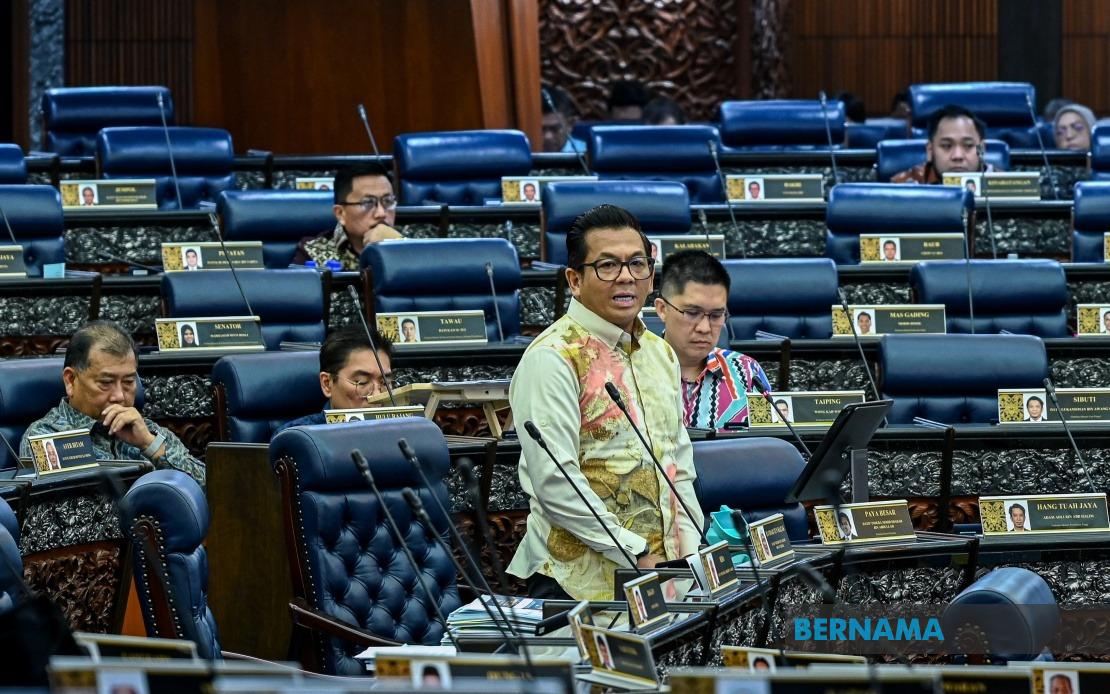
Malaysia's government is intensifying its approach to tackling the cost-of-living crisis by deploying a sophisticated data-driven tool that maps household spending patterns across different regions. The strategy centres on the Basic Living Expenditure framework, known locally as PAKW, which the Department of Statistics Malaysia developed to capture the distinct financial realities facing urban and rural households. Speaking in Parliament on July 16, Deputy Economy Minister Datuk Mohd Shahar Abdullah outlined how this granular understanding of regional spending behaviour is informing a range of policy responses designed to provide relief where it is needed most.
The PAKW framework represents a significant departure from one-size-fits-all approaches to cost-of-living interventions. Rather than applying uniform subsidies or price controls, the government now recognises that a household struggling in Kuala Lumpur faces fundamentally different expenditure pressures than one in Kelantan or Sabah. This distinction matters enormously when designing effective support measures. Mohd Shahar illustrated the scope of these differences by citing concrete figures: the PAKW value for Kuala Lumpur stands at RM5,639 monthly, substantially higher than the RM4,254 recorded in Kelantan and the RM4,511 in Sabah. These variations reflect not just income differences but also divergent cost structures for housing, transportation, food, and services across Malaysia's diverse geography.
Making this data accessible to ordinary Malaysians is a key pillar of the government's strategy. The PAKW calculator, available at myPAKW.dosm.gov.my, allows individuals and families to input their spending patterns and compare themselves against national and state benchmarks. This transparency serves multiple purposes: it enables households to evaluate their own financial health, helps policymakers identify emerging pressure points, and creates a shared vocabulary around what constitutes basic living costs in different parts of the country. By democratising access to this information, the government aims to move beyond anecdotal complaints about rising prices towards evidence-based discussions about where support should be targeted.
The government's response to these disparities extends beyond data collection and transparency initiatives. Mohd Shahar revealed that a coordinated approach to income enhancement forms the backbone of the strategy, with training programmes designed to help Malaysians increase both their baseline earnings and their potential for higher wages. This represents a philosophical shift from purely demand-side interventions like price controls or subsidies towards supply-side measures that address the root cause of affordability challenges: insufficient household income relative to costs. By embedding these initiatives into each Five-Year Malaysia Plan and revising them twice per planning cycle, the government signals a commitment to continuous adjustment rather than static policy.
The evolution of the Poverty Line Income offers a telling indicator of how the government's understanding of living standards has shifted over the past decade. In 2016, the national PLI stood at RM980 monthly, a figure that most observers would have considered inadequate even then. By 2024, the PLI had climbed to RM2,705, reflecting both genuine improvements in minimum living standards and growing recognition of what households actually need to meet basic requirements. This nearly threefold increase over eight years demonstrates that policy frameworks are not immutable but rather adapt to changing economic realities, though questions remain about whether the pace of adjustment keeps pace with actual cost inflation experienced by households.
The relevance of the PAKW framework extends beyond Malaysia's domestic policy debates. Southeast Asian neighbours facing similar urban-rural disparities in development and living costs may view Malaysia's experience as instructive. Countries like the Philippines, Indonesia, and Thailand grapple with comparable challenges of regional inequality, and the adoption of granular, location-specific data systems could inform their own policy design. Malaysia's willingness to make PAKW data publicly available and to embed it formally into national planning cycles demonstrates a level of statistical sophistication and transparency that positions the country as a regional leader in evidence-based policymaking.
The context for this data-driven approach matters significantly. Rising inflation across the region, driven by global supply chain disruptions, energy prices, and monetary factors beyond any single government's control, has placed acute pressure on household budgets. In this environment, the ability to precisely identify which regions and which household types face the most severe affordability challenges becomes invaluable. Policymakers can avoid wasting resources on broad interventions that provide support to those who do not need it, instead concentrating assistance on the most vulnerable populations in the areas where costs genuinely exceed earning potential.
However, the PAKW framework alone cannot solve Malaysia's cost-of-living challenges. Data, however accurate and comprehensive, remains merely a foundation for policy. The real test lies in whether the government's income-enhancement programmes can deliver genuine wage growth faster than prices continue to climb. The gap between a PLI of RM2,705 and actual household incomes, particularly in rural areas and among informal sector workers, remains substantial. Additionally, the framework does not directly address structural issues like housing affordability in major urban centres, healthcare costs, or education expenses, all of which consume significant portions of household budgets but may not be fully captured in basic living expenditure calculations.
The parliamentary exchange that prompted Mohd Shahar's detailed response also underscored government awareness that this challenge requires sustained attention. The question from Wan Hassan Mohd Ramli referenced a 2023–2025 economist field study specifically focused on developing solutions for inflation and the urban-rural cost disparity, indicating that multiple agencies are engaged in parallel research efforts. Whether these various initiatives cohere into a unified strategy or operate in silos remains an important question. Coordination between the Department of Statistics Malaysia, the Ministry of Economy, the Ministry of Finance, and other relevant agencies will be crucial for translating data insights into coherent, effective policy.
Looking ahead, the government's reliance on PAKW data to guide cost-of-living interventions represents both progress and an admission that previous, less targeted approaches proved insufficient. The framework offers genuine value by rendering visible the regional variations in living costs that many households experience daily but that policy discussions often obscure. Yet Malaysian households will judge the government's efforts not by the sophistication of its data infrastructure but by whether their own purchasing power stabilises or improves. The challenge now lies in converting analytical insight into tangible relief for millions of Malaysians navigating an increasingly expensive cost of living.

