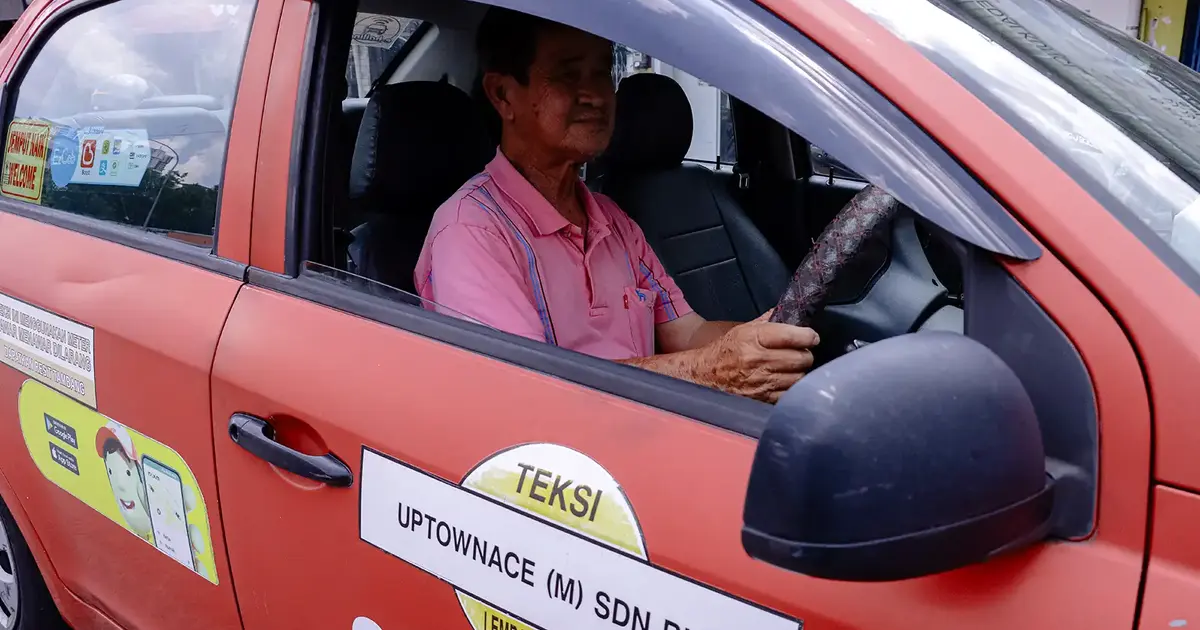
Prime Minister Anwar Ibrahim has unveiled a supplementary funding package worth RM10 million directed at Malaysia's taxi driver community, underscoring the government's recognition of their significance to the nation's service sector and international standing. The allocation reflects a broader commitment to supporting workers in the transportation industry who operate at the frontlines of public interaction, particularly with foreign tourists and business travellers seeking ground mobility across Malaysian cities.
Anwar characterised taxi drivers as essential contributors to Malaysia's external image, noting their direct engagement with visitors and the impressions these interactions create. The Prime Minister's framing positions the taxi sector beyond conventional transport services, positioning drivers as unofficial ambassadors who communicate Malaysia's standards of hospitality, safety, and professionalism to international audiences. This perspective aligns with the government's wider strategies to enhance the country's competitiveness in regional and global tourism markets, where service quality fundamentally shapes visitor satisfaction and repeat business.
The timing of this allocation arrives amid sustained economic pressures on Malaysia's transport workers, particularly taxi operators who have faced volatile fuel costs, changing commuting patterns following the pandemic, and intensifying competition from ride-hailing platforms. The financial injection addresses longstanding grievances within the driver community regarding operational costs and income sustainability, areas that have historically generated significant concern among worker associations and industry representatives. By directing resources toward this workforce, the government signals its commitment to preserving the traditional taxi sector as a viable employment avenue in Malaysia's evolving mobility landscape.
Malaysia's taxi industry has undergone substantial transformation in recent years, with digital platforms reshaping demand patterns and passenger expectations. Established taxi operators, particularly those in major urban centres like Kuala Lumpur and Petaling Jaya, have adapted to competitive pressures while maintaining traditional on-street hailing and hotel dispatch operations. This RM10 million allocation potentially supports modernisation initiatives, driver training programmes, or equipment upgrades that could enhance service delivery and operational competitiveness against alternative transport modes. Such investments prove particularly relevant as Malaysia positions itself as a technology-forward Southeast Asian hub, where even traditional sectors embrace innovation.
The government's investment carries implications extending beyond individual driver welfare. Taxi services form a critical component of Malaysia's urban transport ecosystem, serving demographic segments—elderly passengers, travellers with luggage, disabled commuters—who may not utilise ride-sharing applications or public transit systems effectively. By sustaining this sector through targeted funding, policymakers preserve transport options diversity, ensuring comprehensive mobility access across socioeconomic and demographic groups. This inclusionary approach strengthens overall transport resilience and prevents over-reliance on single mobility modes.
For Malaysian readers, this development reflects broader government priorities around social support for essential workers and economic inclusivity during periods of global economic uncertainty. The allocation demonstrates responsiveness to labour market pressures and represents an attempt to balance technological disruption with traditional employment preservation. Tourism, a significant revenue generator for Malaysia's economy, depends fundamentally on visitor experiences, within which transportation constitutes a measurable component. Supporting taxi drivers thus becomes an economically rational investment, not merely a welfare gesture.
The announcement also contextualises Malaysia's positioning within Southeast Asian competitive dynamics. Regional competitors including Thailand, Indonesia, and Vietnam maintain similar taxi sectors serving tourism and local transport functions. Investment differentials in driver support and service quality potentially influence visitor satisfaction metrics and repeat tourism rates. Malaysia's emphasis on taxi driver welfare suggests recognition of how service-sector excellence translates into tourism competitiveness and foreign exchange earnings, dimensions particularly significant for an economy diversifying beyond manufacturing and commodities.
For the wider transportation sector, this precedent may influence expectations regarding government support for other driver communities, including bus operators, truck drivers, and emerging mobility workers. The RM10 million allocation establishes a benchmark for worker-focused investment, potentially creating pressure for comparable support mechanisms elsewhere. Industry observers will likely monitor implementation details, including whether funds support training programmes, equipment standardisation, or direct income supplements, as these distinctions shape long-term sector development trajectories.
Looking forward, sustainability of taxi sector viability depends on multiple factors beyond single allocations. Infrastructure development, regulatory frameworks supporting operational efficiency, technology adoption supporting customer experience, and strategic cooperation between traditional operators and emerging platforms will collectively determine sector futures. The government's financial commitment signals political willingness to invest in this outcome, though comprehensive sector transformation requires sustained policy attention and multi-stakeholder collaboration extending across operators, workers, technology companies, and urban planners addressing mobility infrastructure systematically.

