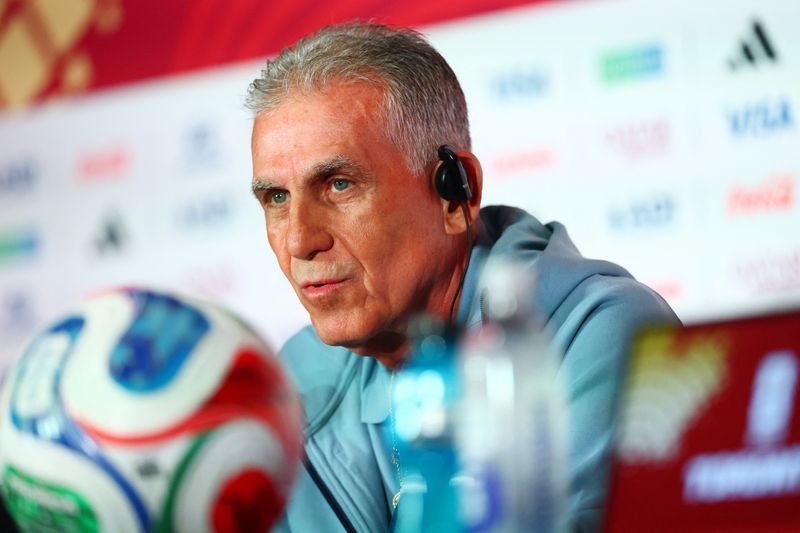
Ghana's coaching staff is projecting unwavering confidence heading into their World Cup Group L encounter against Panama at Toronto Stadium, with manager Carlos Queiroz declaring on Tuesday that his team possesses the tactical flexibility to succeed with or without the contested participation of midfielder Thomas Partey. The Portuguese coach's measured tone came as a Canadian federal court considered Ghana's appeal against the country's earlier rejection of Partey's entry, setting up a high-stakes contest scheduled for the following day at one of North America's premier venues.
The Villarreal midfielder finds himself at the centre of a controversy that has overshadowed Ghana's tournament preparations. Partey faces allegations of rape and sexual assault in Britain, charges he has consistently denied. The circumstances surrounding his potential availability have created an unusual diplomatic and legal dimension to the World Cup Group L competition, forcing Queiroz to navigate both the athletic and administrative challenges of international football at its highest level. The 73-year-old Portuguese tactician, renowned for his experience across multiple continents and competitions, has opted to compartmentalise the off-field complications from his on-field responsibilities.
At his press conference, Queiroz deliberately sidestepped prolonged discussion of Partey's situation, describing such commentary as a distraction from his core mandate. His philosophy centred on the cards dealt to him rather than lamenting the hand he might have preferred. This pragmatic approach reflects the reality that elite coaches must remain adaptable, maintaining contingency plans for various scenarios that could unfold during tournament football. Ghana's broader squad composition and strategic depth would need to compensate should Partey's participation remain restricted, a challenge that Queiroz suggested his coaching staff had already systematically addressed through comprehensive preparation.
Regarding Panama as opponents, Queiroz offered a characterisation that blended respect with tactical optimism. He identified the Central American side as a well-organised and experienced ensemble, qualities that demanded careful management and precise execution from Ghana's perspective. Yet the Ghana manager appeared confident that his players possessed the attributes necessary to exploit weaknesses he identified in Panama's setup. His assessment of Ghana's own capabilities encompassed speed, technical skill, individual quality, and physical strength—a multidimensional profile suggesting the Black Stars could impose themselves in direct duels and transitional moments.
The coaching philosophy Queiroz articulated emphasised converting Ghana's recognised strengths into concrete advantages during ninety minutes of play. He avoided the trap of dismissing Panama's credentials while simultaneously refusing to project defeatism or reservation about his own team's chances. This measured optimism, grounded in specific attributes rather than abstract confidence, reflected the thinking of a coach who had managed elite sides across Europe, Asia, and Africa and understood the variables that determine outcomes in competitive international football.
Beyond the immediate match context, Queiroz used the platform to critique one of the tournament's administrative innovations. FIFA's mandatory hydration breaks—implemented across World Cup matches—have generated considerable debate within the professional football community regarding their sporting necessity, health implications, and potential secondary effects on match flow and entertainment value. Queiroz acknowledged that immediate criticism served little practical purpose during the tournament itself, but he articulated a desire for comprehensive post-tournament analysis of the rule's implementation and effects.
His call for an integrity report reflected scepticism about the ruling bodies' primary motivation for introducing hydration breaks. Queiroz wanted independent examination of whether the measure truly prioritised player welfare and athletic performance or whether other considerations—particularly commercial and marketing interests—had influenced the decision-making process. This critique aligns with broader concerns within professional football regarding the balance between player protection, sporting integrity, and commercial imperatives, issues that resonate across Southeast Asian football communities increasingly exposed to both the benefits and complications of globalised sport.
The timing of the federal court hearing on Partey's appeal added urgency to Ghana's tournament narrative. A decision expected imminently would either provide clarity and potential reinforcement to the squad or confirm constraints that the coaching staff had already begun managing through tactical alternatives. Queiroz's repeated assertion that Ghana were ready for either scenario suggested the team had invested mental and strategic energy in preparing for both possibilities rather than fixating on a single preferred outcome.
For Malaysian and regional supporters, the Ghana-Panama match represented an intriguing World Cup fixture between two sides seeking to make decisive impacts during the group stage. Ghana's established football credentials and regional African prominence contrasted with Panama's emergence as a competitive football nation, offering a genuine competitive examination of both teams' credentials. The broader context of Partey's legal challenges, Canada's border decisions, and international football's regulatory complexities illustrated how modern elite sport operates across legal, diplomatic, and sporting jurisdictions simultaneously.

